
Selecting the right lighting modifier can feel overwhelming. There are softboxes, umbrellas, reflectors, beauty dishes, strip boxes, grids, and that is just the beginning. Photography educators Mark Behrens and Steve Batz from Panoptic Photography want to make this easier for you. In their video, they take you on location around San Francisco and walk you through the simple questions they ask before choosing a modifier.
Their goal is to teach you how to think about light so you can make smart choices no matter where you are shooting. Let’s break it down the same way they do.
Start With Your Subject
Before you set up a single light, take a moment to think about who you are photographing. Mark and Steve explain that your subject is the first clue for choosing a modifier.
A senior portrait feels different from an engagement session. A couple has a softer, more emotional vibe. A big family group needs a wide pool of even light. Fashion shoots might be bold and dramatic. Each one benefits from a different look.
For couples, softer light works well since it matches the romantic mood. For groups, a larger modifier or even two lights will help you light everyone evenly. When they work with models, they often switch to harder light, like a deep reflector, because it fits the fashion style and stronger shadows feel intentional.
Your subject helps set the direction for your lighting choices. It guides the mood, the strength of the light, and the overall feel of the photo.
Look at the Lighting Conditions Around You
Most of Mark and Steve’s work happens outside rather than in a controlled studio, so they talk a lot about how the environment changes your choices:
Time of day matters: Midday sun is bright and harsh, so matching that contrast with a smaller modifier can make your light feel natural. Sunset, on the other hand, is soft and golden. A large modifier in that setting can look too artificial, so something smaller or with a bit more punch may blend better.
Weather matters too: Wind can knock over large modifiers without warning. If the conditions are rough, choosing a smaller modifier can save your shoot. Sometimes, simpler gear is the smartest choice.
Instead of fighting the environment, work with it. Your location and light will often point you toward the right modifier.
Starting Simple with an Umbrella and Speedlight
If you are new to modifiers, Mark and Steve suggest starting with something simple. A single FJ80 II and a 43-inch shoot-through umbrella is a great first step.
First, they take a portrait with a bare flash. The light is small and crisp. Then they add the umbrella, and the difference is immediate. The umbrella spreads the light, softens shadows, and gives a flattering glow. Even better, umbrellas are light, easy to pack, and one of the most affordable lighting modifiers for off-camera flash. Umbrellas also give your subject more room to move without falling out of the light. This makes them a forgiving choice for beginners and quick portraits on the go.
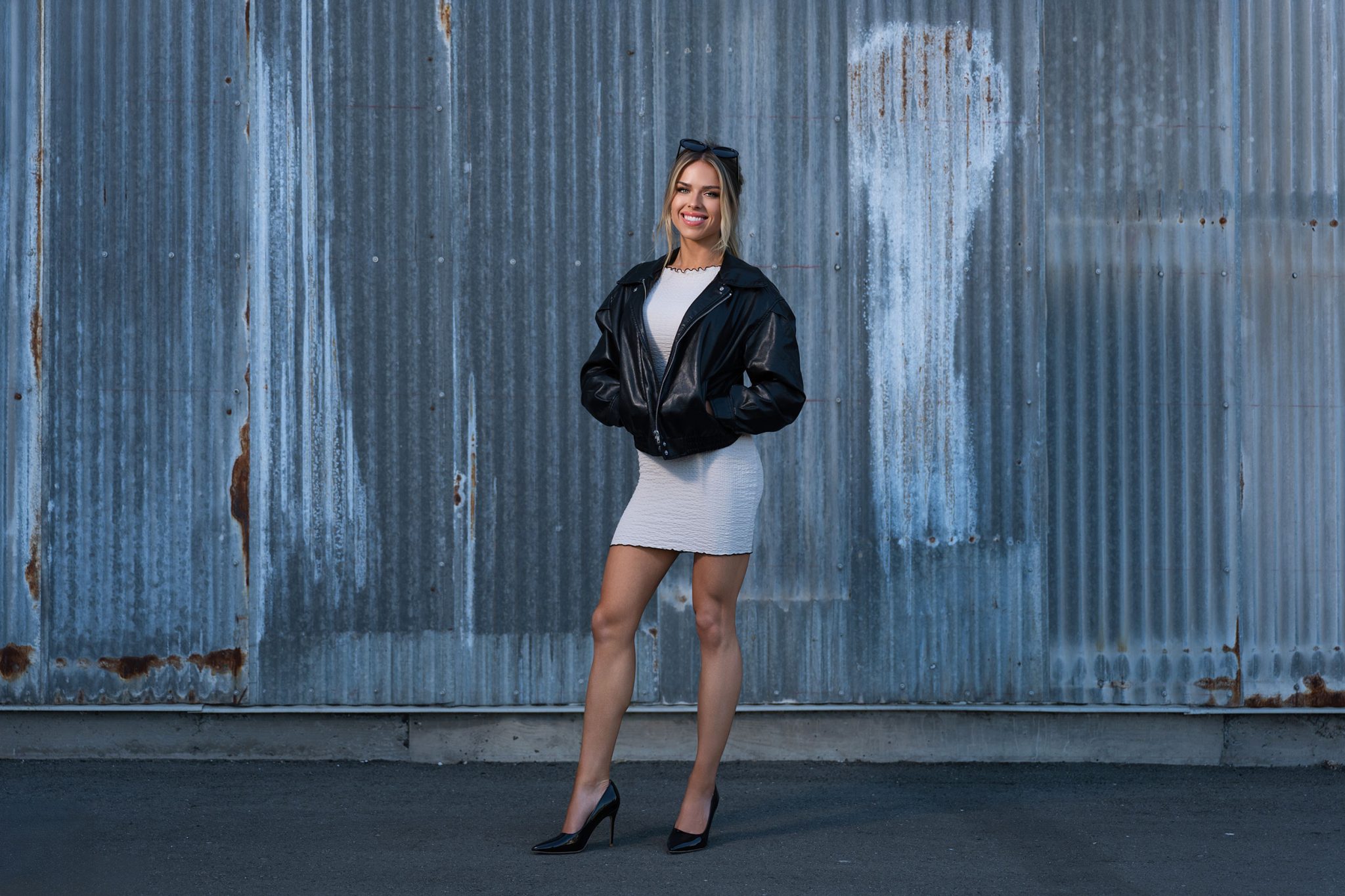

Great Lighting Options for Single Portraits
When Mark and Steve photograph one person, they have two favorite modifiers.
Mark paired a Rapid Box Switch Octa-M with a FJ400 II strobe, saying the octabox feels like portable window light. He uses a simple idea to place his light. He imagines a wall beside the subject and asks himself where he would cut a window. This helps him angle the modifier so that the light wraps across the face in a soft, natural way. This technique is often called feathering. Instead of pointing the modifier directly at your subject, you let the softer edge of the beam skim across their face. The results are gentle and flattering.
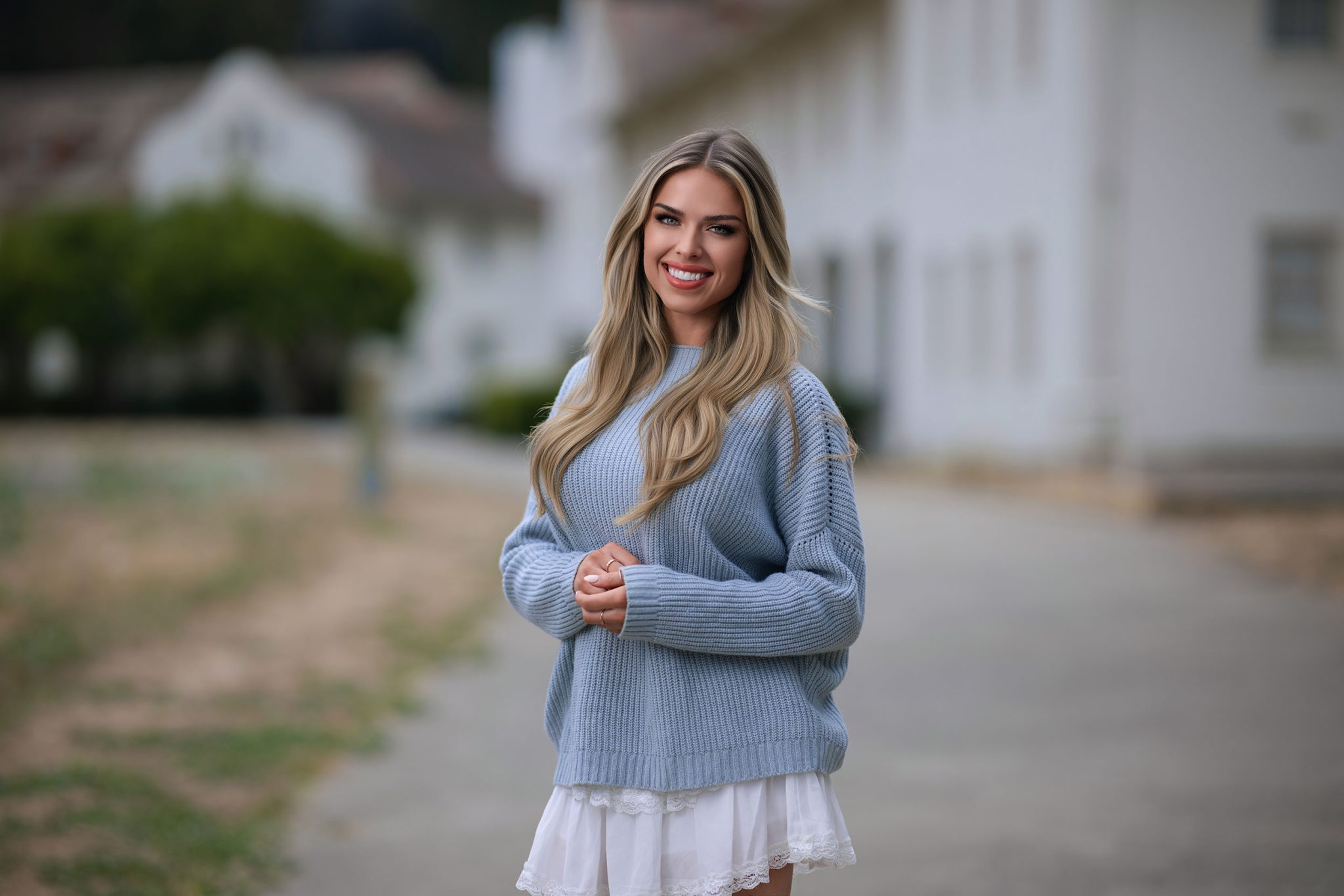
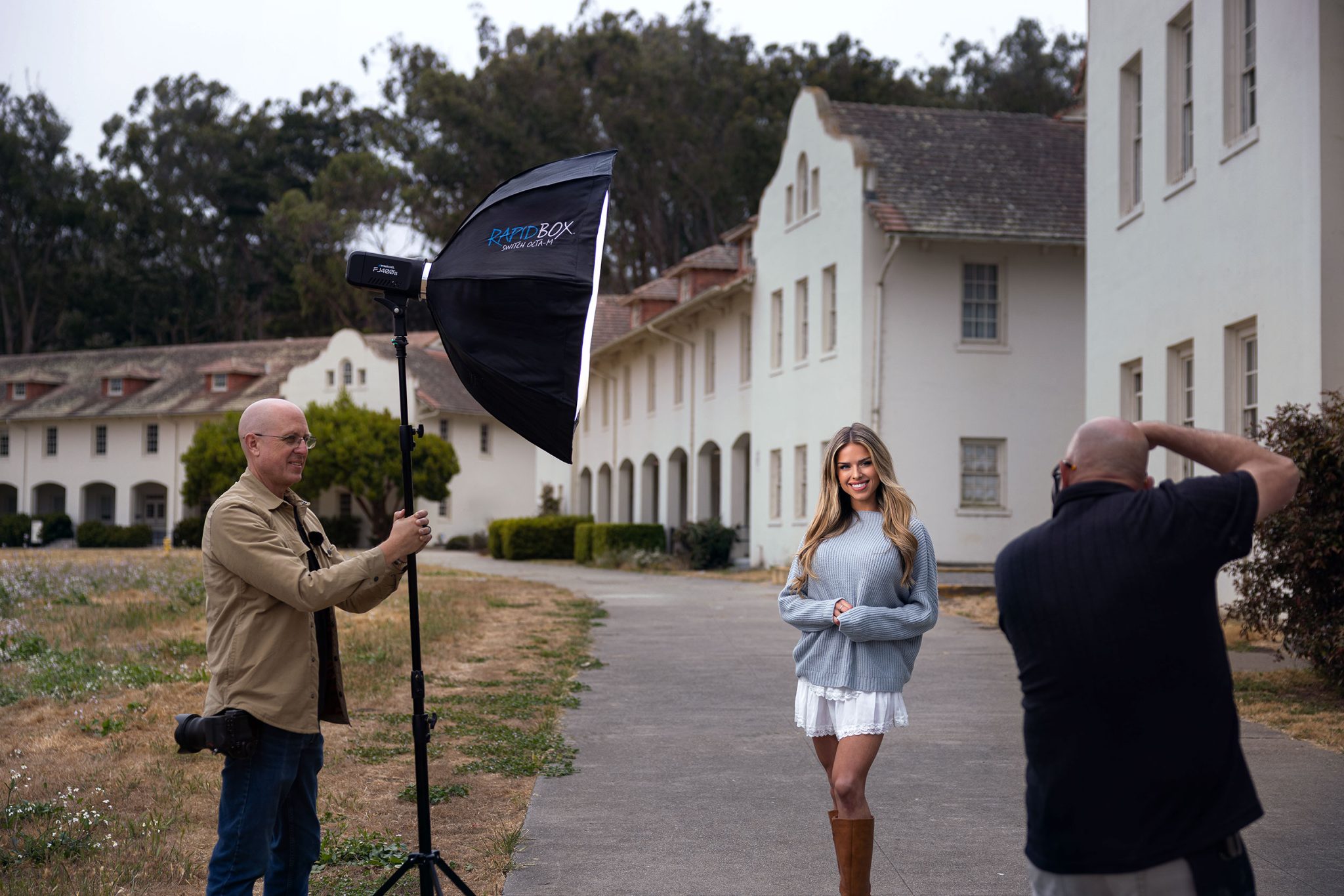
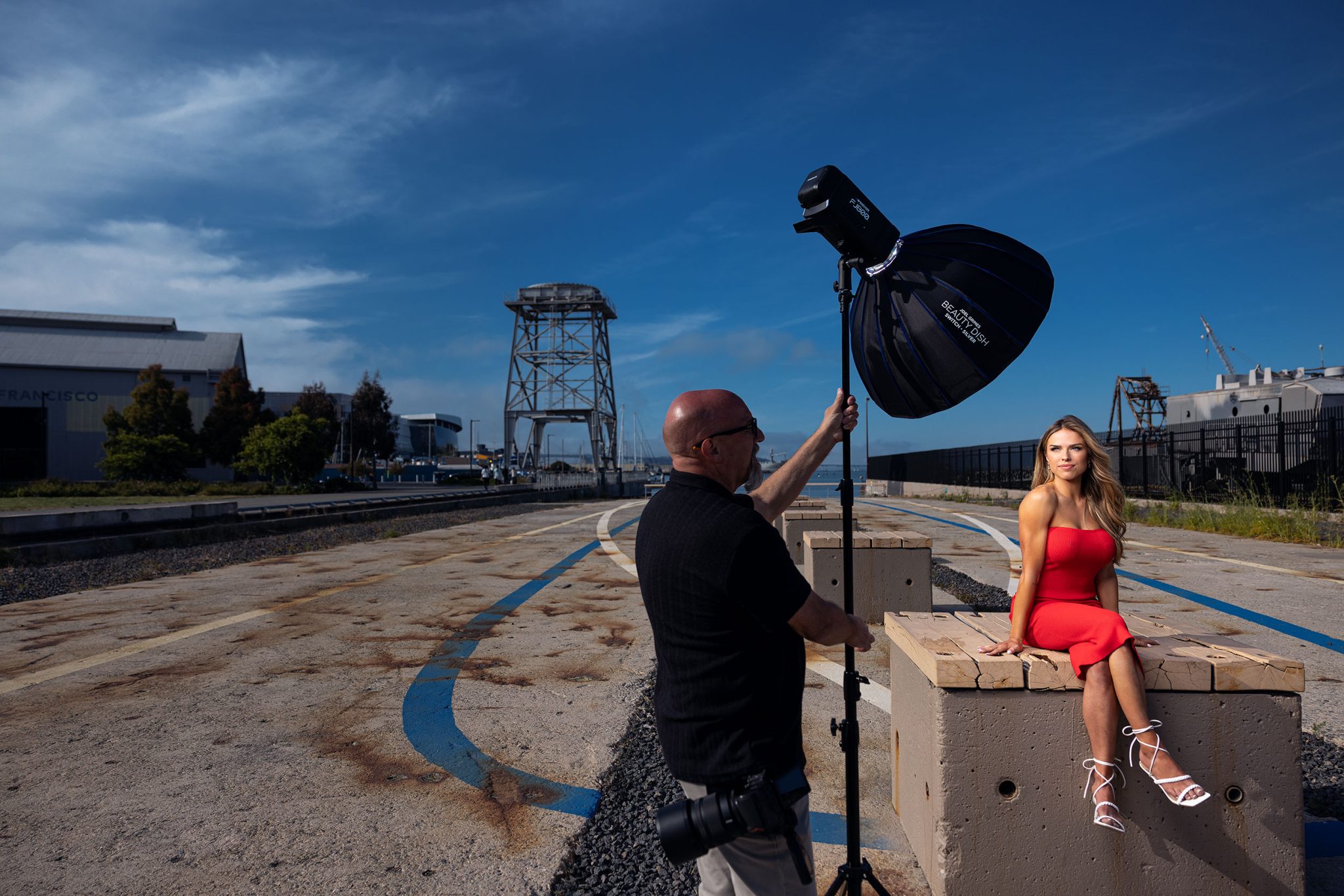
Steve switches to a Beauty Dish Switch by Joel Grimes (24”) when he wants something a little more dramatic. Beauty dishes give a crisp, punchy look that works well in contrasty locations. They still flatter the face, but with more definition and a bit more edge.
He also explains when to use the front diffuser. Without it, the beauty dish gives brighter highlights. If those highlights feel too strong for your subject’s skin, adding the diffuser softens them nicely. Both modifiers work well for single portraits. The choice comes down to location, mood, and how soft or bold you want the image to feel.
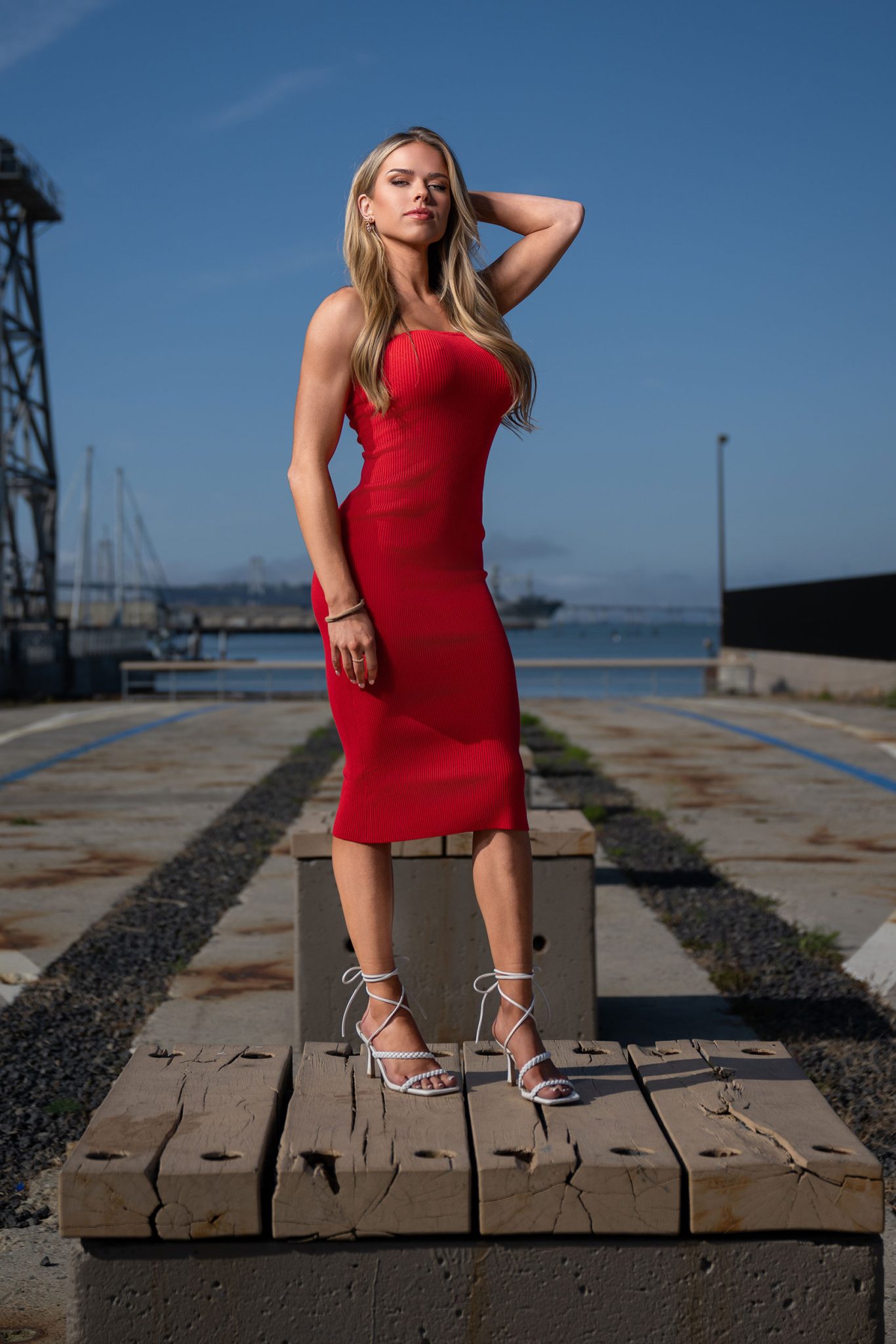
Creative Light Modifiers for Fashion Shoots
For fashion-inspired work, Mark and Steve like to push the look a little further.
Steve uses the 45-degree Deep Focus Reflector with the FJ800 strobe. This combination creates strong contrast and allows him to place the light far enough away that it stays out of the frame. The reflector creates hard edges and sharp shadows that match the city environment around them.
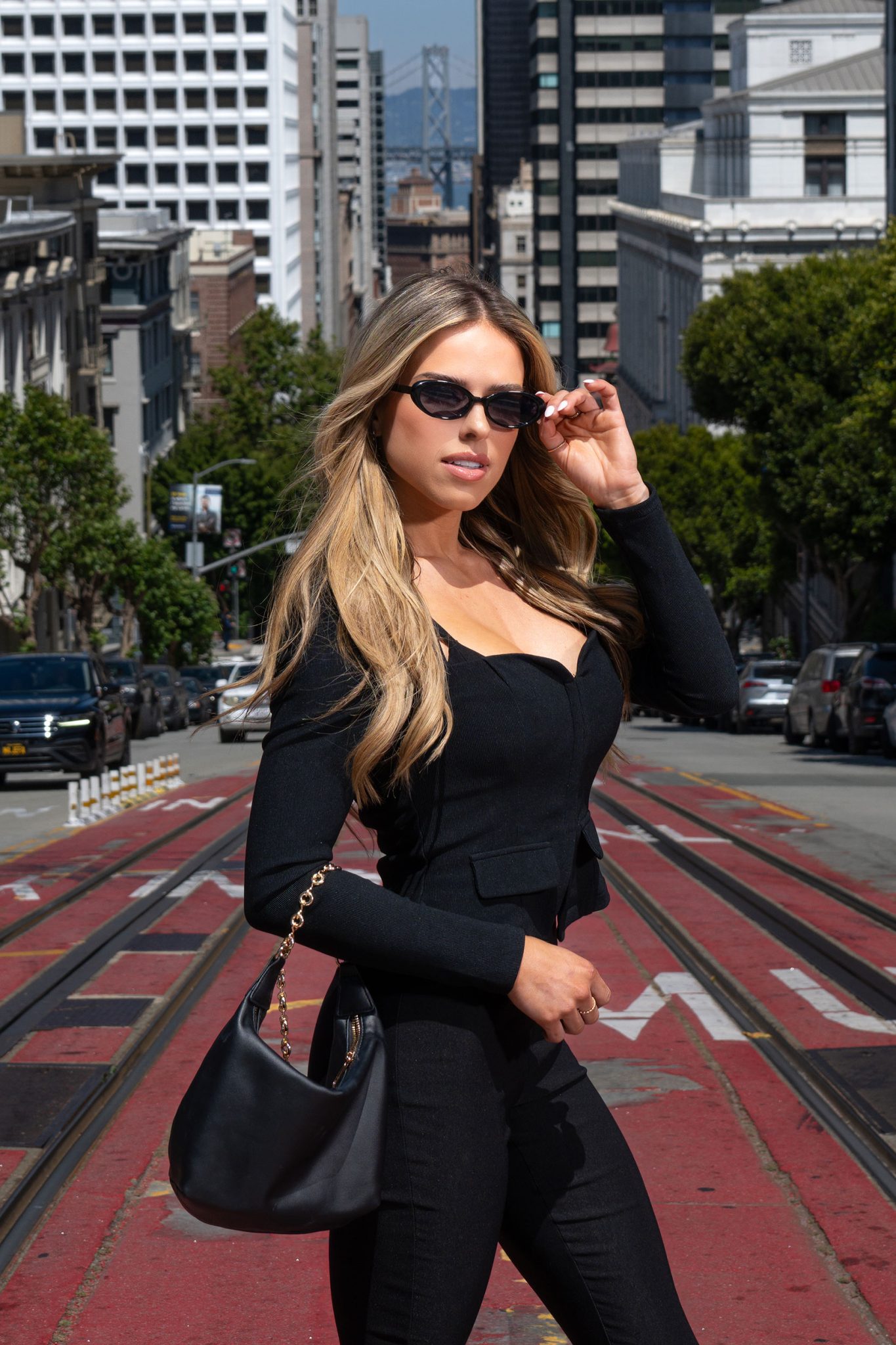
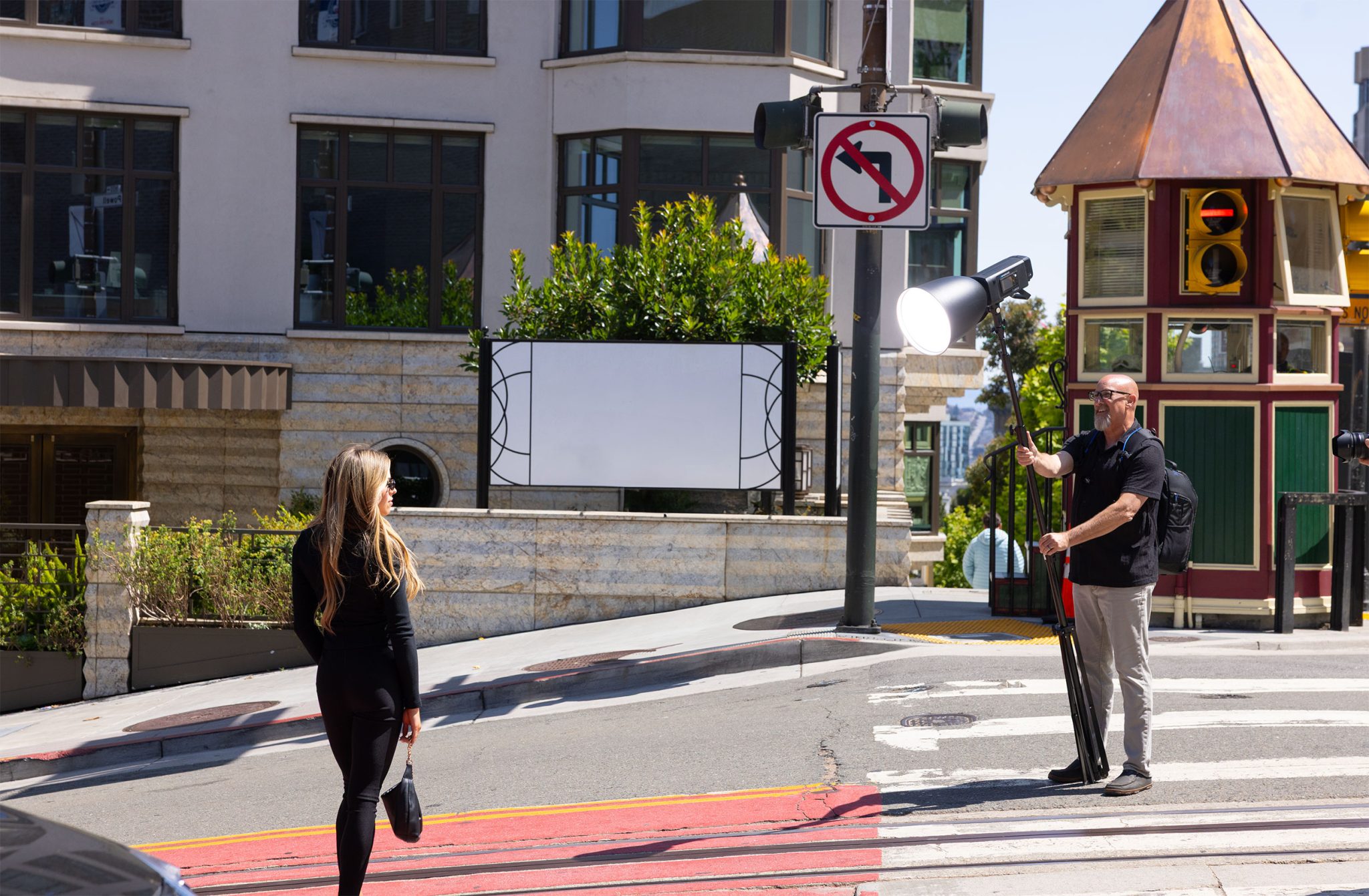
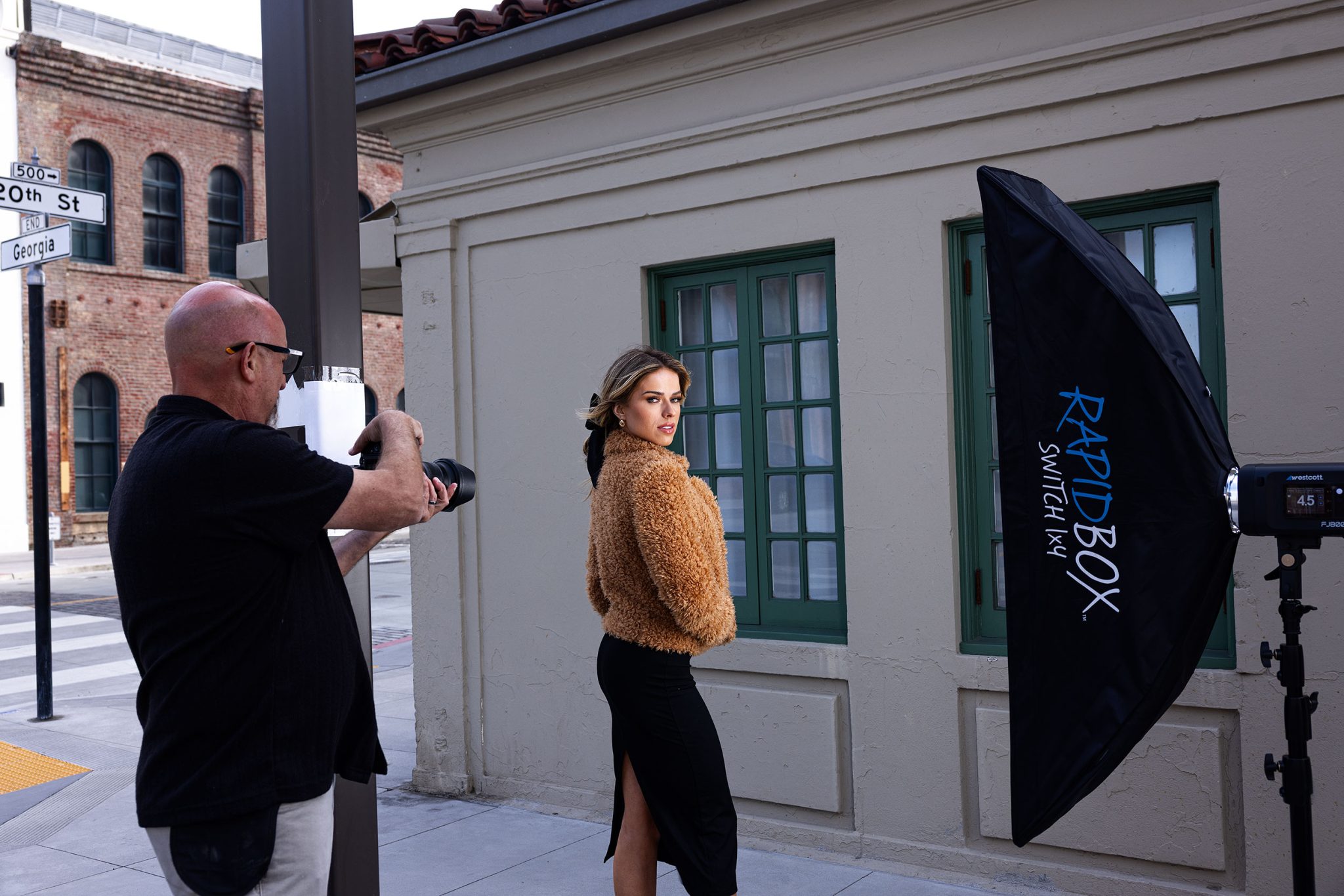
Mark brings out a Rapid Box Switch 1x4 for creative lighting. Most photographers think of strip boxes as backlights, but he uses one from the front to shape the face with narrow, controlled light. With the power from the FJ800, he can use this larger modifier and still get the punch he wants.
These tools help them craft a mood that feels bold and intentional.
Lighting Couples with a Beauty Dish by Manny Ortiz
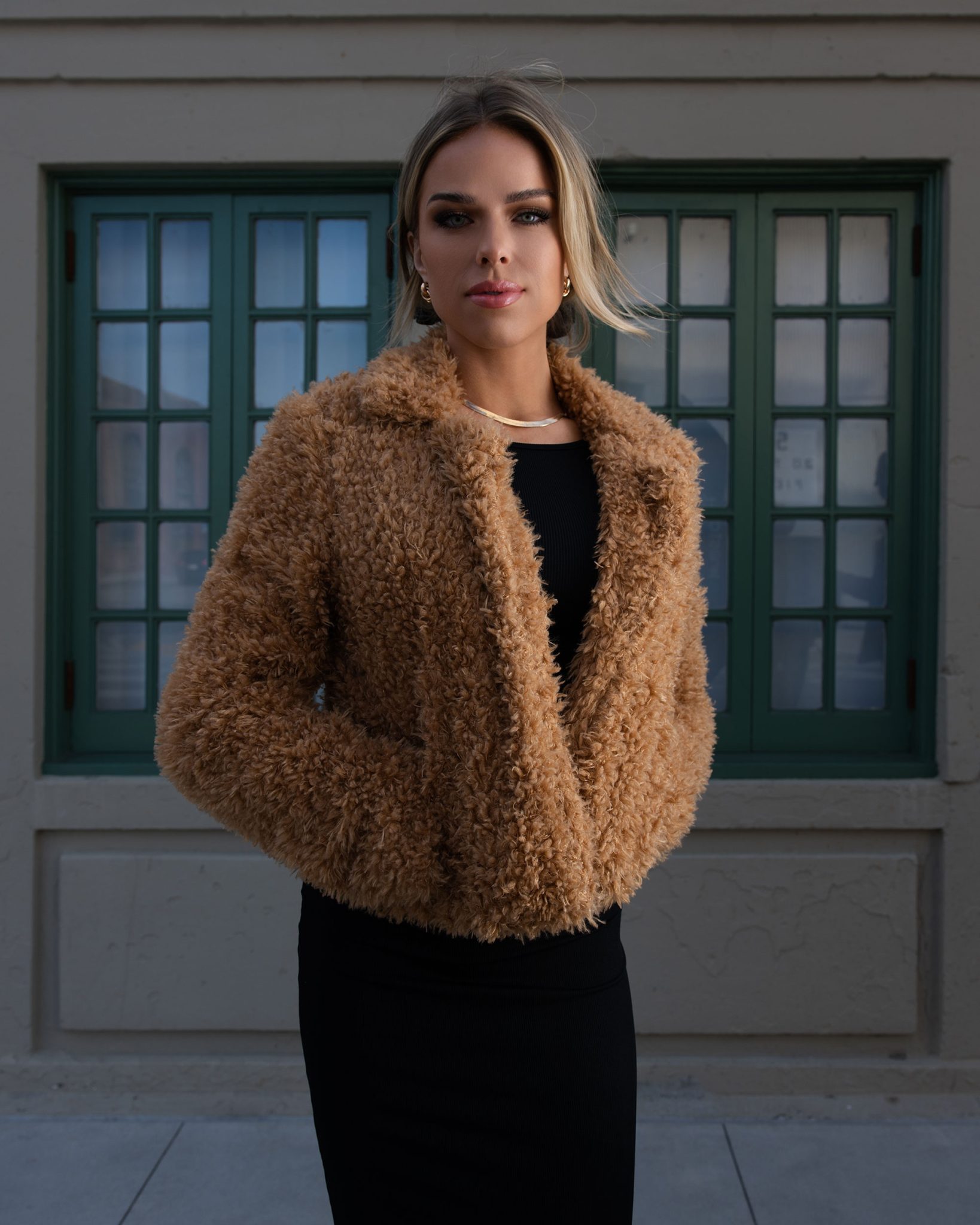
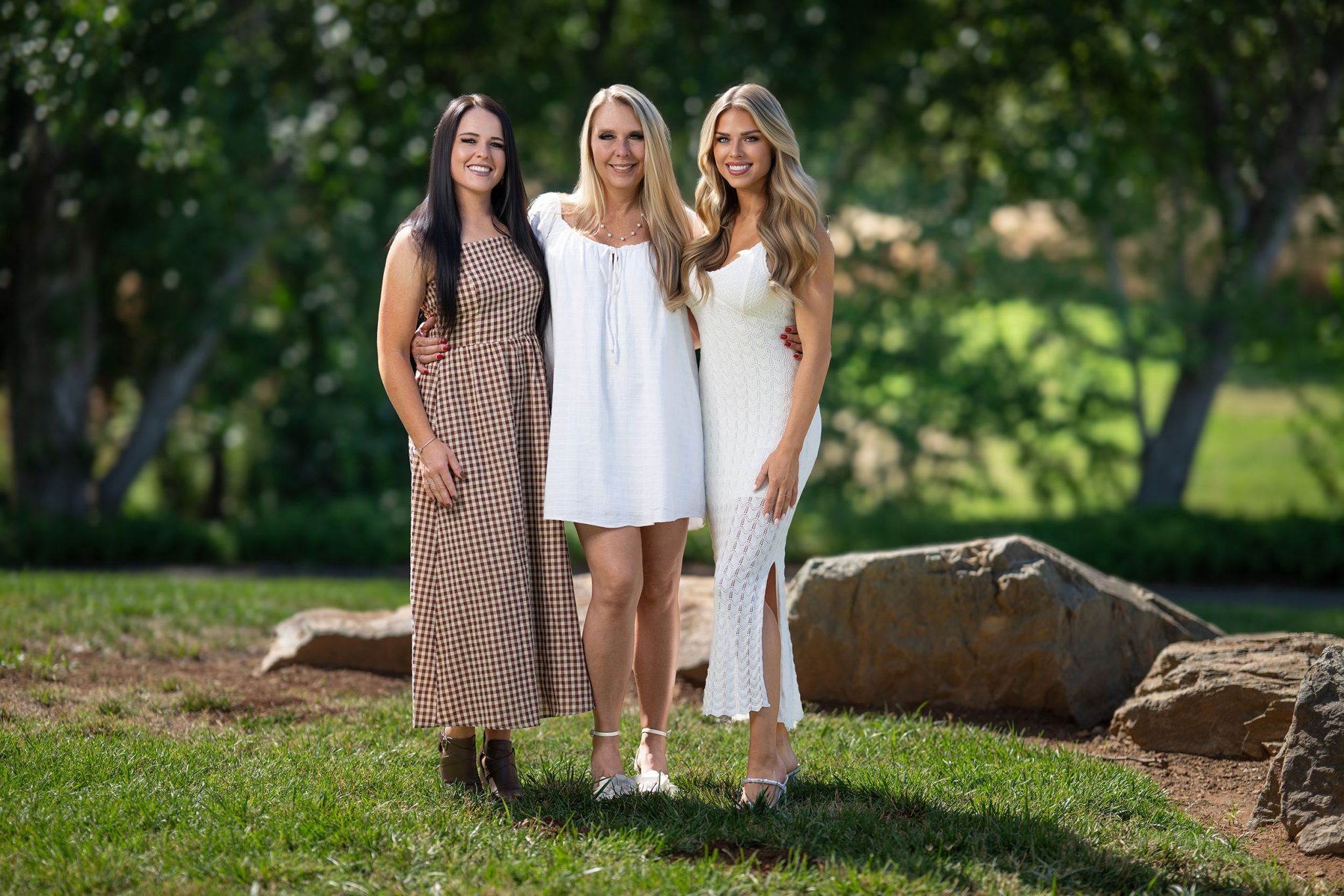
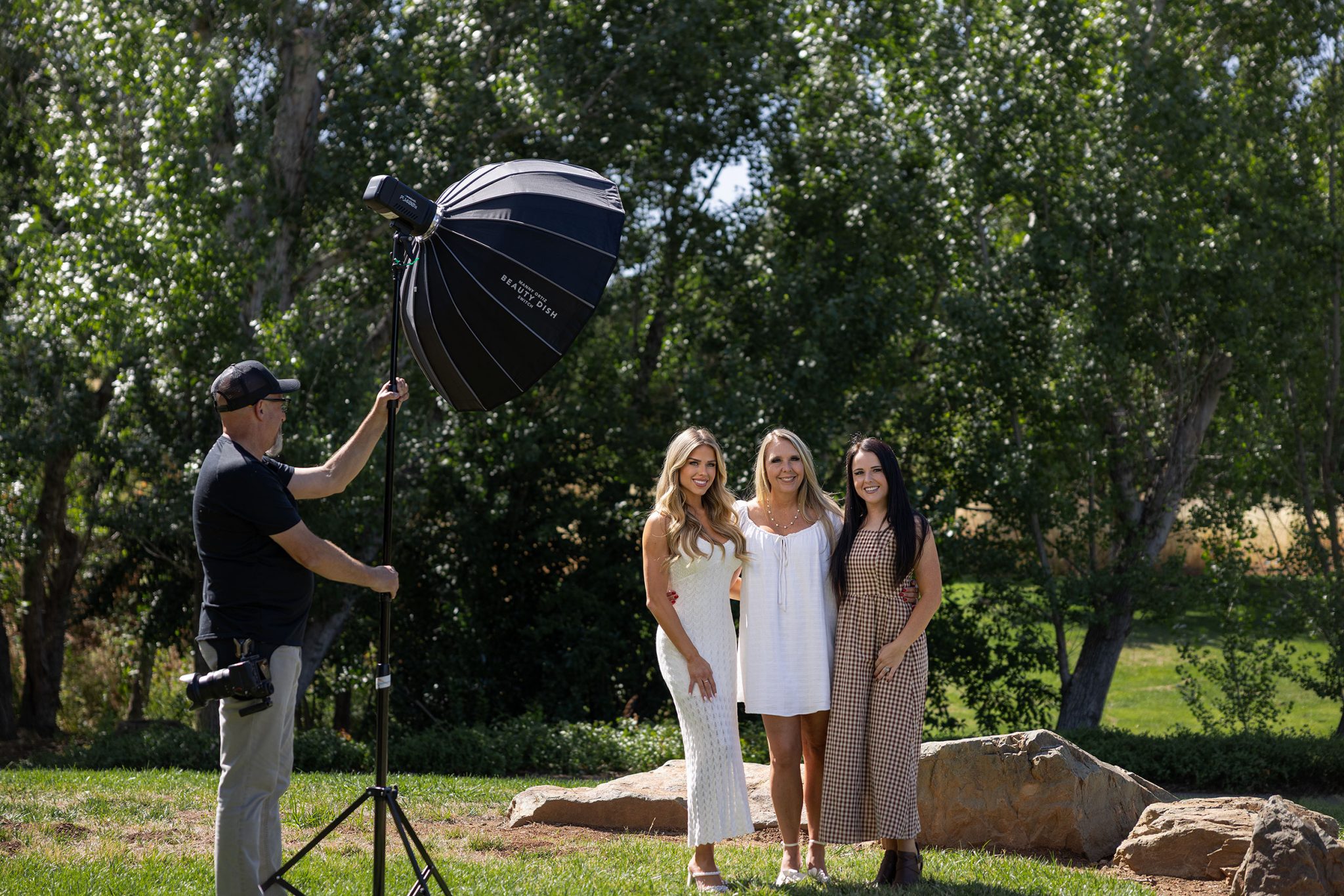
When Steve photographs two people, his favorite tool is the Manny Ortiz Beauty Dish paired with the FJ400 II Strobe. One reason is flexibility. With the center deflector plate installed, it acts like a classic beauty dish. Remove the plate and it becomes a softbox. You get two looks in one modifier. Its 36-inch size is great for lighting couples and small groups because it wraps light evenly across all of their faces. The light feels soft and natural, without losing shape.
Lighting Group Portraits: Cross-Light for Even Coverage
Groups can be tricky because people cast shadows on each other. Mark shows how cross-lighting solves this problem.
He uses two Rapid Box Switch 2x3 softboxes with two FJ400 II strobes. One light is placed on each side of the group, angled toward the center. This creates an even pool of light, so no one falls into shadow.
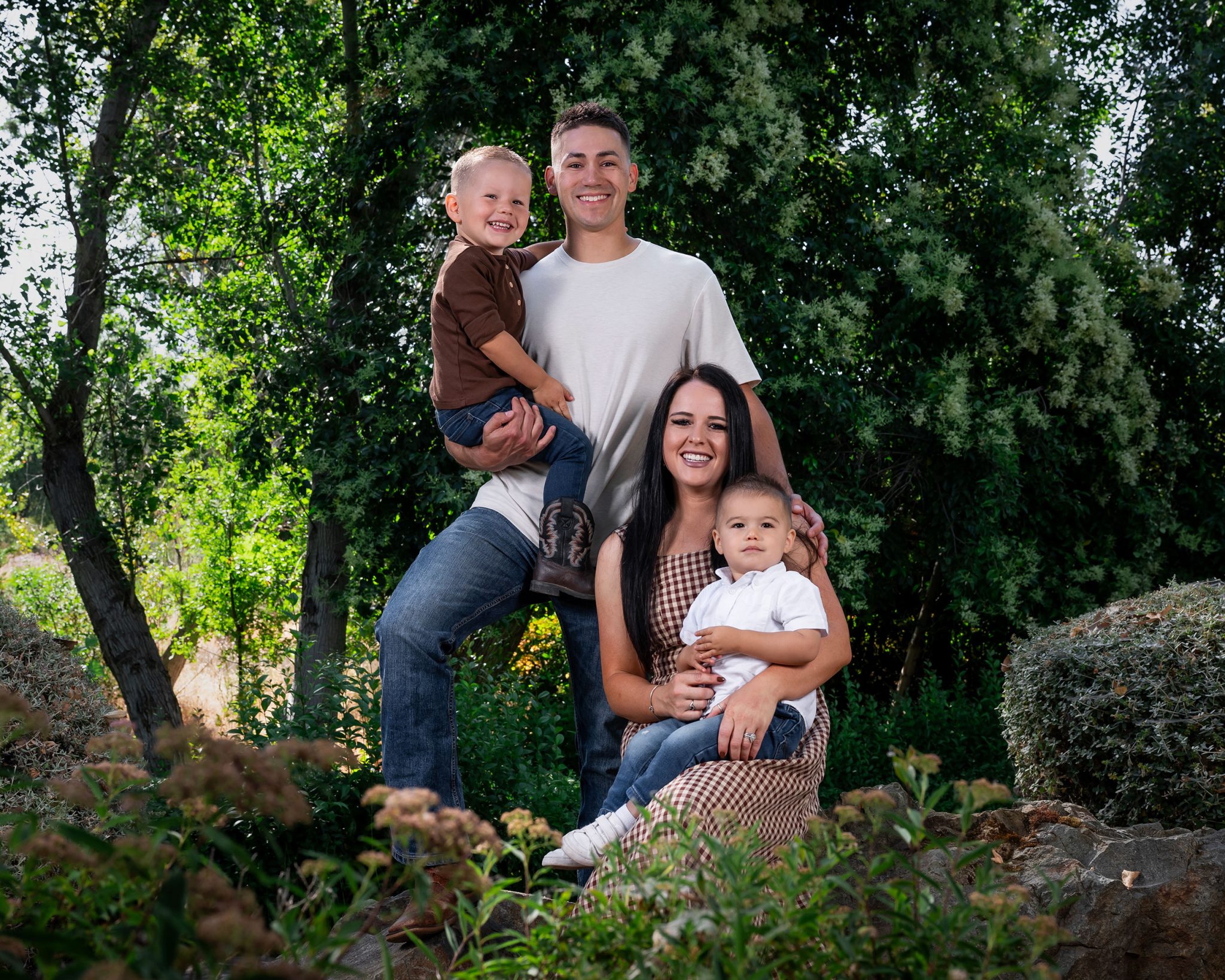
He also explains why to move your lights farther back when shooting groups. Thanks to the inverse square law, the closer a light is to the subject, the faster it falls off. Backing the lights up spreads the exposure more evenly across everyone. If the group gets larger, switching the softboxes from vertical to horizontal spreads the light even wider. It is a simple method that works for four people or four hundred.

Key Takeaways for Choosing the Right Lighting Modifier
By the end of their portrait lighting shoot, Mark and Steve have shown how many factors shape your choice of modifier. Your subject, your location, the time of day, the mood you want, and even the weather all play a part.
Your lighting gear is only part of the equation. What really matters is how you use it. Modifiers are tools that help you paint with light. You get to decide the look and feel.
Start simple and learn what each modifier does. The more you practice, the easier these choices become.
Want to Learn More about Flash Photography?
Check out Mastering Flash Photography: 5 Lighting Principles for Beginners, where Mark and Steve help you master the basic principles of lighting with flash photography.


You must be logged in to post a comment.