
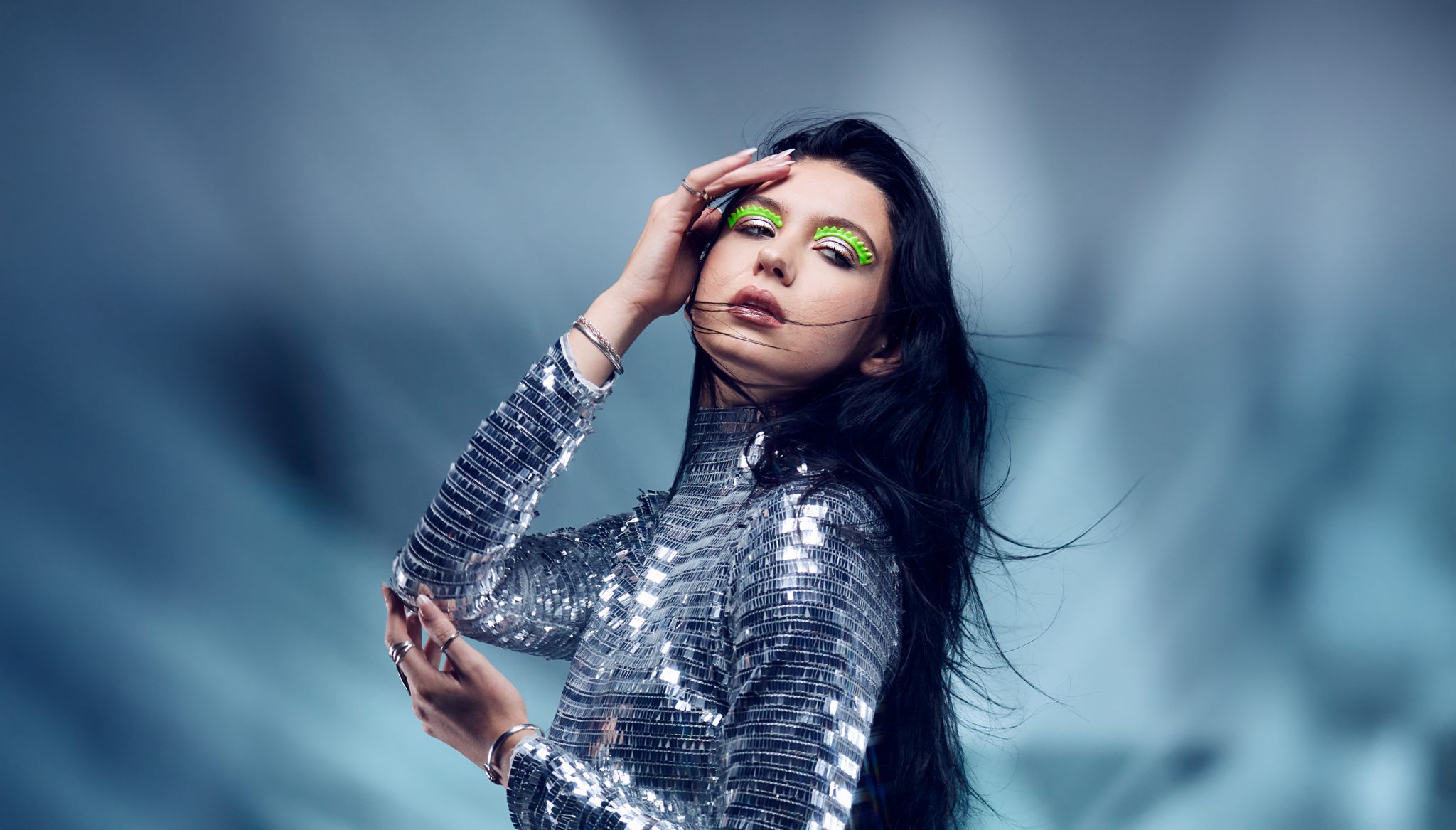
We’ve all been there. You have a brilliant experimental lighting idea, you try it out, and the results are… fine. They’re not bad, but they aren’t exactly what you saw in your head. For Westcott’s own Ashley Boring, that almost there moment happened with a handmade mirror prism. Recently, Ashley decided it was time to revisit the concept. With five years of extra experience and a few new tools in her kit, she set out to turn an idea into a polished, professional portrait. Here is how she tackled the setup and finally captured the mirrored effect she always wanted.
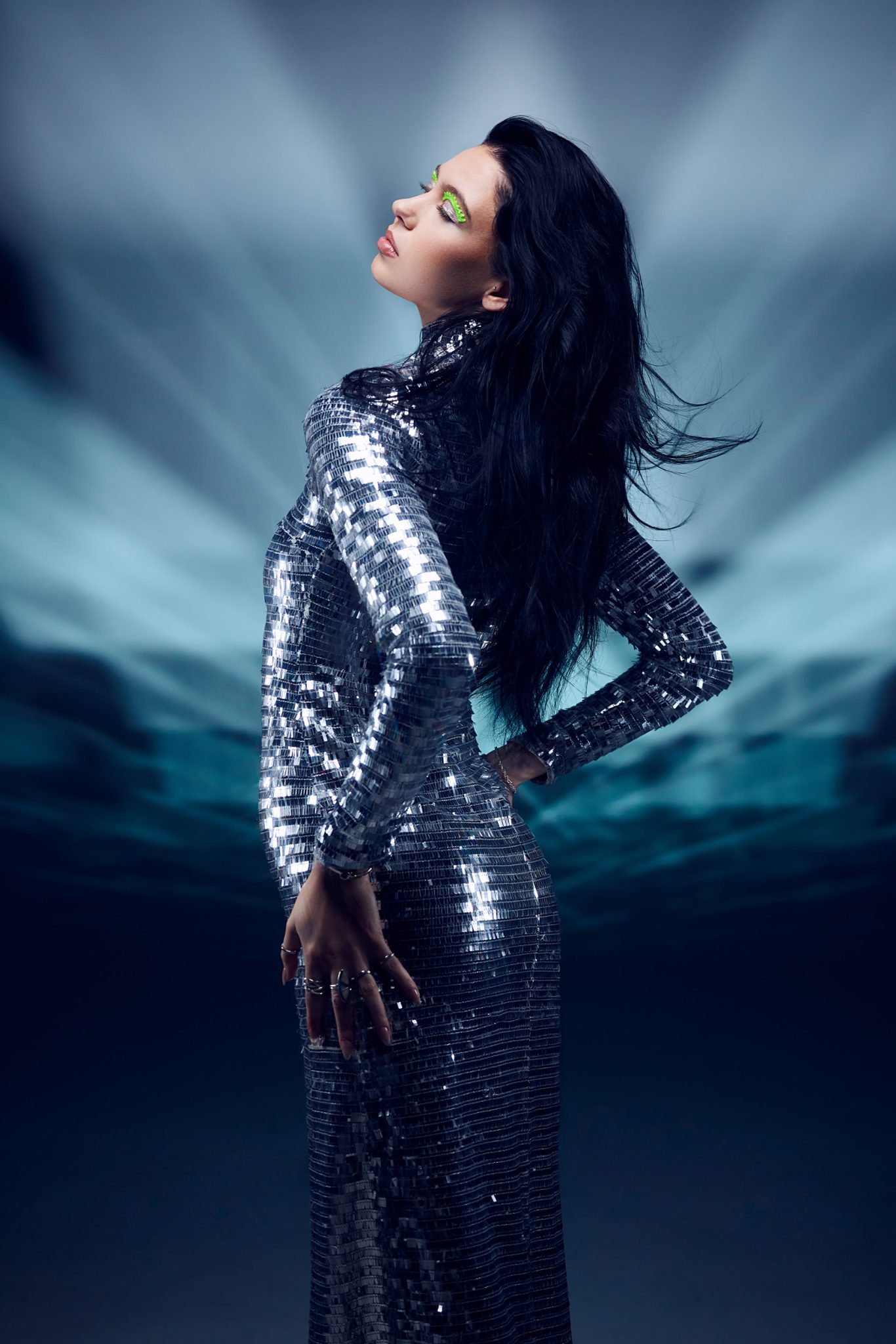
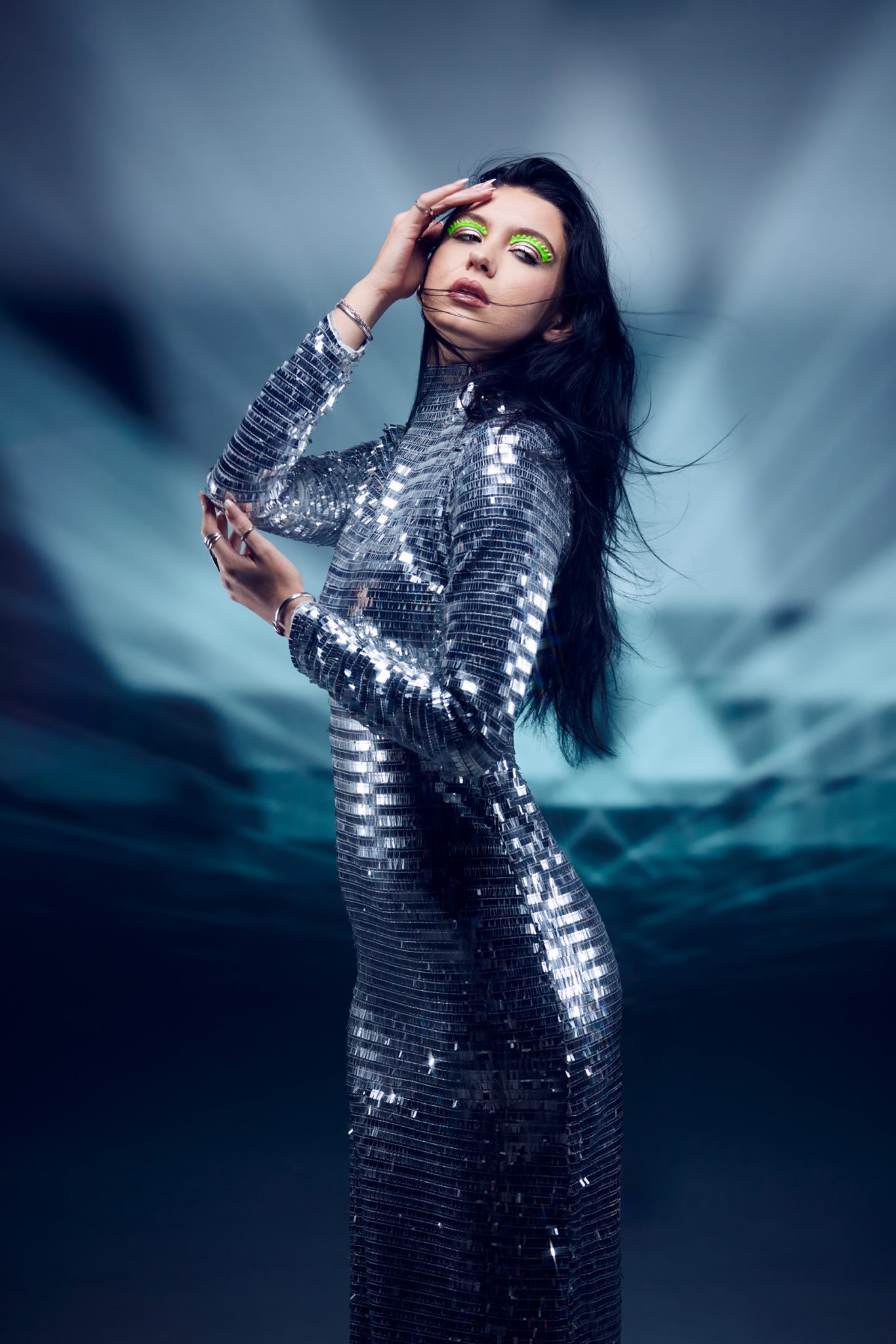
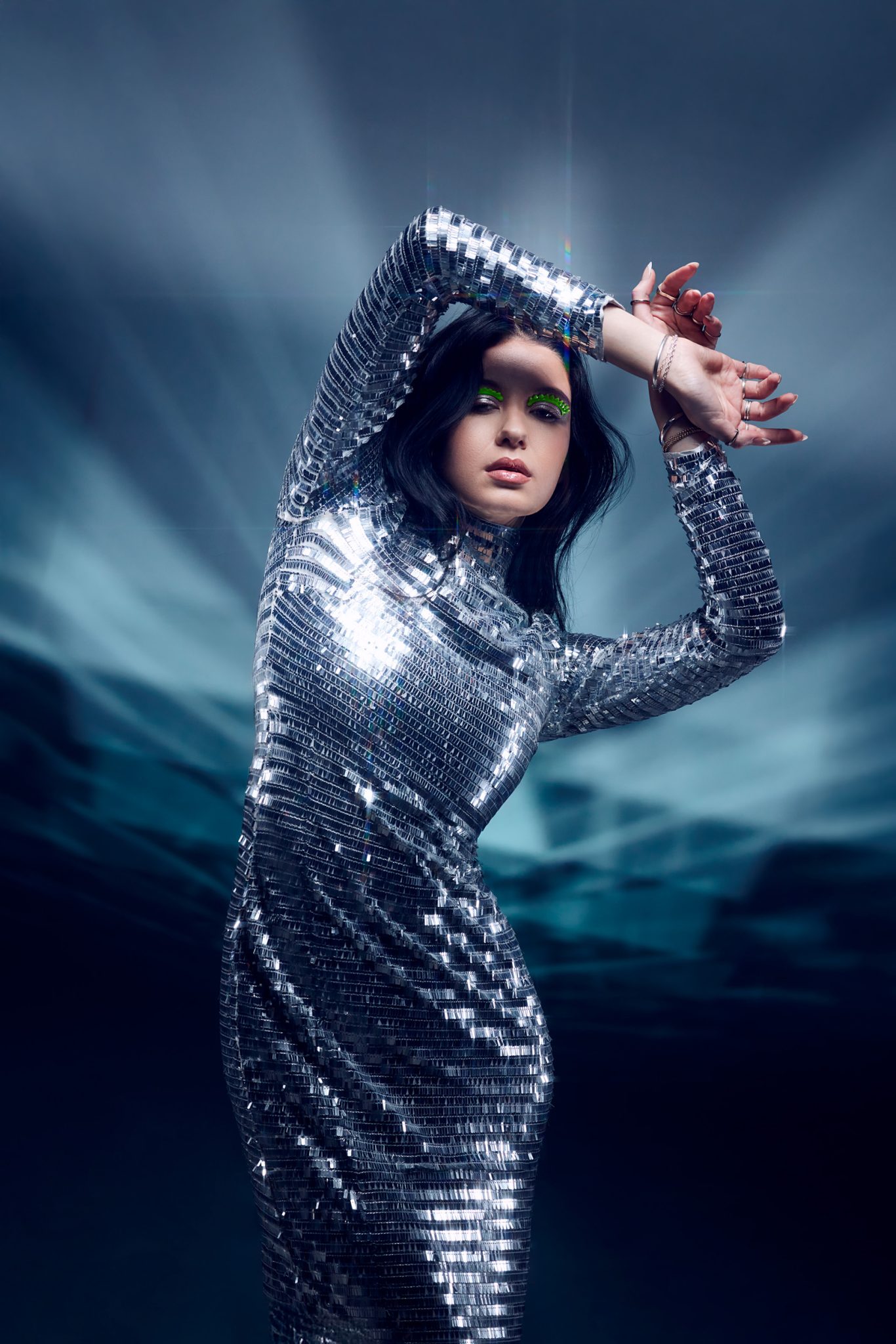
The Concept: A DIY Mirror Prism
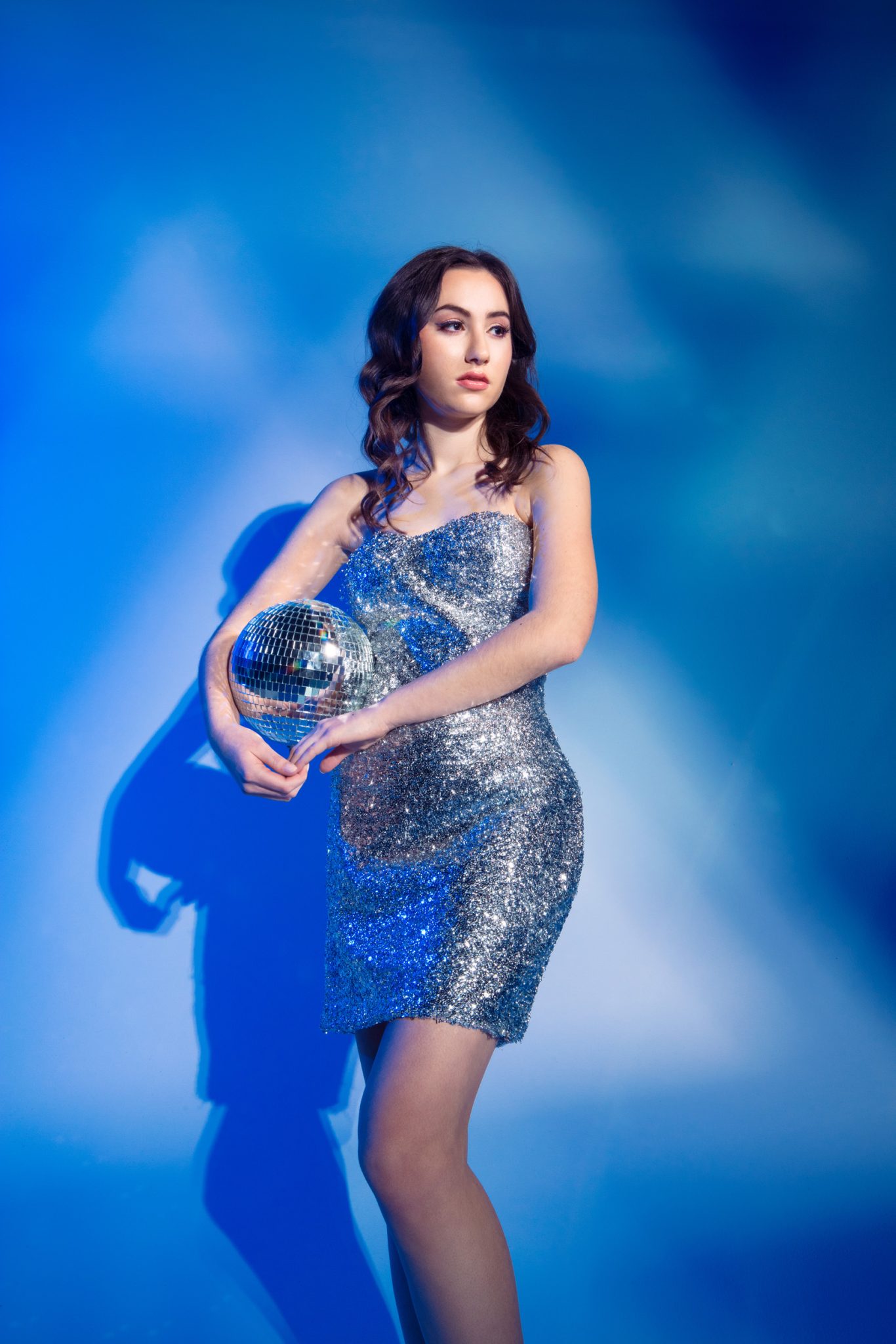
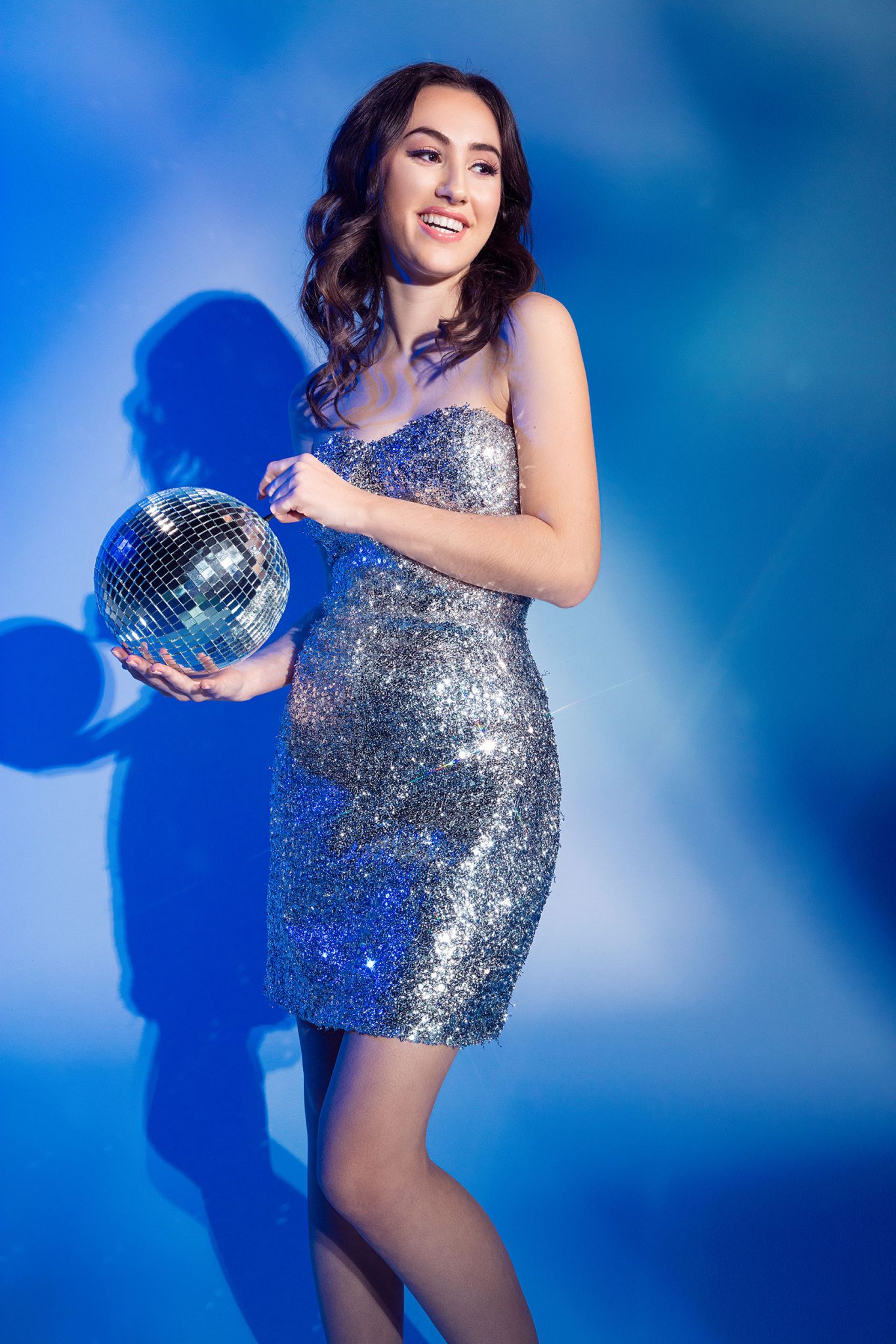
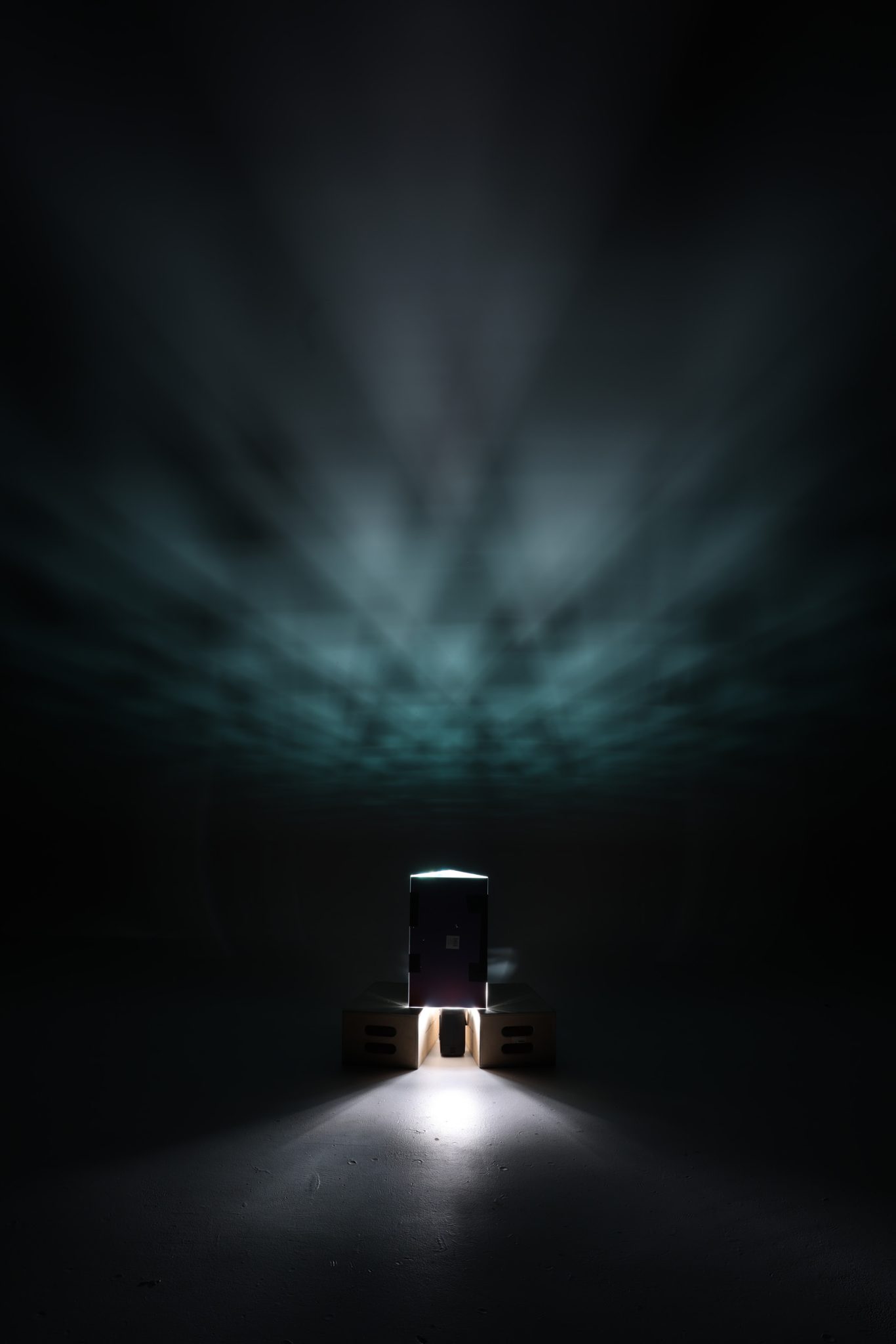
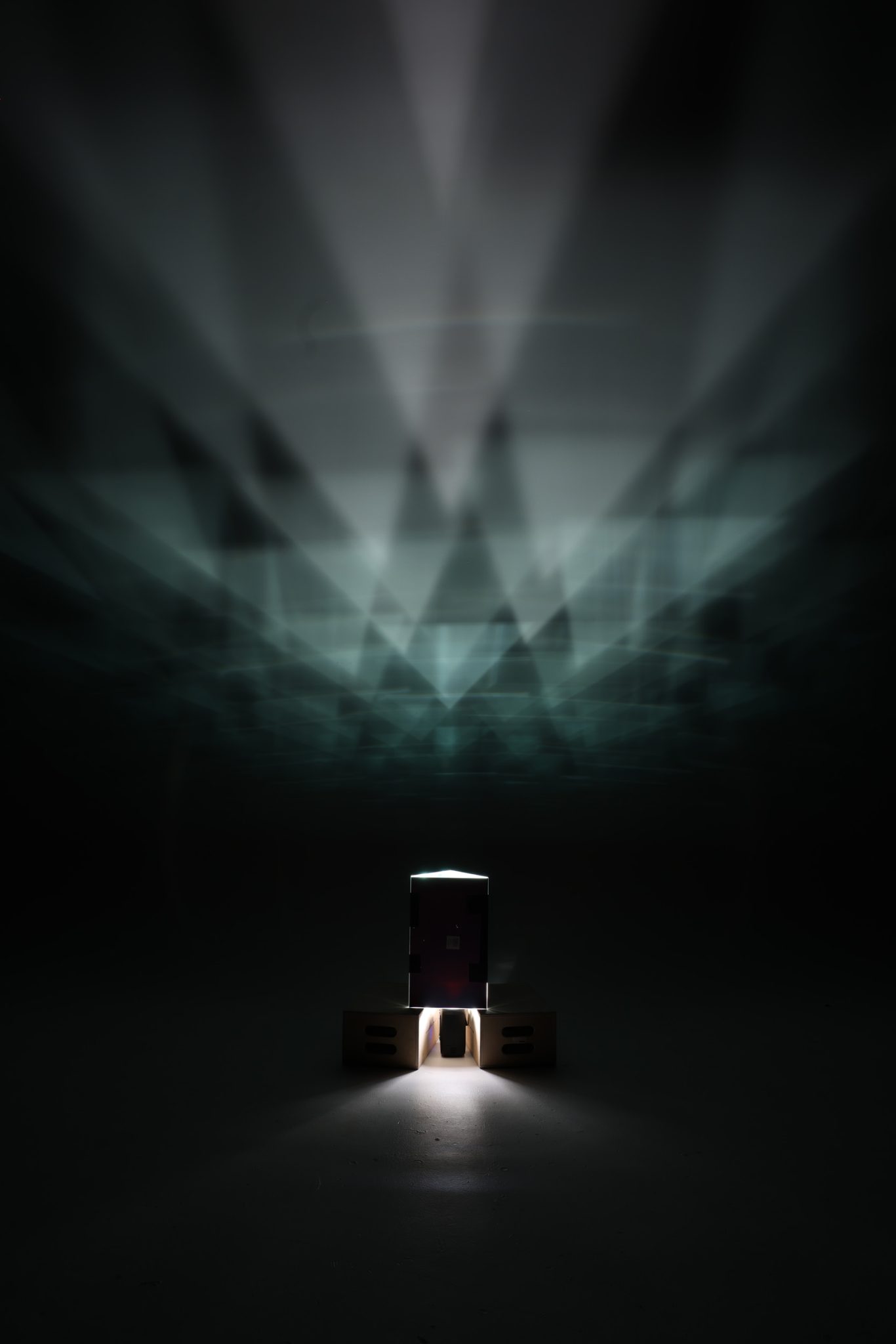
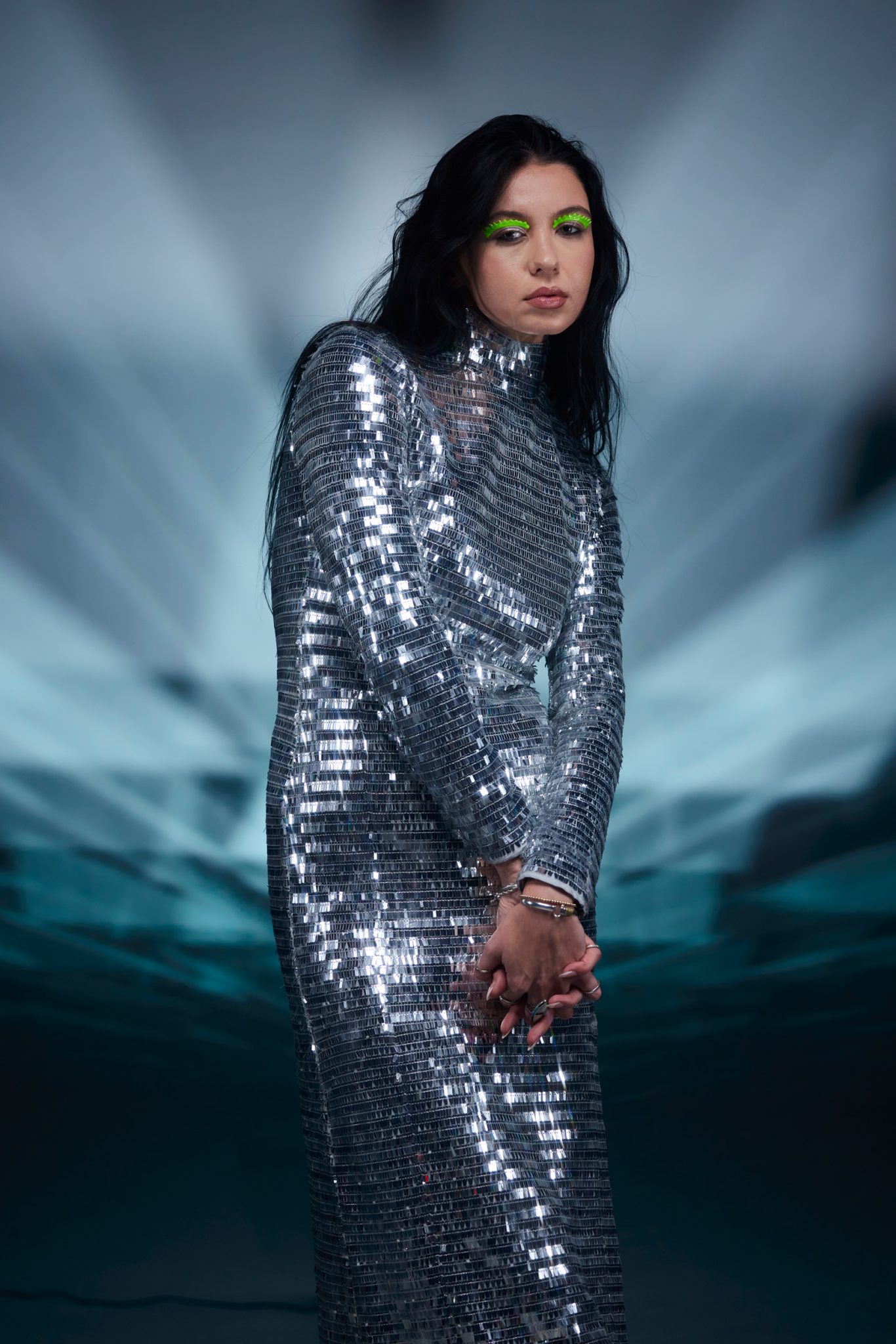
At the center of this look is a surprisingly simple tool. The mirror prism is made from 3 small mirrors taped together into a triangle. When light is aimed through the center of the prism, it reflects outward, creating repeating triangle shapes across the background and even onto the subject. The idea itself was not a problem. The challenge was getting the effect to translate from what the eye sees to what the camera records.
Learning from the Past
Looking back at the original shoot, two main issues stood out right away. The subject was placed too close to the background, which meant the mirrored pattern did not have room to spread. Ironically, the most interesting reflections were happening around the edges, but the model was standing in the middle where the effect was weakest. Sharpness was the other frustration. In person, the triangles looked crisp and defined. In the photos, they looked soft. At the time, narrowing the beam and stopping down the aperture helped a little, but not enough. The idea worked, but not well enough to feel finished.
Testing Made the Difference
When Ashley revisited the idea years later, she started with testing. The prism was rebuilt and placed in the studio, and the goal was simple. Figure out why the camera was not seeing what the eye was seeing.
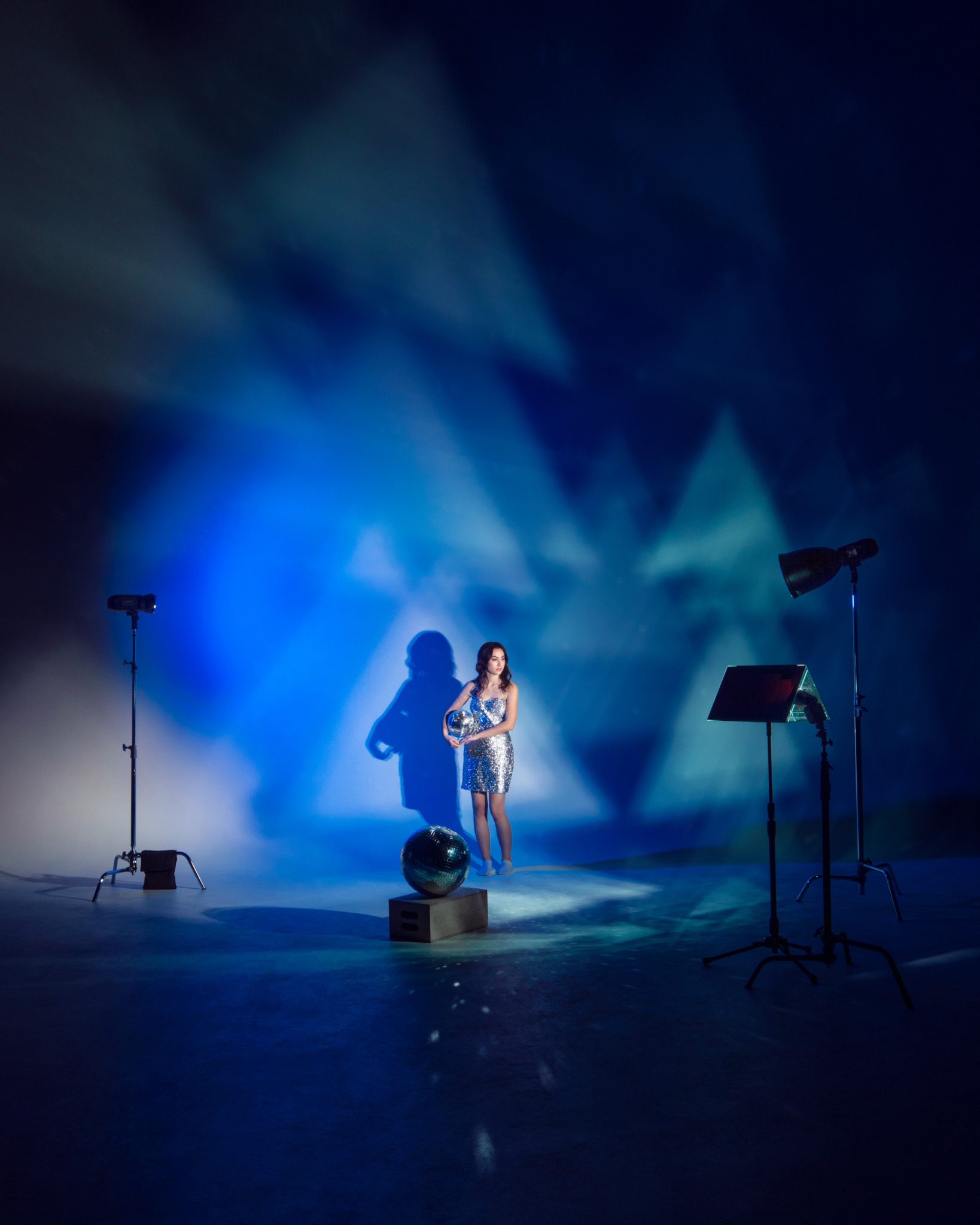
The first fix was easy. Moving the subject farther from the background instantly gave the pattern room to breathe. Changing the direction of the prism and light also helped. By pointing them straight up instead of toward the subject, the triangles started small and spread outward, which made the image feel more dynamic.
The Breakthrough: Strobe vs. Constant Light
After taking a test shot, the same issue appeared again. The mirrored triangles still looked softer in the photo than they did in person. That was the moment to stop adjusting placement and focus on the light itself. The modeling lamp looked sharp because it used a small, focused LED source. The FJ400 II flash, however, spread light in all directions. That wide spread is great for most portrait lighting, but in this case, it softened the reflections too much.
There were two options. Shape the flash with extra tools or switch light sources altogether. The simpler solution won. By swapping the strobe for a L120-B Bi-Color COB LED (120W) with a focused point source, the very next test shot showed crisp, clean triangles that finally matched what was visible to the eye.
The Final Lighting 4-Light Setup
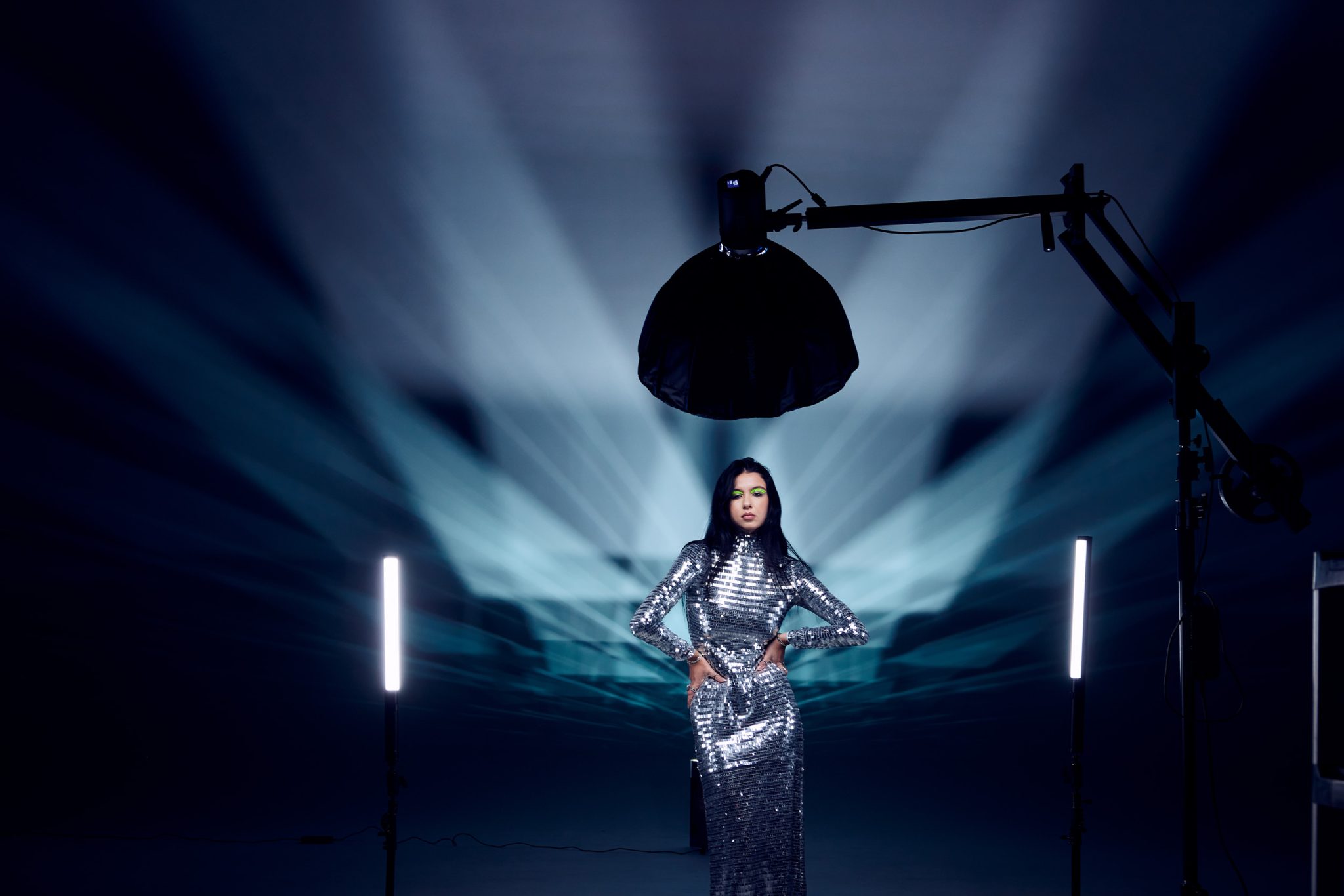
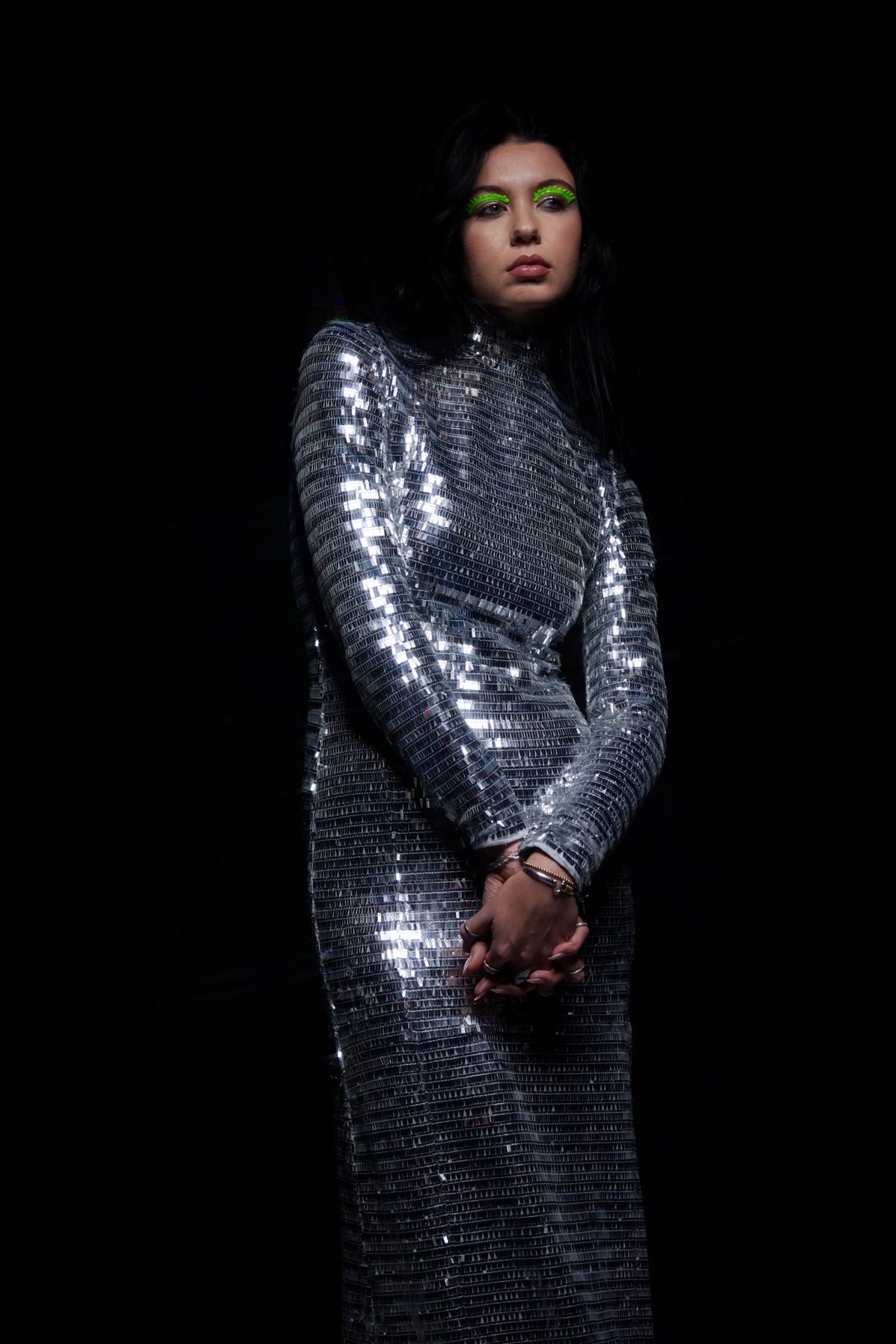
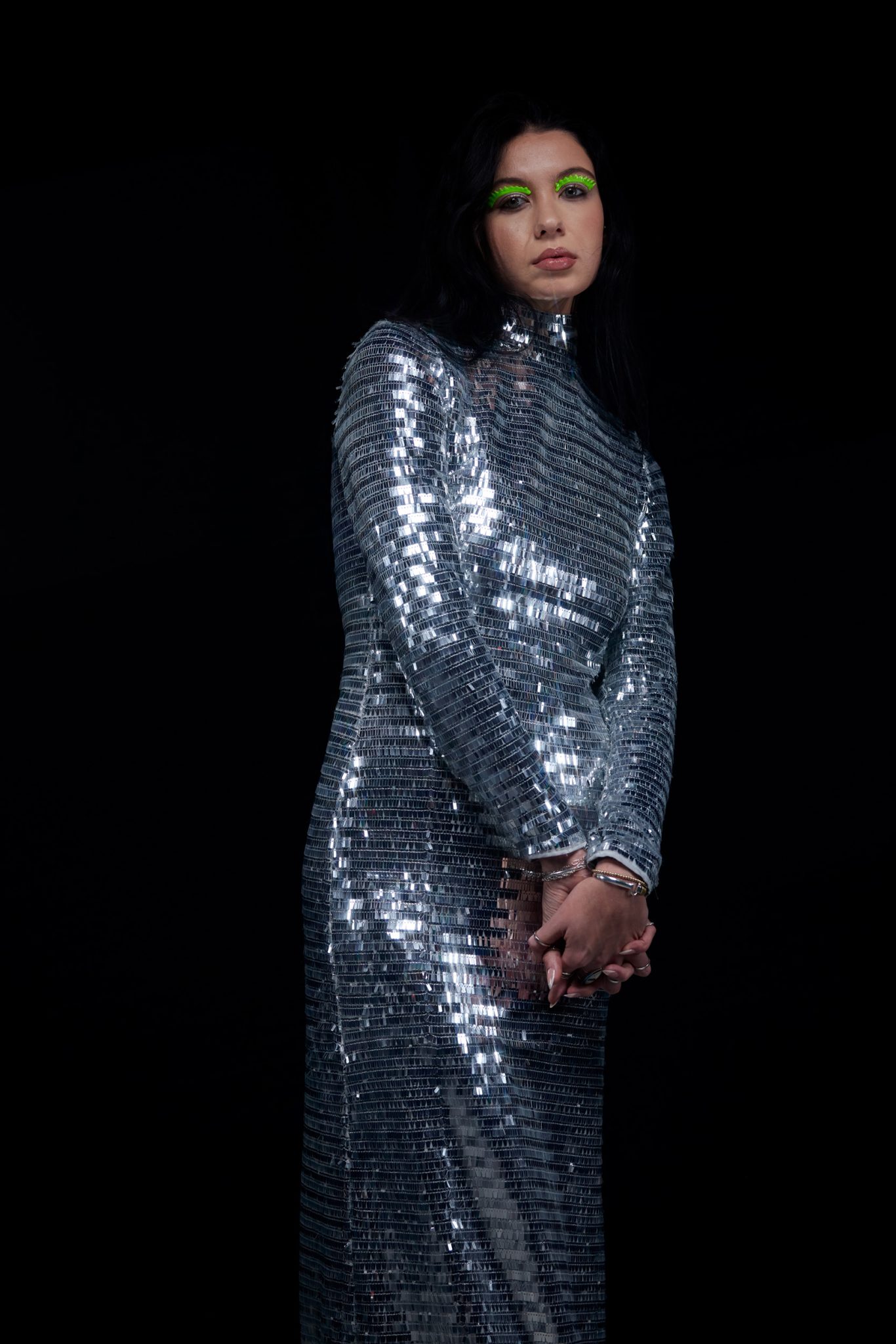
To complement the complex background, Ashley built a clean, punchy portrait lighting setup using a second L120-B as the key light. This was paired with a 24-inch Rapid Box Beauty Dish Switch with a silver interior to keep the light punchy and match the reflective wardrobe. She added a 40-degree Egg Crate grid to the beauty dish to ensure no light spilled onto the background, which would have washed out the mirrored pattern. To finish the look, she placed two Ice Light 3 LEDs as rim lights behind the model. These created bright highlights along the silhouette, separating her from the dark background and making the reflective textures of the outfit truly pop.
Camera Settings for Constant Light
Since she was working with constant LED lights rather than flashes, Ashley adjusted her settings to ensure a sharp, clean exposure:
- Shutter Speed: 1/100s, fast enough to freeze slight movement
- Aperture: f/4, providing a balance of background detail and subject separation
- ISO: 800, to gain the necessary brightness without introducing digital noise
The Takeaway: Don’t Give Up on an Idea
The biggest lesson from this shoot wasn’t just about mirrors or LEDs, it was about the power of testing. By taking the time to troubleshoot the “why” behind her previous attempt, Ashley was able to walk into the actual shoot day with total confidence. If you have a lighting concept that almost worked, don’t give up on it. Revisit it with more intention and a willingness to ask why something is not working. Sometimes the difference between a good image and a great one is as simple as moving your subject, changing your light angle, or switching from a strobe to constant light.
Looking for more creative inspiration in your portrait photography?
See Ashley’s lighting breakdown in 3 Creative Ways to Use Gels in Portrait Photography.


You must be logged in to post a comment.