
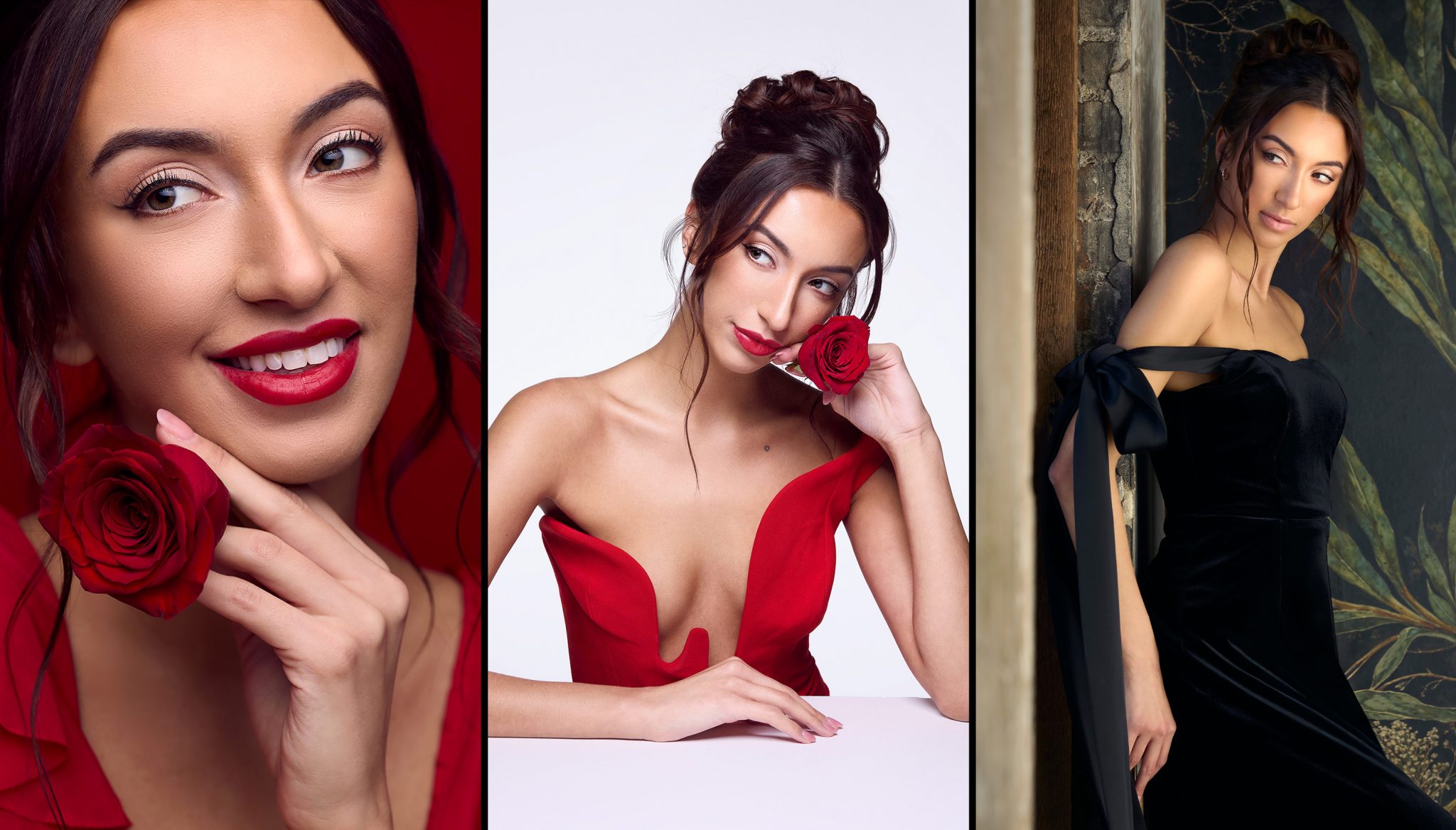
When it comes to photography gear, nothing beats a tool that can do it all. That is exactly why the V-Flat is a favorite for so many creators. It is easily one of the most versatile pieces of equipment you can bring to a shoot. It can add light, take it away, block a distraction, or even become a backdrop in a matter of seconds.
In this guide, Westcott’s own Ashley Boring takes us both in studio and on location for a portrait shoot to show just how adaptable this simple tool can be. She will walk you through five completely different ways to use a V-Flat to shape, change, and control your light.
What is a V-Flat?
If you have never seen one before, a V-Flat is essentially a very large black or white surface used to control and shape light. It’s a staple in the studio, but it’s also incredible on location where you don’t always have control over the environment.
While old-school V-Flats were made from heavy, fragile foam boards that were tough to travel with, Ashley is using the Westcott V-Flat. This modern version is built with a lightweight frame and removable fabric covers. It folds up quickly into a carry case, making it easy to bring that incredible versatility with you to any location.
Bouncing Light for Soft Fill
The most common way to use a V-Flat is for bouncing light. When you use the white side of the fabric, the V-Flat acts like a giant, soft reflector that can turn bright, harsh light into a beautiful glow.
During this part of the shoot, Ashley found a room with gorgeous, but very intense window light. Instead of placing her subject directly in the blinding sun, she moved the model just past the window. Then, she brought in the V-Flat with the white fabric facing the model to catch the window light and bounce it back onto her subject’s face.
This bounced light became the main light source (or key light) for the portrait. It completely replaced the harsh sun with a soft, flattering light and created large, beautiful catchlights in the subject’s eyes.
Lighting Tip: The closer your V-Flat is to your subject, the more light will bounce off it. By pulling the frame in nice and tight, you can easily turn a harsh light source into a soft, wrapping light.
Blocking Unwanted Light
Just as the V-Flat with a white fabric is great for adding light, the V-Flat and the black fabric is perfect for taking light away. This shows the V-Flat’s ability to switch roles completely. Blocking light, often called flagging, is a simple technique when you want to clean up a messy lighting situation and build your own look from scratch.
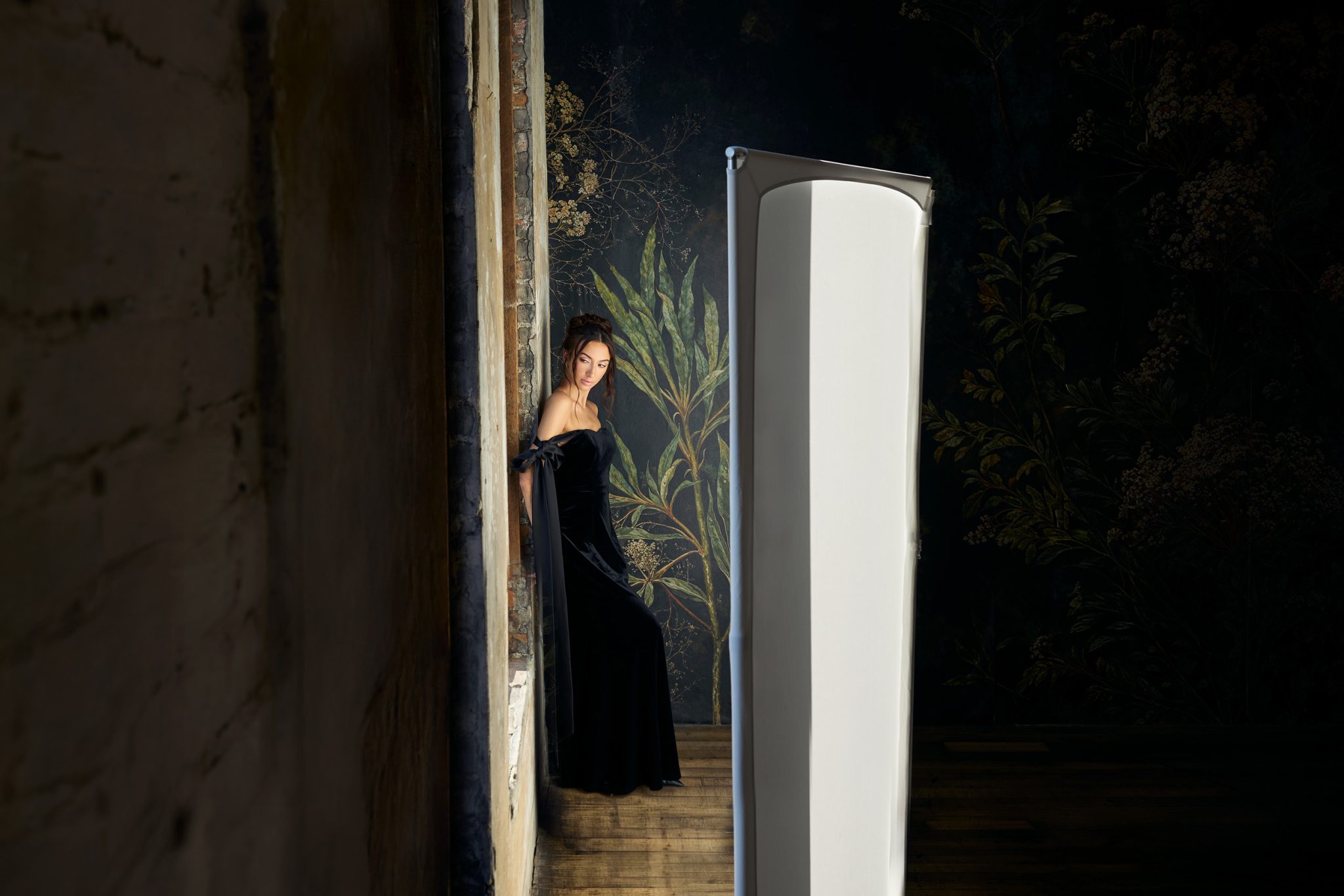
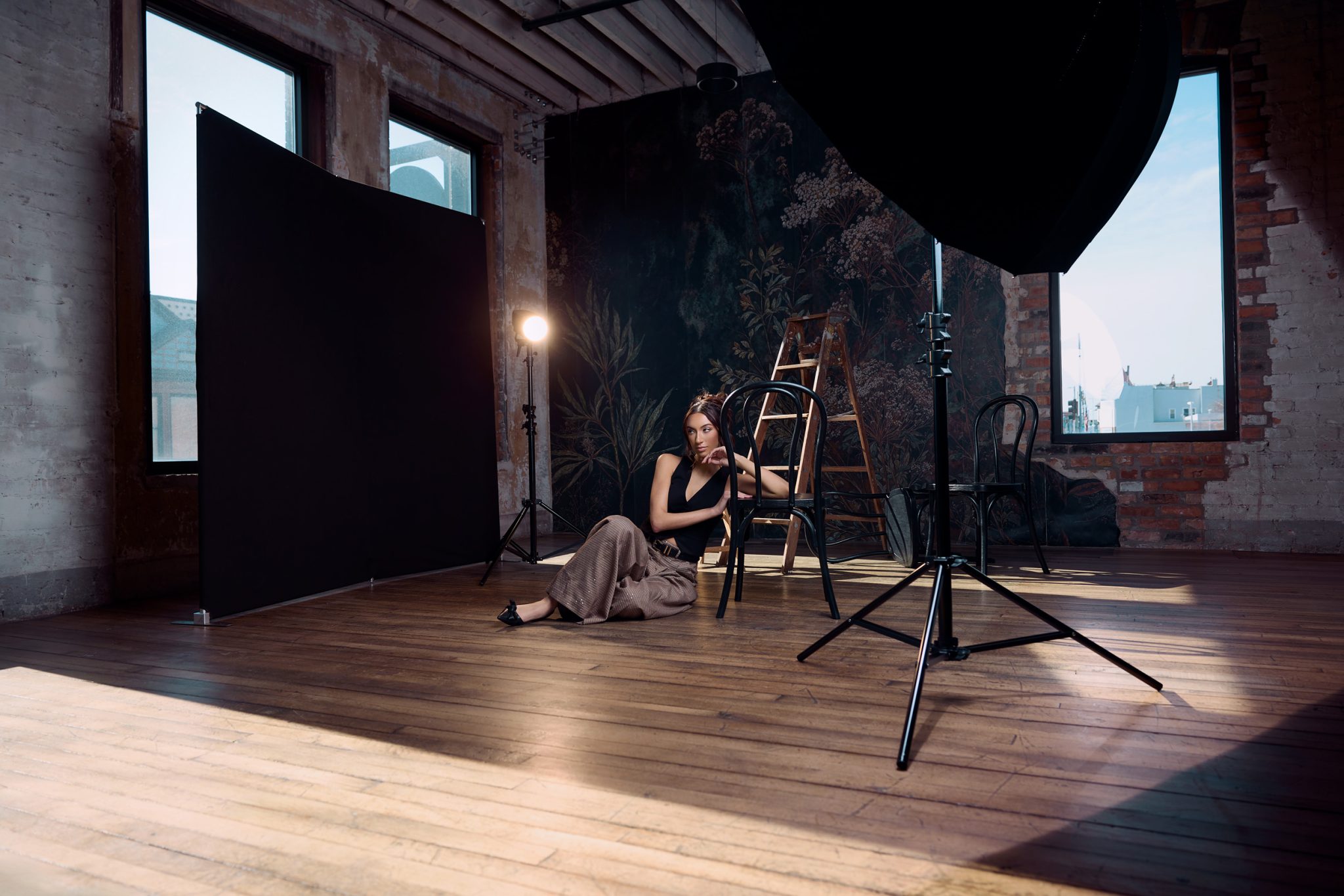
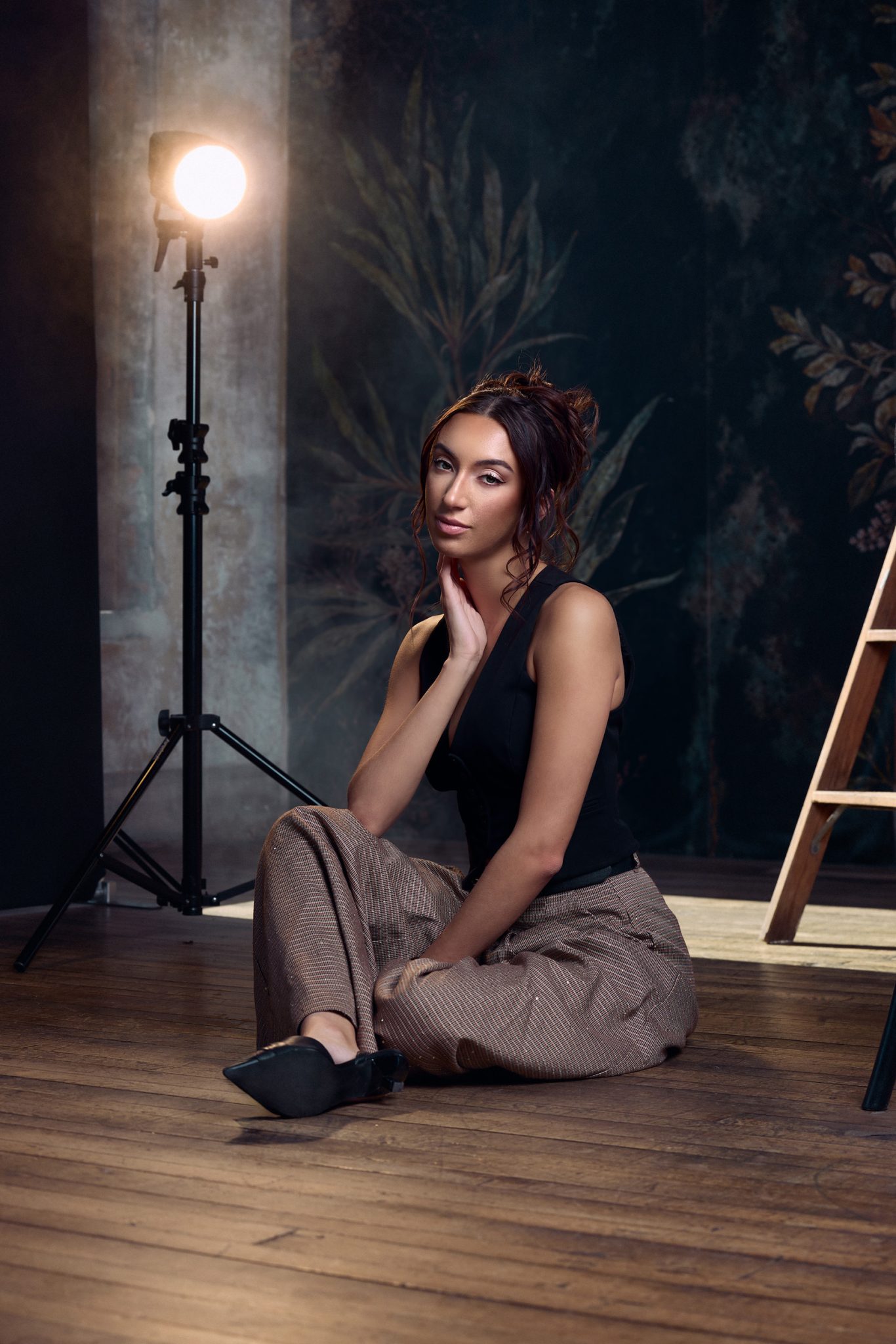
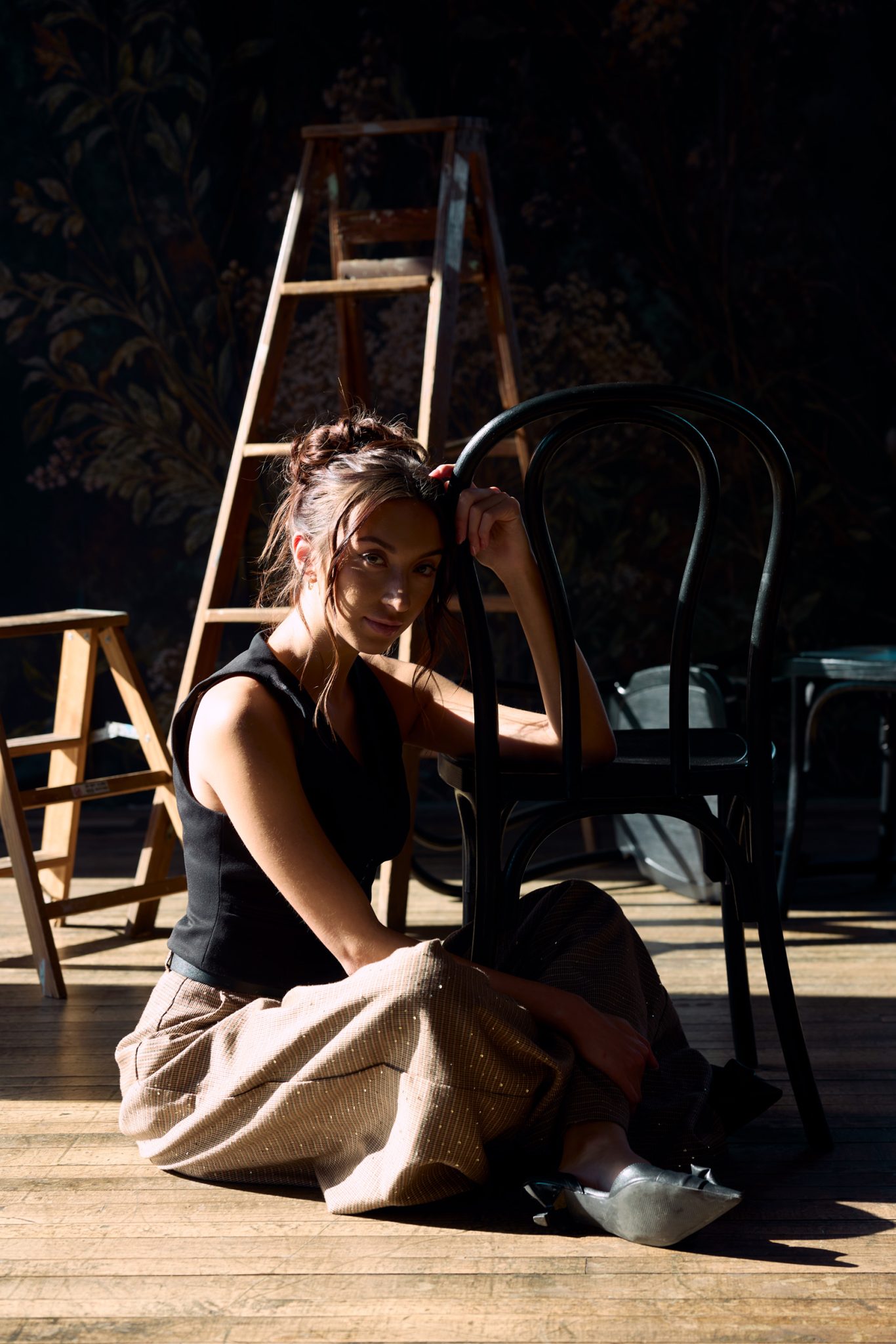
In this setup, the window light was casting bright, distracting patches of light all over the floor and room. While it looked cool for the background, it was hitting the subject’s face at an unflattering angle. To fix this, Ashley used the black fabric on the V-flat to completely block off one of the windows, giving her a clean pocket of shadow to work in.
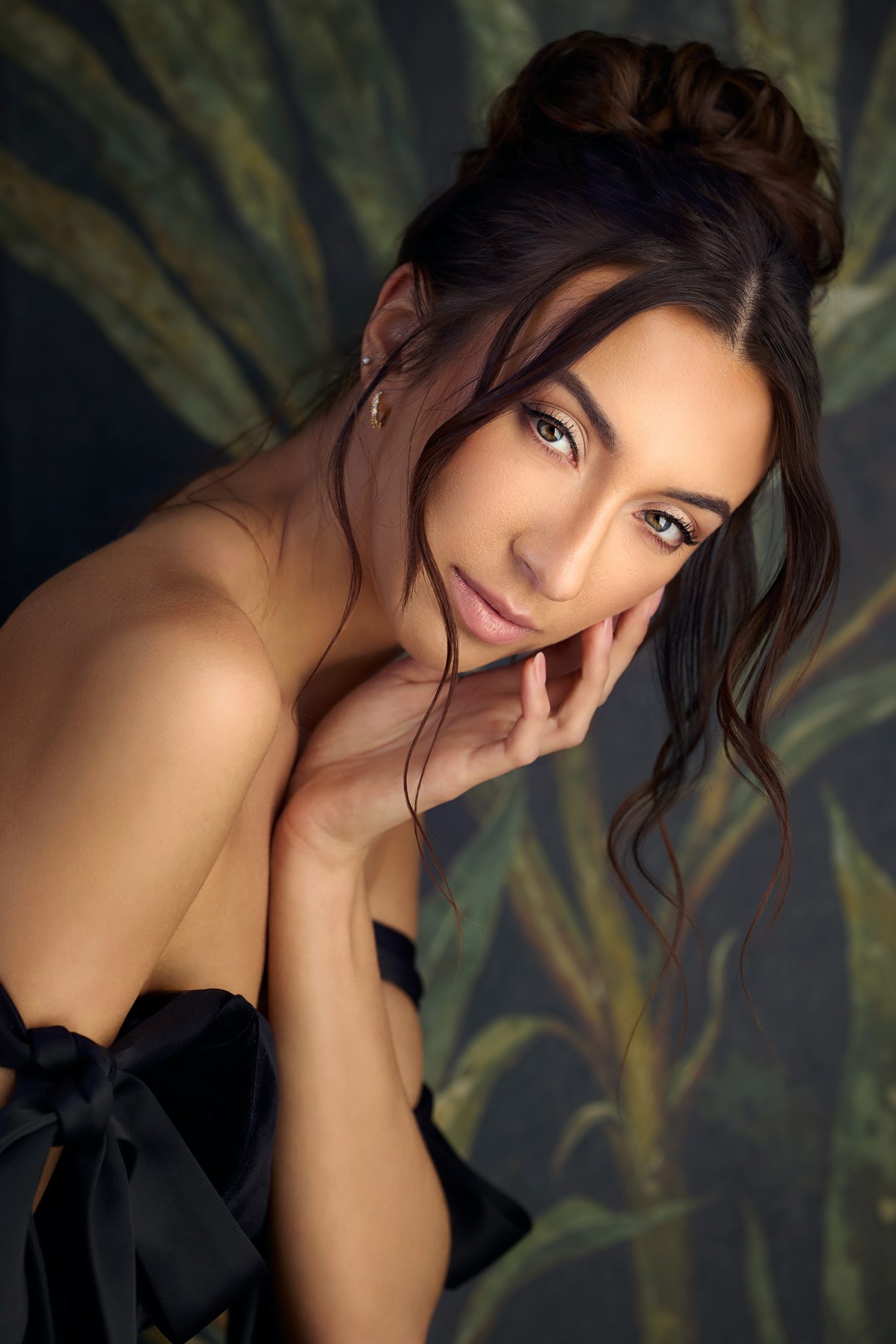
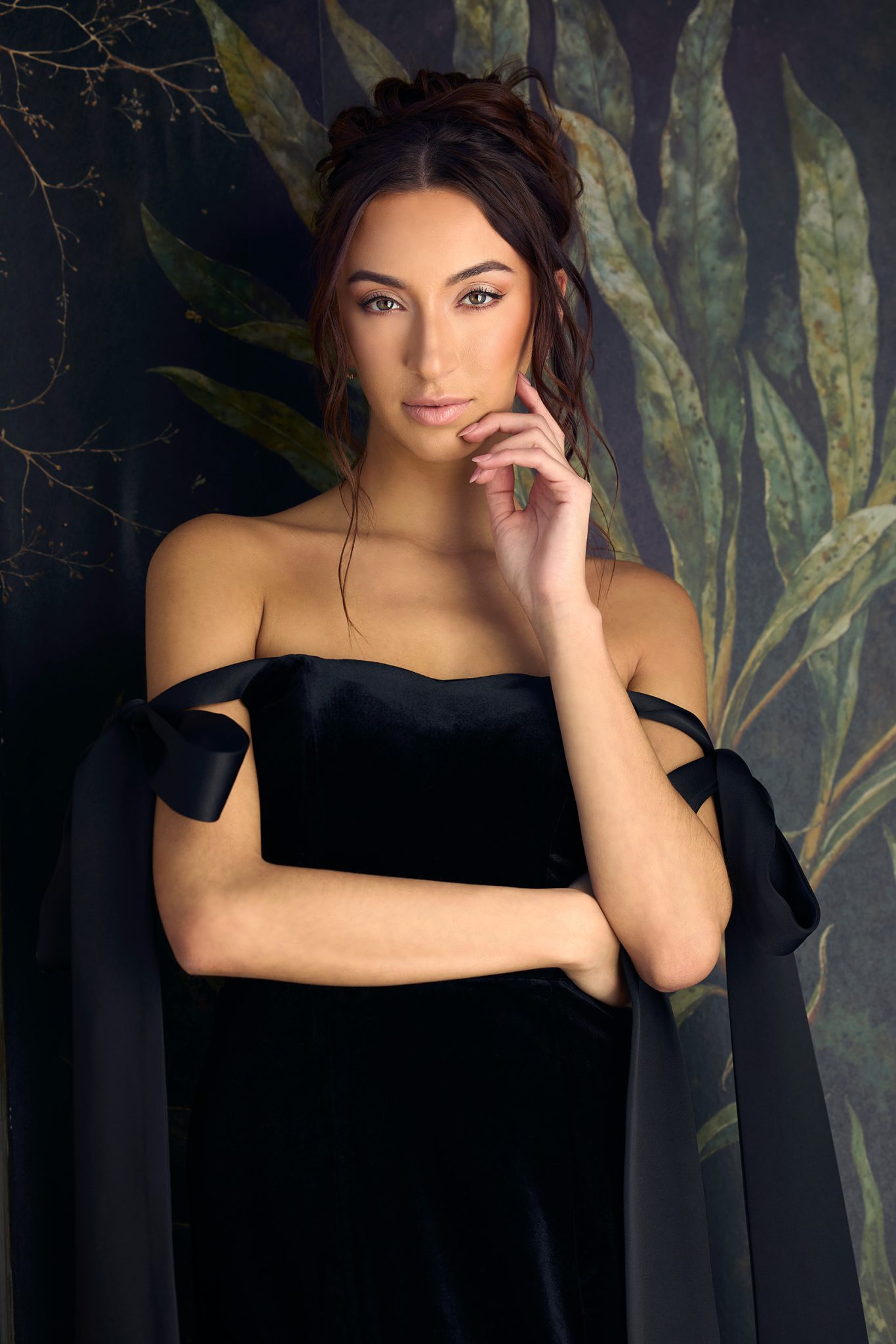
With the harsh light blocked, Ashley brought in her own flashes to take full control. She used the FJ400 II strobe inside a 53-inch Deep Umbrella (White Interior) to create a wide, soft spread of light on her subject. She then placed an FJ800 strobe with a light orange FlexiGel behind the model to add a warm hair light. To finish the look, she used a bit of atmosphere spray to create a subtle fog, adding beautiful depth and a moody vibe to the shot.
Negative Fill for Dramatic Portraits
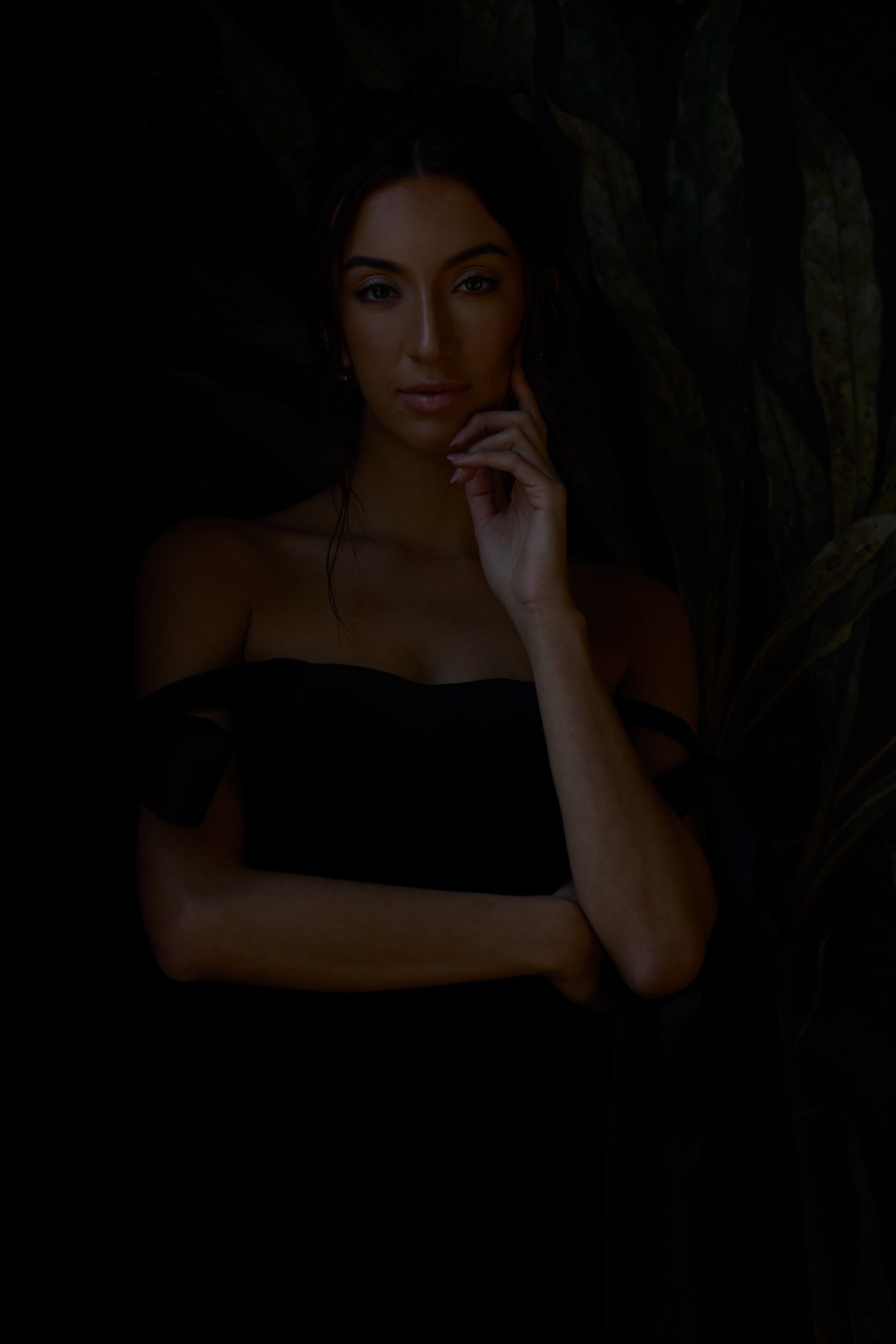
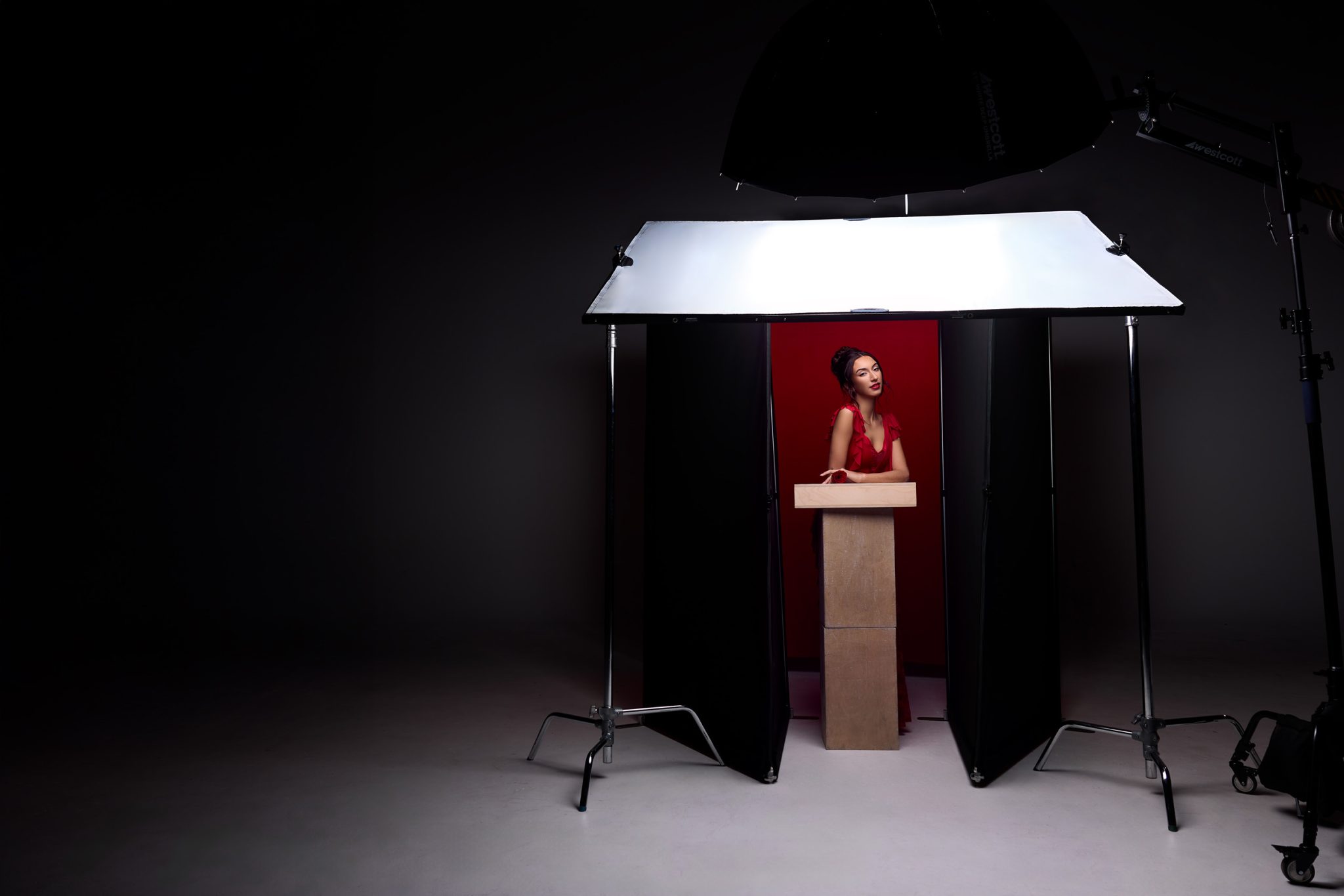
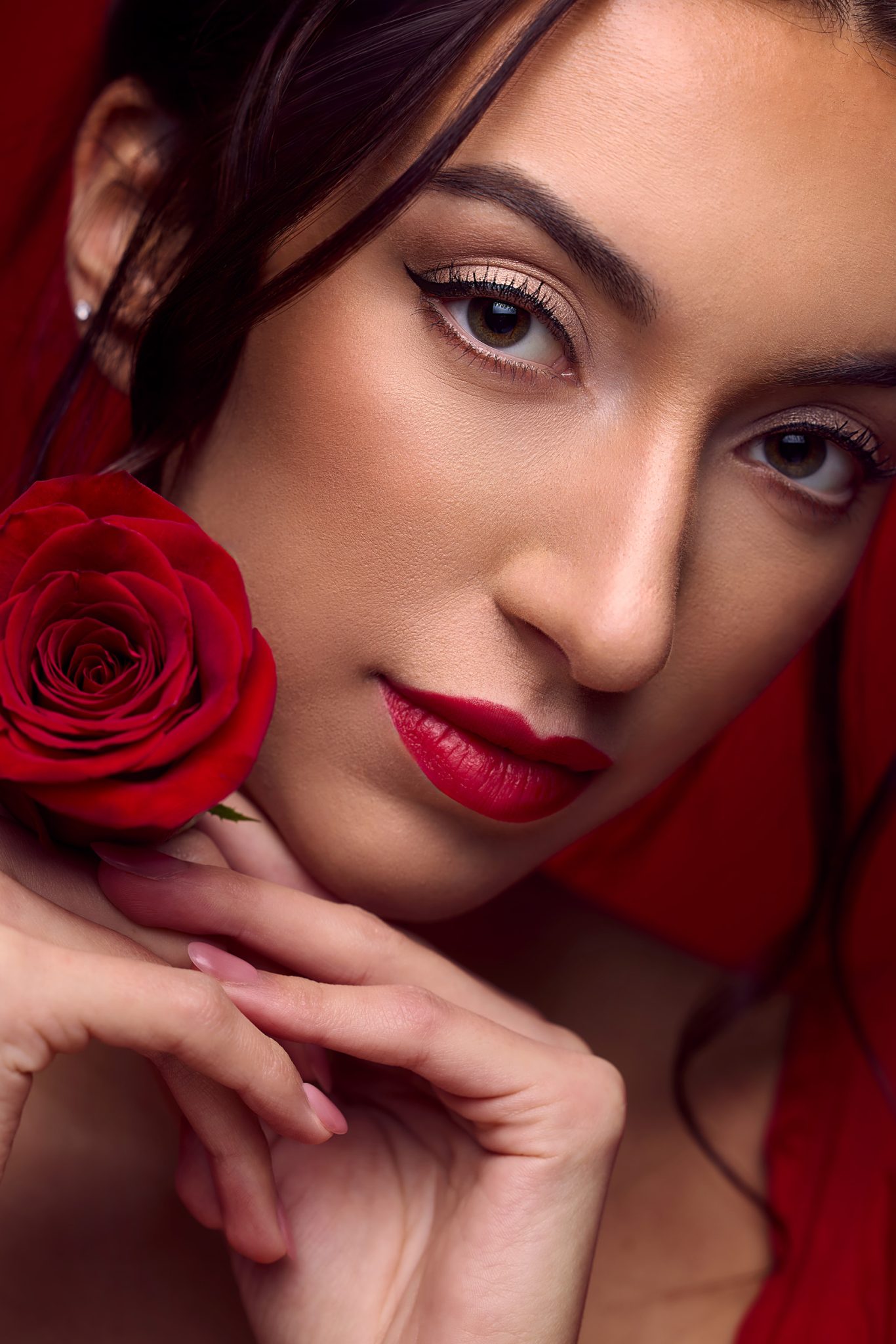
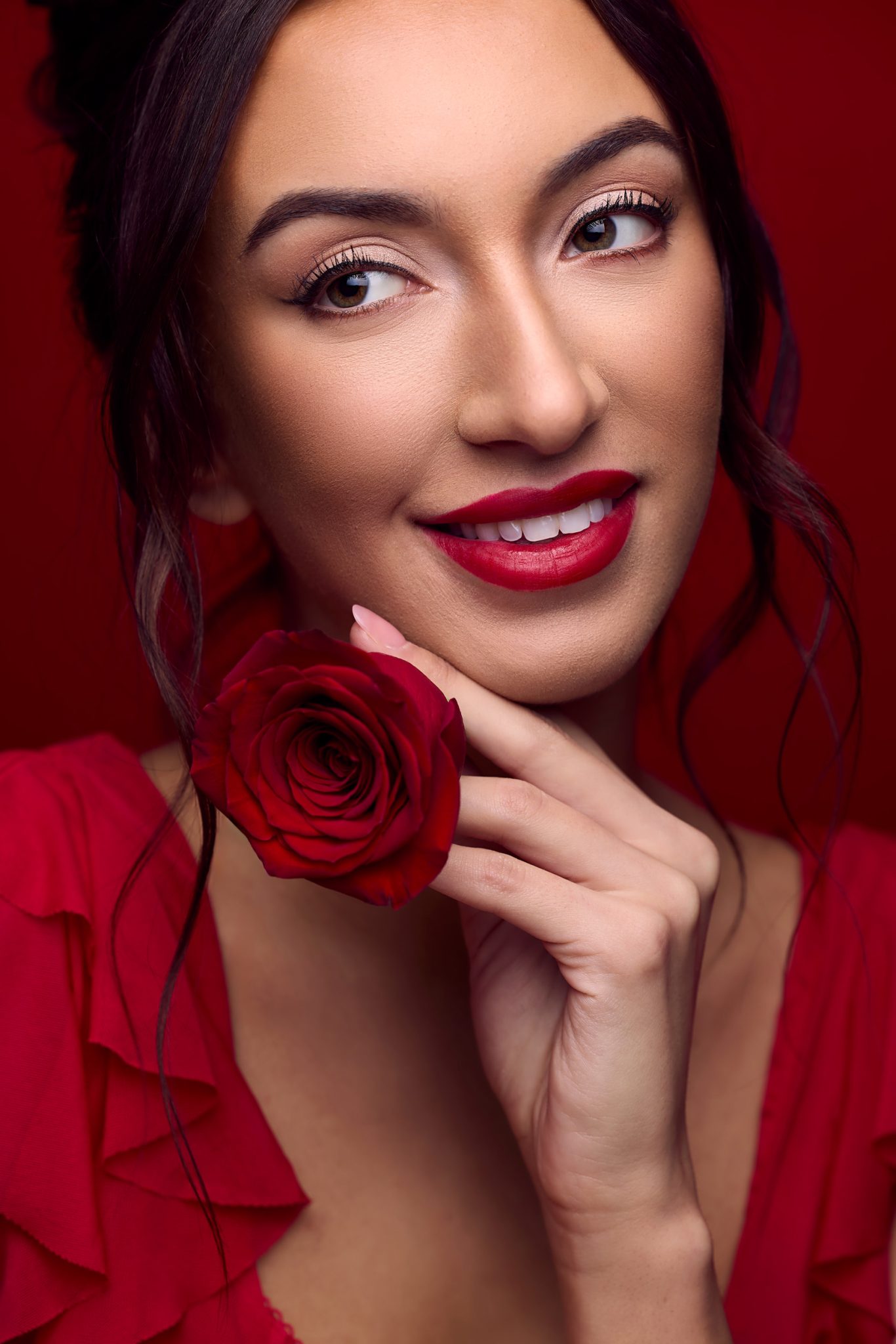
If you want to add drama and mystery to your portraits, negative fill is an incredible technique to try. While the white side reflects light, the black side absorbs it. By placing the black fabric close to your subject, you stop light from bouncing around, and deepens your shadows.
For this look, Ashley set up her main light using an FJ400 II strobe inside the 53-inch Deep Umbrella, pushing the light through a diffusion scrim and frame to make it extra big and soft. On its own, this large light source looked very pretty, but can feel a bit flat.
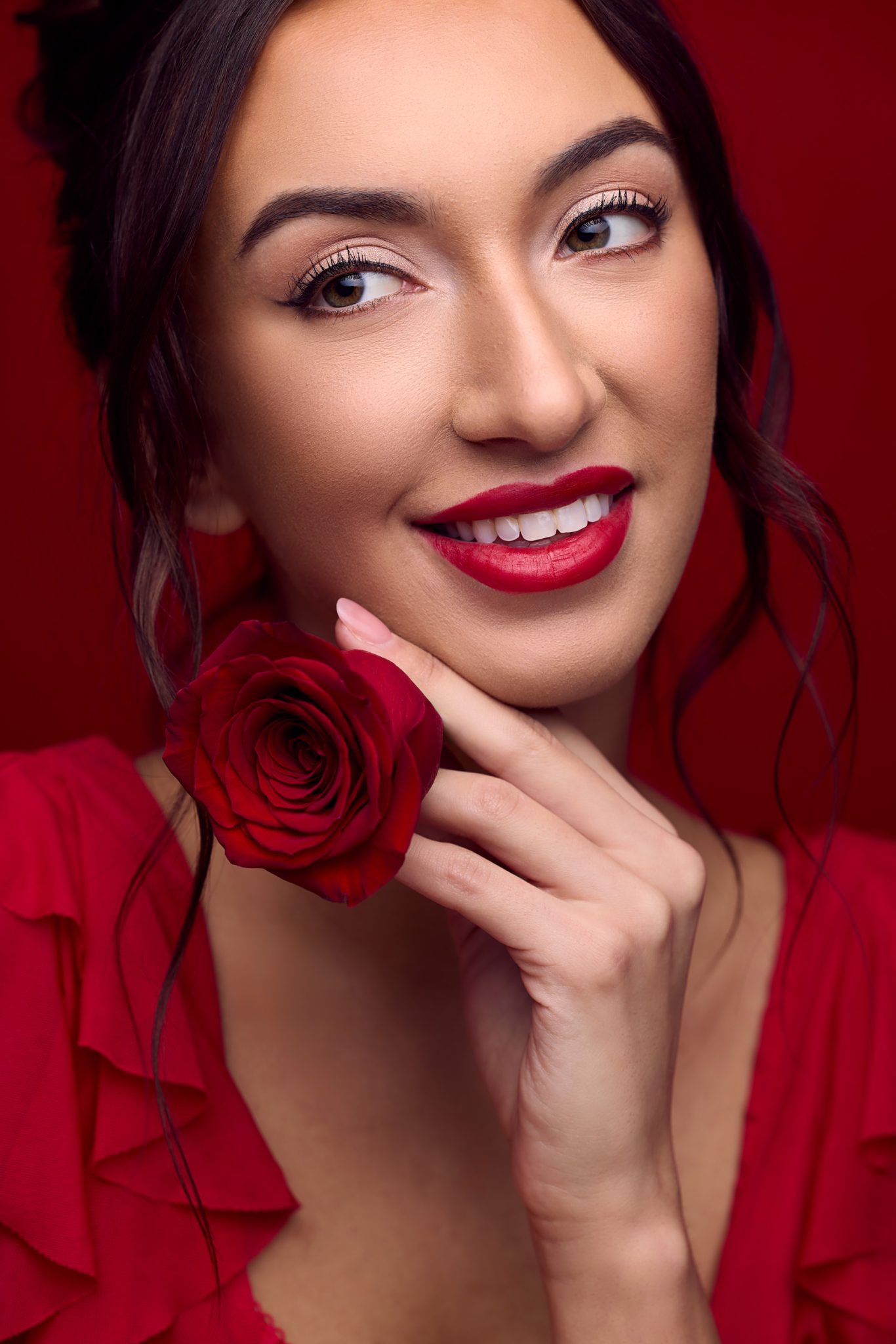
By bringing the black V-Flat in close to the shadows on the sides of the model face, Ashley absorbed any extra light. This instantly deepened the shadows along the cheekbones and jawline. The result is a portrait with much more dimension and contrast, while still keeping the soft, flattering quality of the main light.
Using a V-Flat as an Instant Background
Another amazing benefit of a V-Flat is that it can double as an instant backdrop anywhere you go. Since it gives you a solid black or white surface, you can hide distracting elements in a split second and focus entirely on your subject.
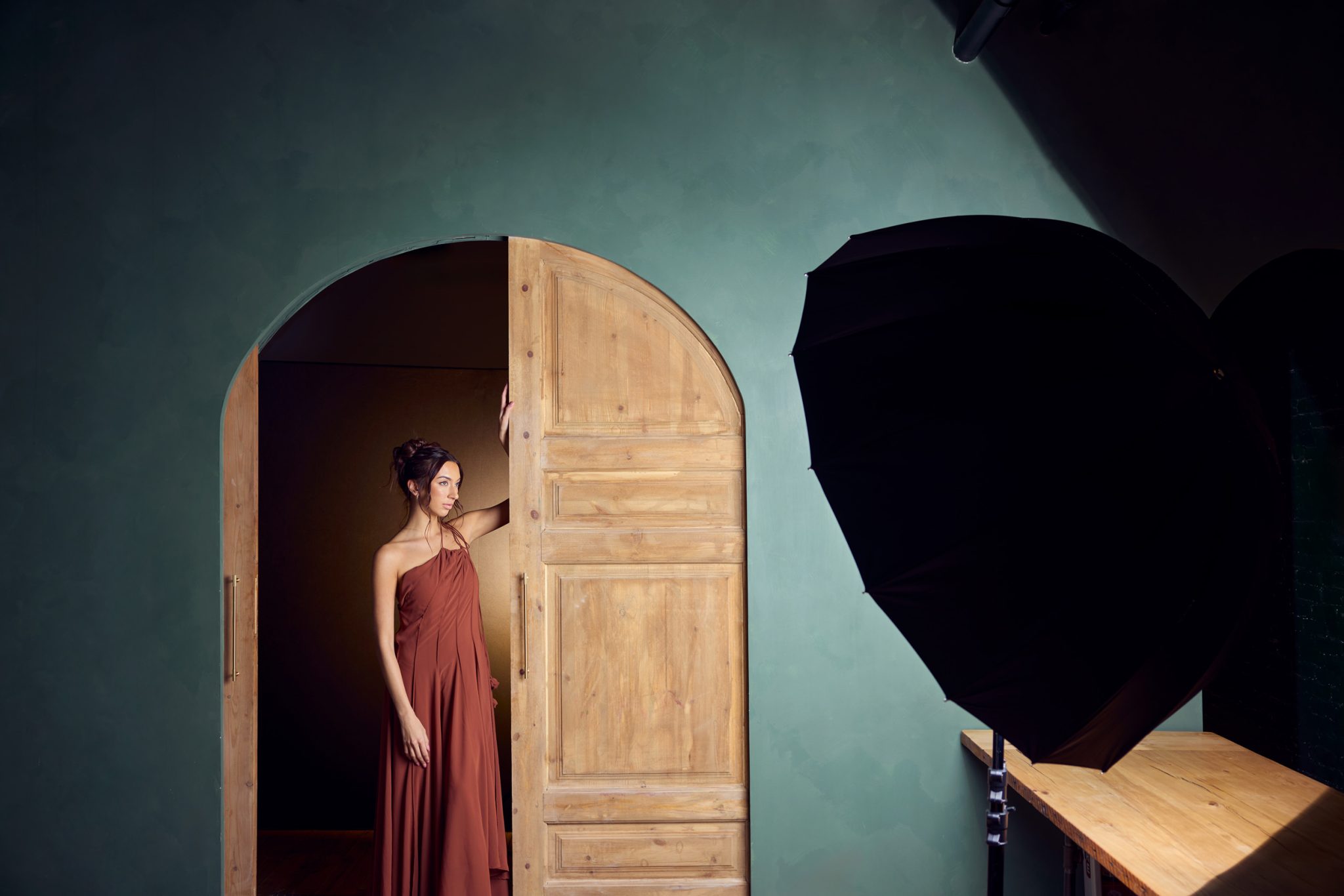
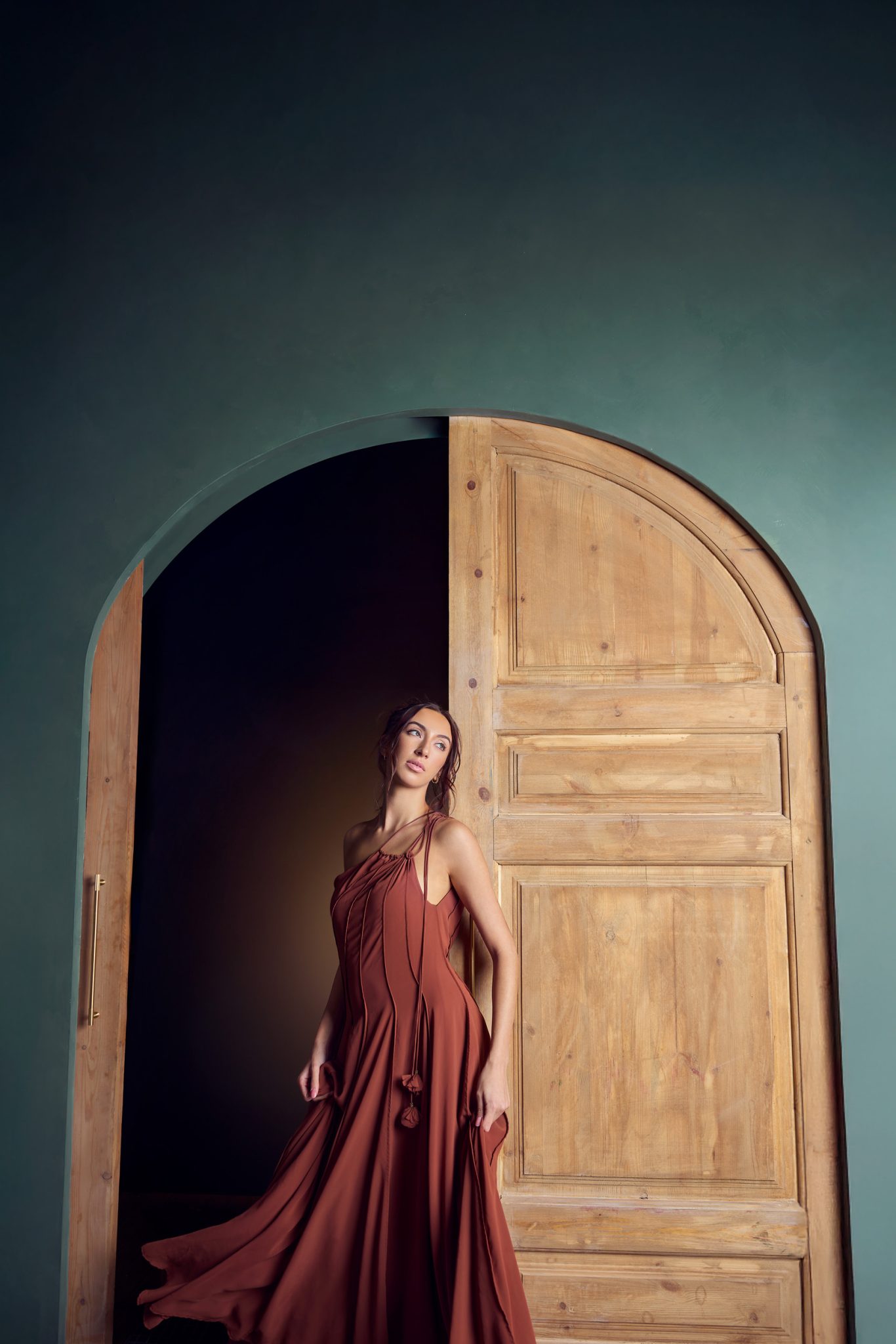
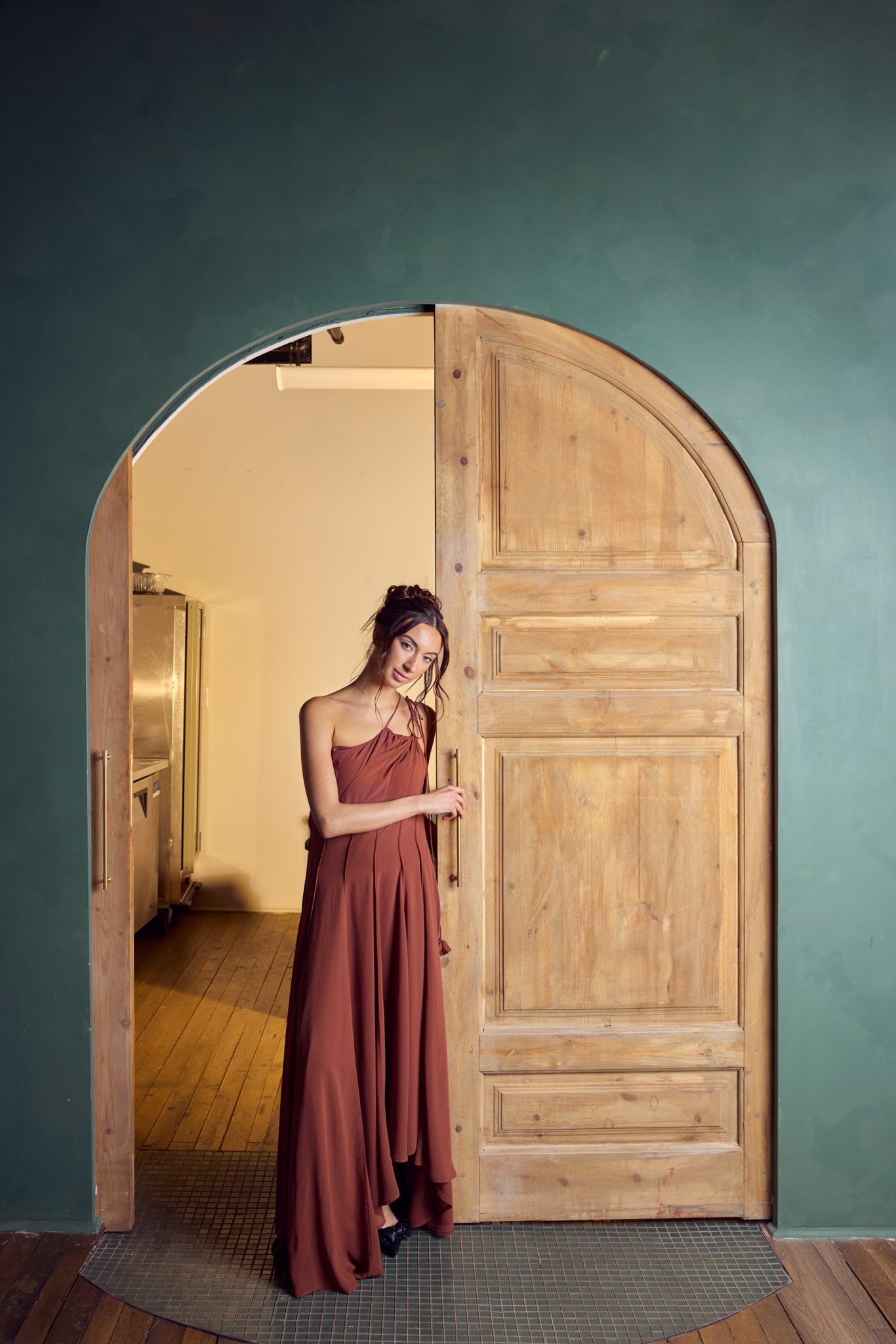
While exploring her location, Ashley found a door with a beautiful color palette that she wanted to use. The only problem was that the room directly behind the door was filled with clutter. To solve this, she placed the V-Flat with the black fabric right behind her subject to block out the clutter and create a clean, professional background.
To keep the black background from looking totally flat, Ashley got creative with her flashes. She used her main FJ400 II to light the model from the front, and then aimed a FlexiGel directly at the black fabric of the V-Flat. This created a subtle, warm color gradient that added depth and tied the portrait perfectly into the colors of the room.
Book Light for Even Background Lighting
The final technique is a twist on a classic studio setup known as a “book light.” Usually, photographers bounce a light into a V-Flat to make a soft light for their subject. Today, Ashley is using this trick to create a perfectly even, bright white background.
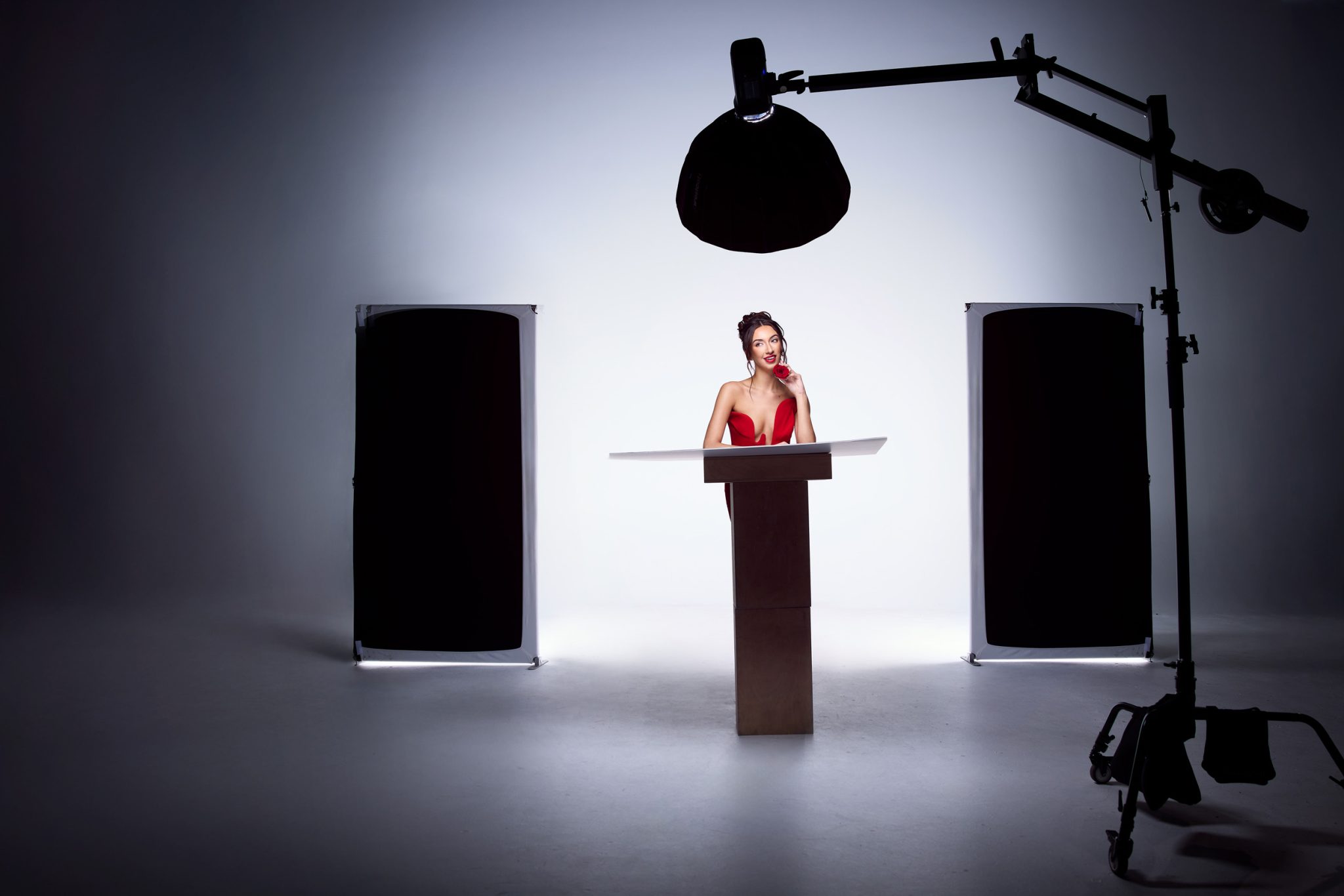
For this setup, Ashley actually used both fabrics on the frame at the same time, showing off the ultimate flexibility of the Westcott V-Flat. She put the black fabric on first to act as a shield, which blocked any stray light from spilling forward onto her subject. Then, she layered the white fabric right on top to give her a clean surface to bounce light off of.
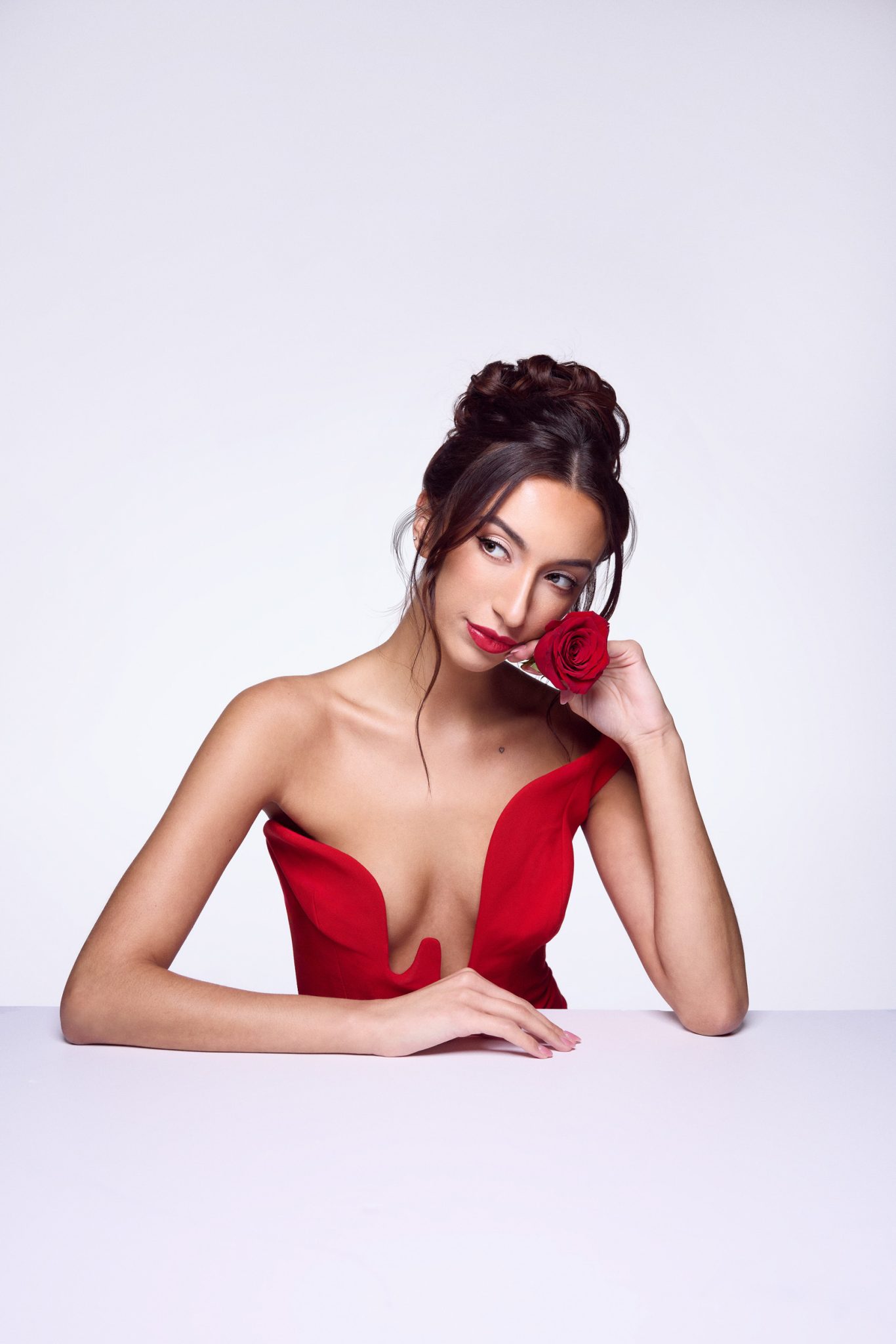
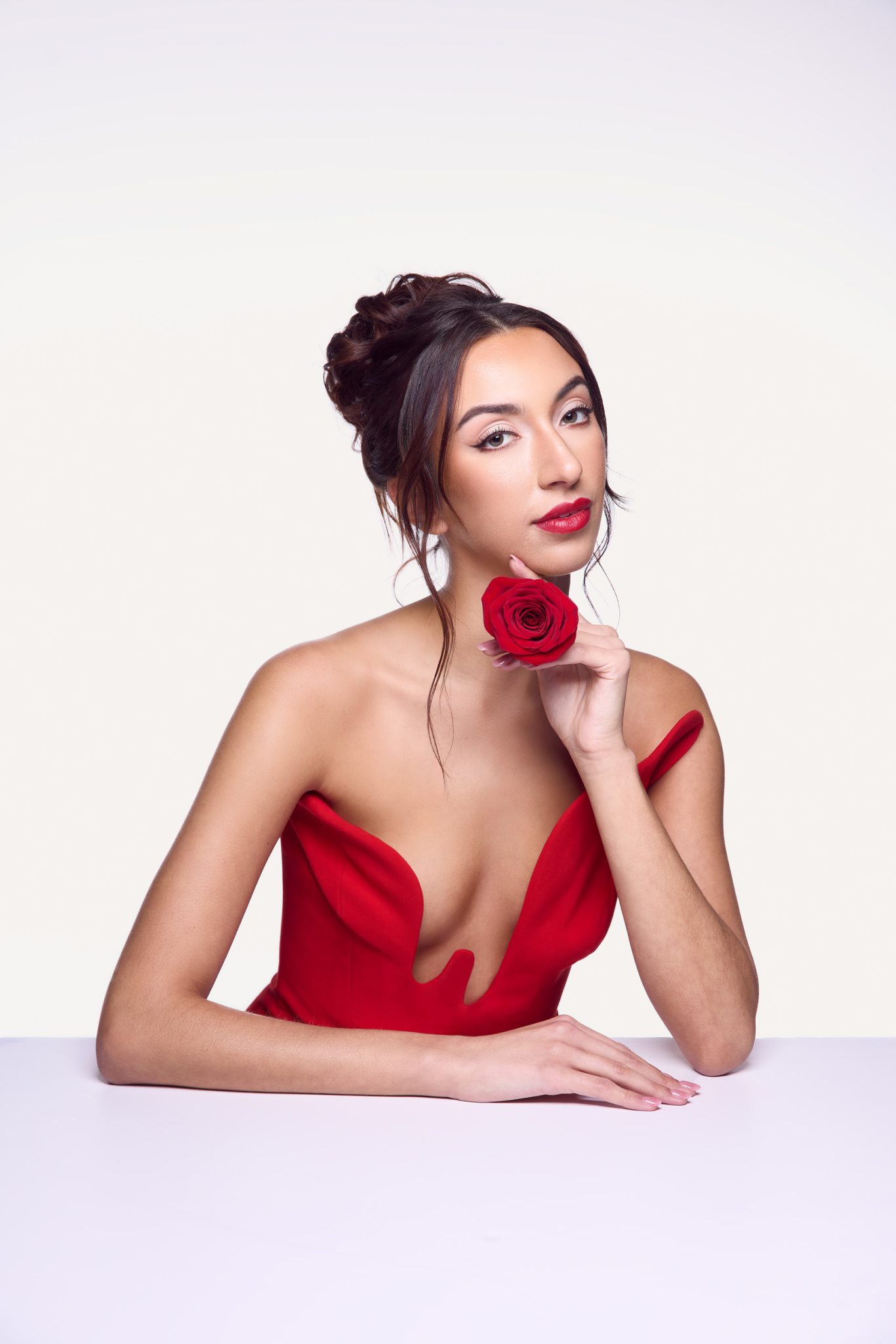
Ashley pointed her background strobes directly into the center of the white fabric. The light bounced off the V-Flat and spread out perfectly from top to bottom, lighting the white background completely evenly. For her subject, she used an FJ400 II paired with a 24-inch Rapid Box Switch Beauty Dish to get a controlled, directional light. The V-Flat did double duty here, it created a beautifully soft background light while completely blocking any unwanted light from spilling onto the model.
Main Takeaways
Ashley showed us that the V-Flat is easily one of the most useful and versatile tools you can pair with your strobes. It gives you the power to bounce light, block windows, deepen shadows, hide a messy background, or create an even book light, helping you get the exact look you want.
The best way to get comfortable with these techniques is to go out, turn on your lights, and start experimenting with your own gear!
Want to see more of Ashley’s work?
Check out 5 Creative Beauty Lighting Techniques, where Ashley shows how different light modifiers can completely shift the mood of a photo to get everything from a natural look to bold and experimental art.


You must be logged in to post a comment.