
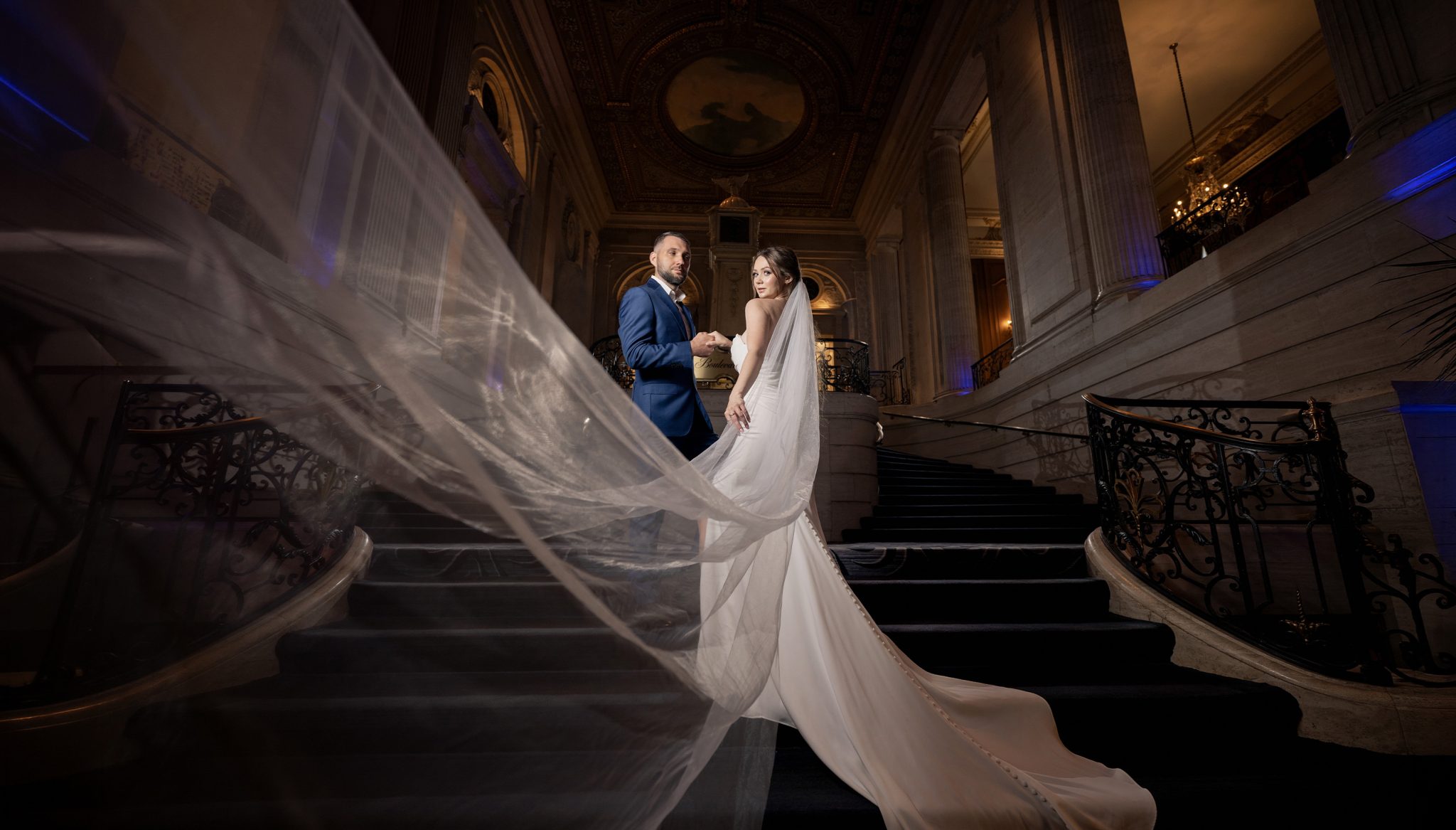
Stepping into a massive, ornate venue can leave any wedding photographer feeling both inspired and intimidated. Towering ceilings, grand staircases, and glittering chandeliers create an unforgettable atmosphere, but they also threaten to swallow your couple whole. How do you showcase the space while keeping your couple at the center of the image?
Wedding photographer Lauren Ashley knows that the secret lies in off-camera lighting. Using compact Westcott FJ100 Strobes, she shares setups that help couples stand out while preserving the atmosphere of the room.
Whether you’re working with one light or three, start with these posing and lighting fundamentals.
Essential Posing and Off-Camera Lighting Tips for Weddings
Before we get into the lighting setups, here are a few simple tips to help your couple look their best and stand out in a grand space.
- Ask about their preferred side. Ask your clients if they have a favorite side of their face. If they don’t know, default to their left side. The left side of the face usually expresses more genuine feeling in photos.
- Place the main light with intention. When setting up your main light, aim it right toward the bride’s nose to fill her features smoothly. Men can typically handle more dramatic shadows across their faces. If you are photographing a same-sex couple, be sure to mix up who receives the primary light source throughout the shoot to keep the gallery balanced.
- Create natural points of contact. Encourage your couple to connect through their hands, hips, or shoulders. These small touches help poses feel intimate and reduce awkward gaps. Keep the contact comfortable rather than forcing every point to touch.
- Match their gaze to the composition. For wide portraits that showcase the venue, ask the couple to look at each other or into the distance. This makes the photo feel like a candid, intimate moment. Save direct-to-camera poses for medium and close-up portraits, where their expressions are easier to see.
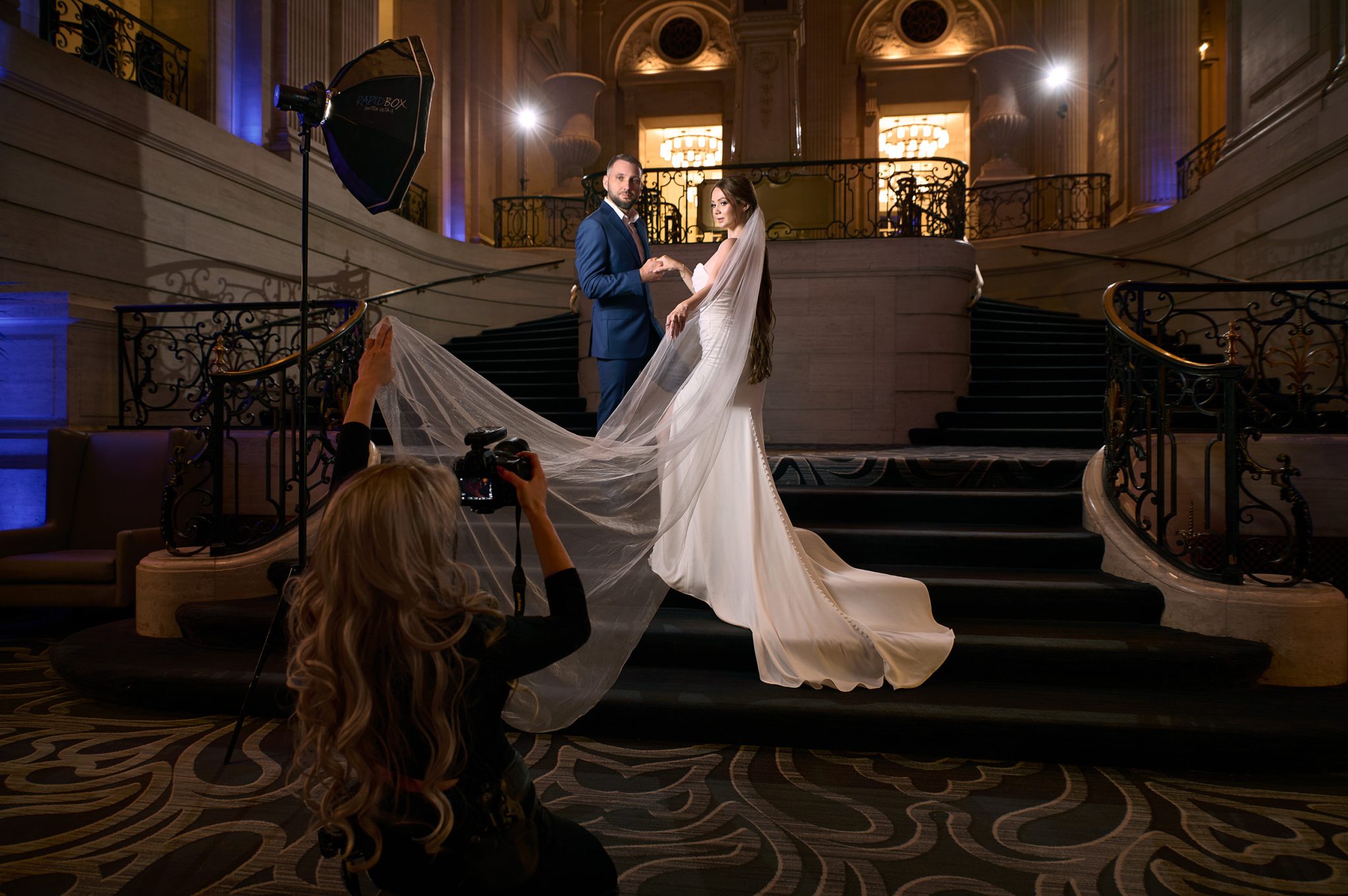
- Style the dress and veil. Spread out the train or veil when the setting allows. The fabric can add shape, movement, and drama.
- Establish the room’s exposure, then add flash. To create a dark, moody vibe, lower your ambient exposure first, then use your flash to make the couple pop. Set your strobe to mid-power (around level 5 or 6). This will help your gear last much longer throughout a busy wedding day.
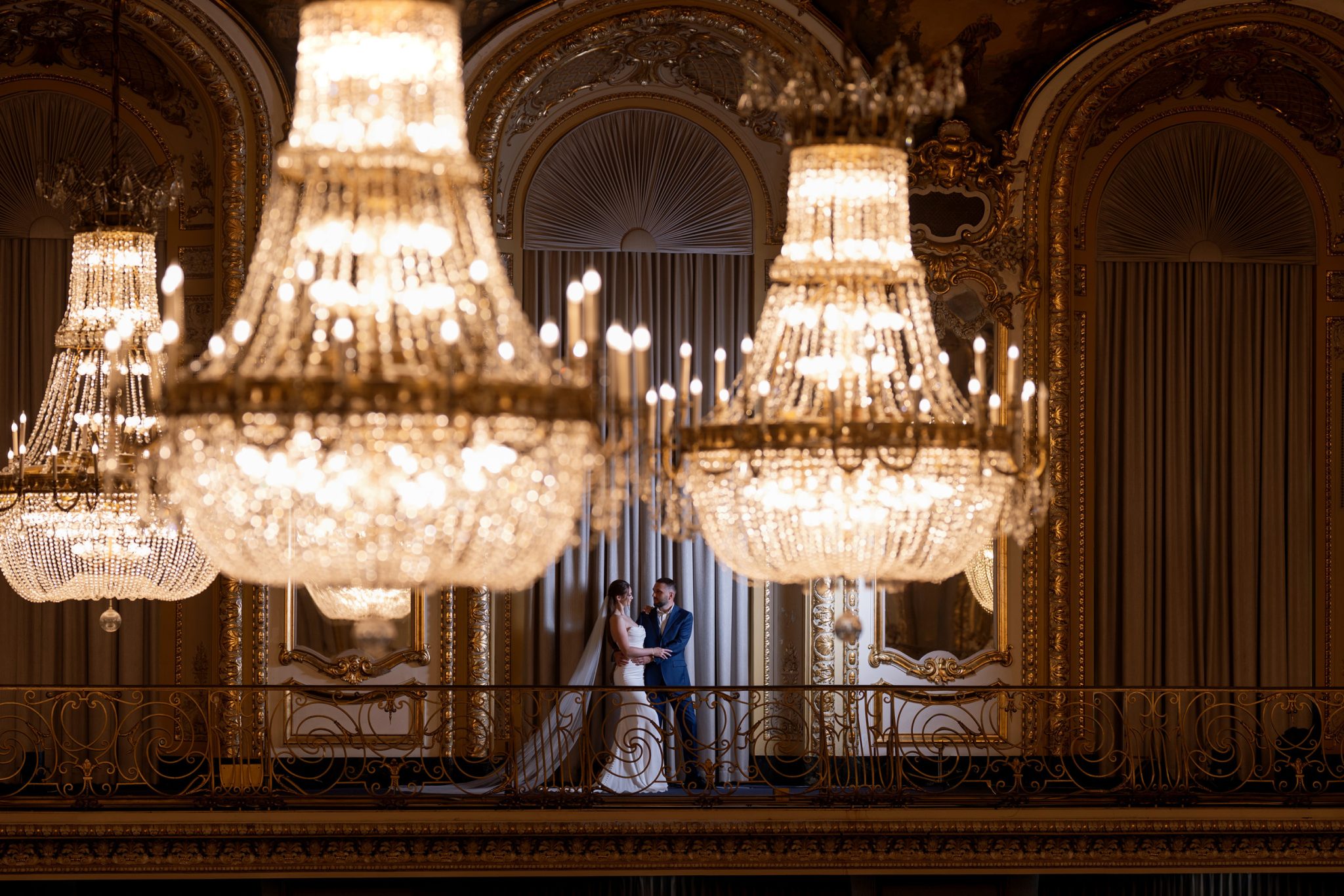
Balcony Lighting: One FJ100 Strobe and an Octa Softbox
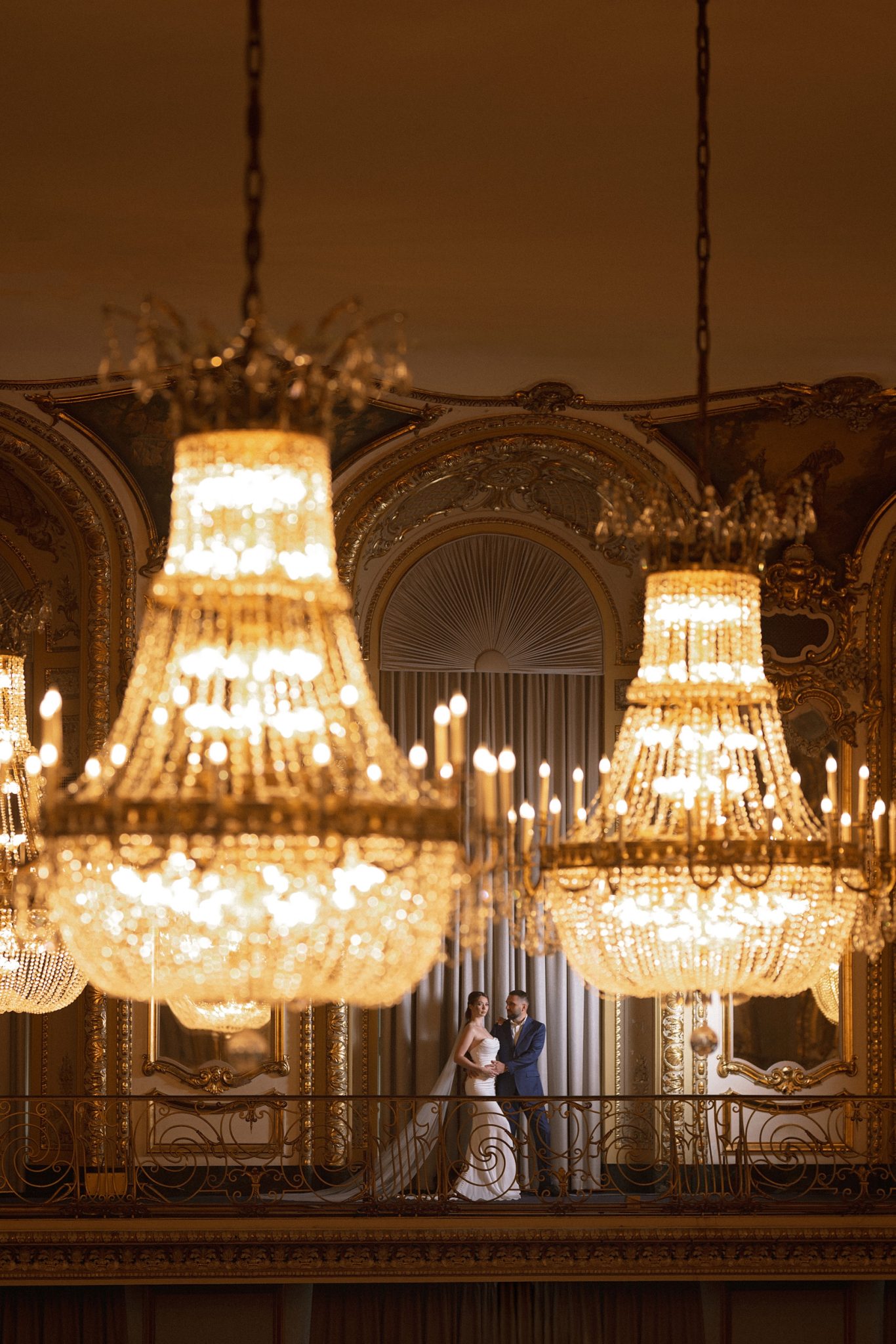
For the first setup, Lauren takes the couple to a balcony overlooking the ballroom. Since the goal is to capture the grandness of the space without blowing out the ambient room lights, she lowers her camera’s ISO all the way down to 100. This creates a rich, moody background. She then brings in a single Westcott FJ100 Strobe paired with a Rapid Box Switch Octa-S as the main light.
With the couple properly posed, the off-camera flash brightens them up instantly, ensuring they stand out perfectly against the dark background. During this setup, Lauren also recommends playing around with focal lengths and orientations. While a 135mm lens might give you a beautiful tight shot, switching to a 24-70mm lens will really show off the sweeping architecture of the room.
Mirror Portraits: Framing Reflections and Hiding the Light
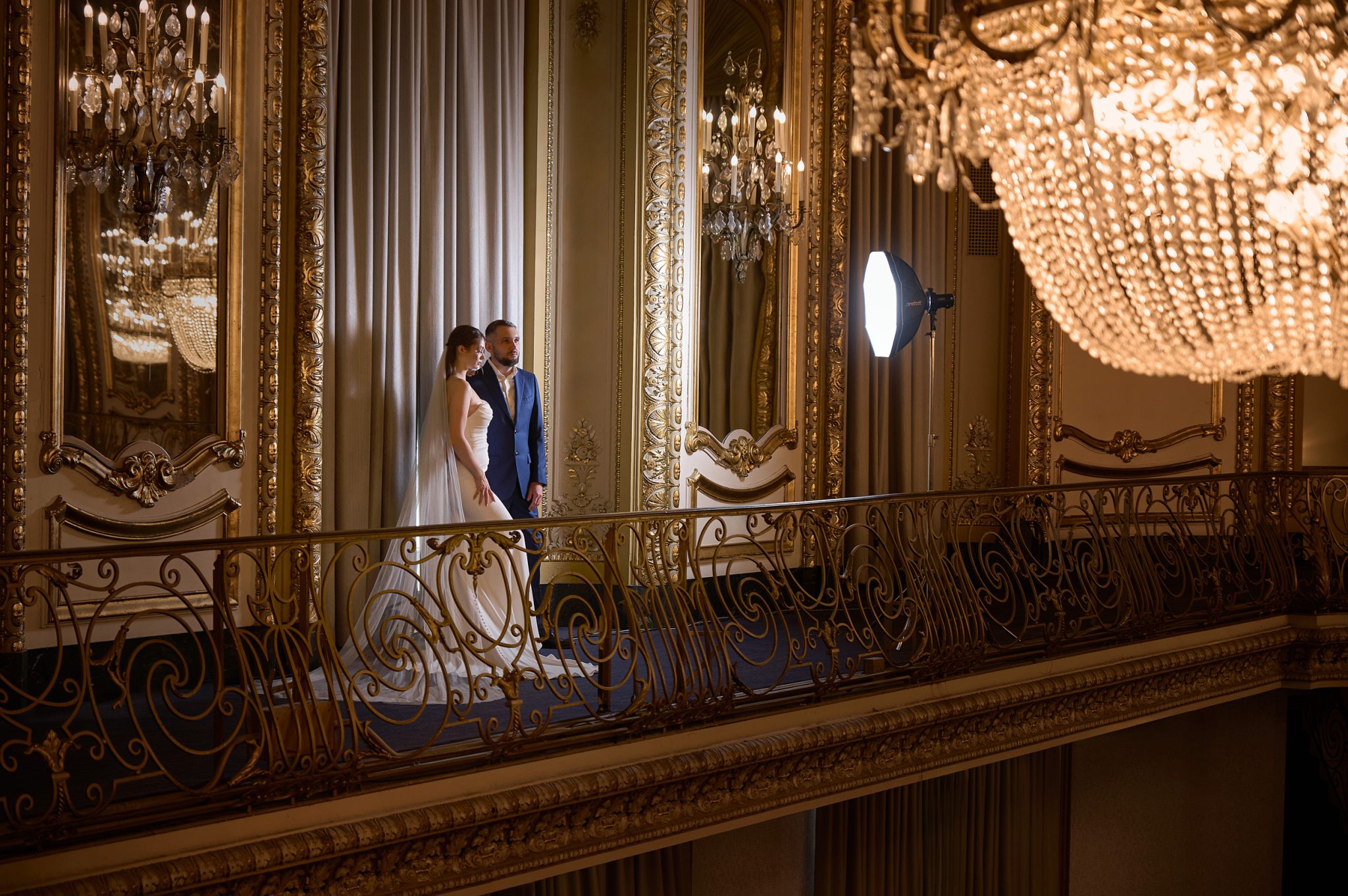
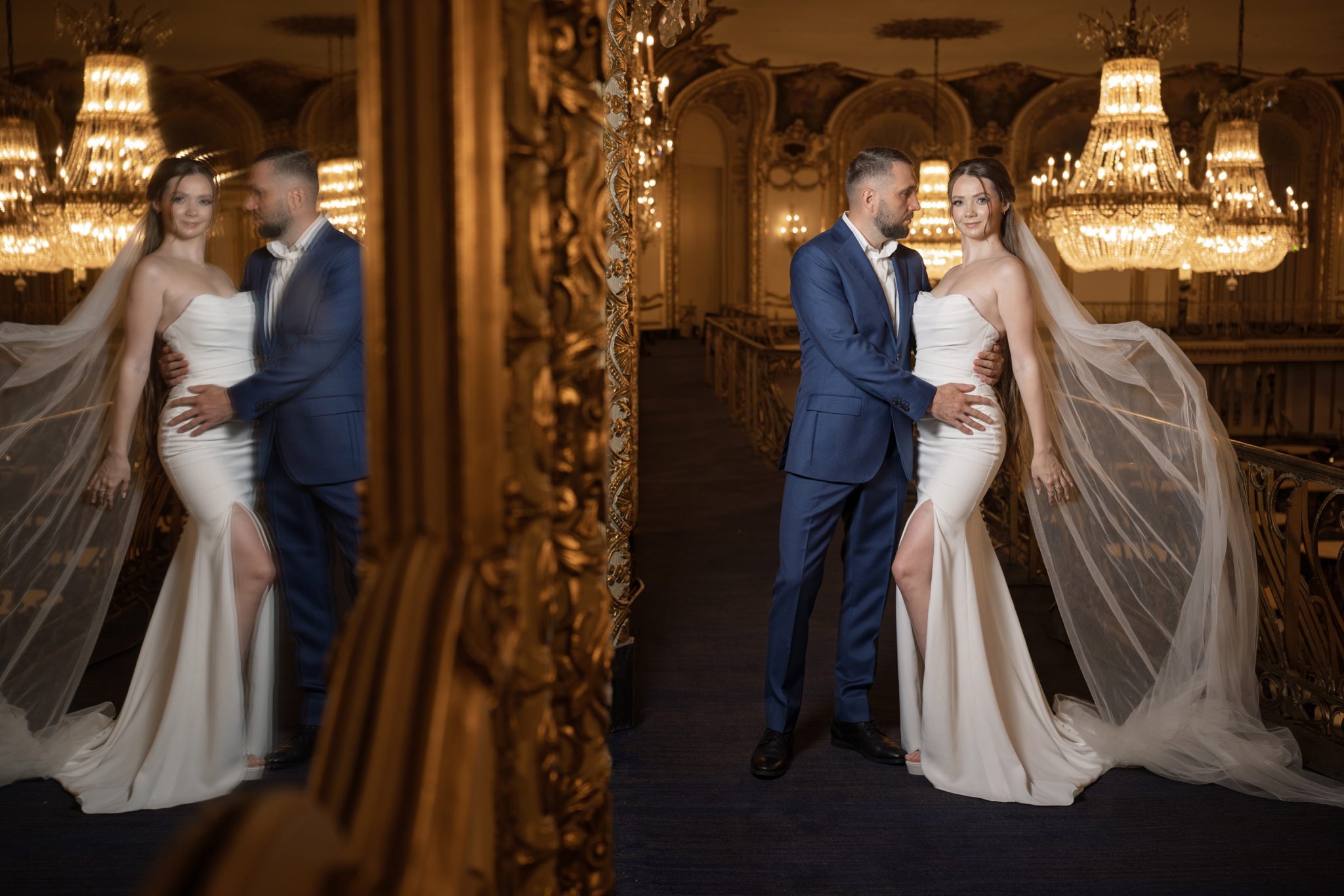
Grand venues are full of reflective surfaces and long architectural lines that are perfect for creative framing. When Lauren spots a great mirror, she uses it to showcase both the couple and the grand lighting fixtures of the room. Rather than getting stuck in a cramped corner, she moves the couple into a longer hallway where the mirrors can reflect the full scale of the space.
The key is finding a camera angle that keeps the lighting equipment out of the reflection. Position the light stand behind a pillar, wall, or doorway while maintaining a clear path for the light to reach the couple. Once you nail the shot, quickly move on to the next location to get as much variety as possible.
Using 3 Strobes for Depth and Separation
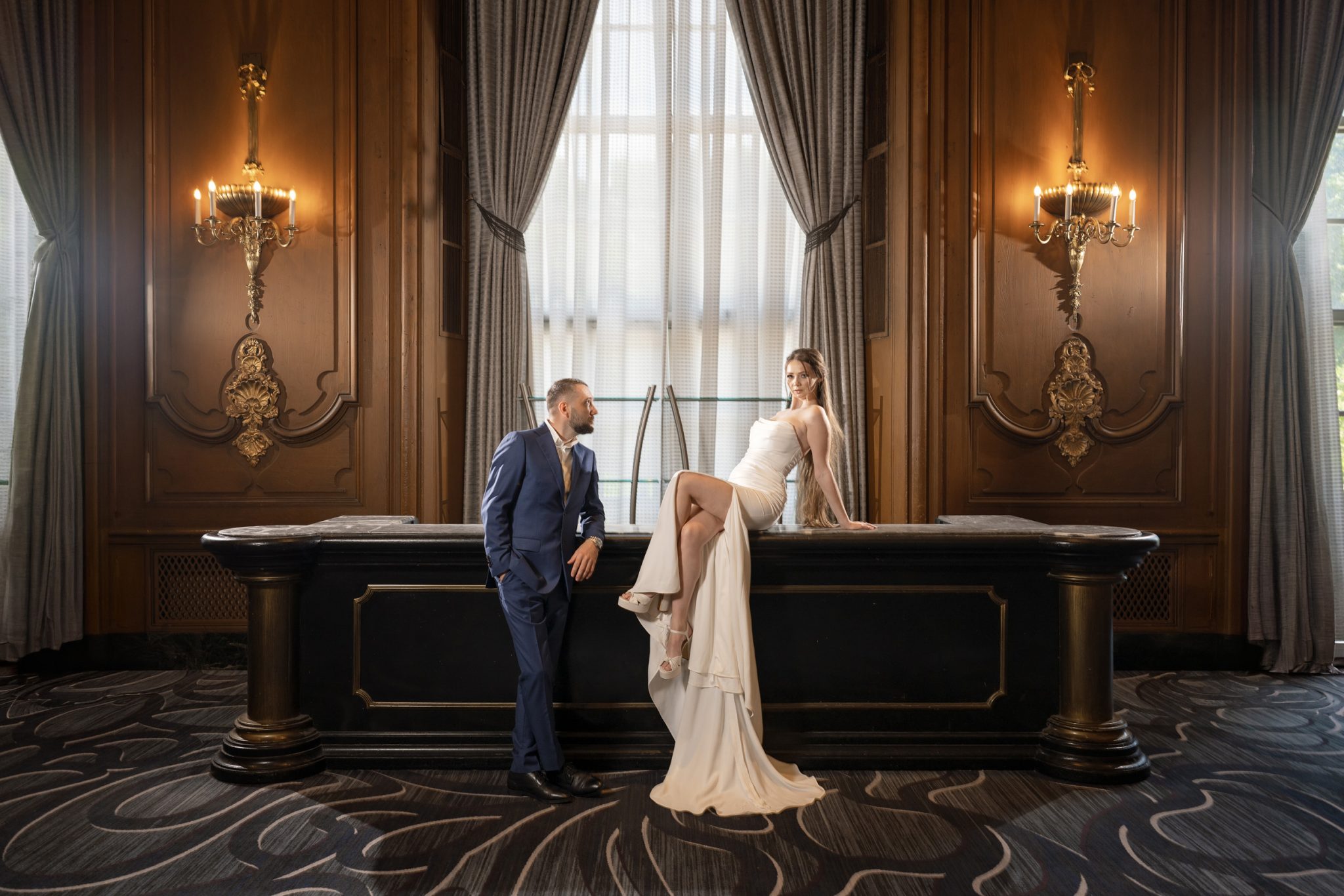
Off-camera lighting gives you the freedom to shoot anywhere, even in dark spaces where natural light is either unflattering or unavailable. To add depth and separation, Lauren changes from a single light to a three-point lighting setup. She places two bare Westcott FJ100 strobes behind the couple aimed toward their backs, and uses a third FJ100 with the Octa-S in front as her main light. The bare backlights create a crisp rim of light that separates the couple from the background, while the main light fills their faces.
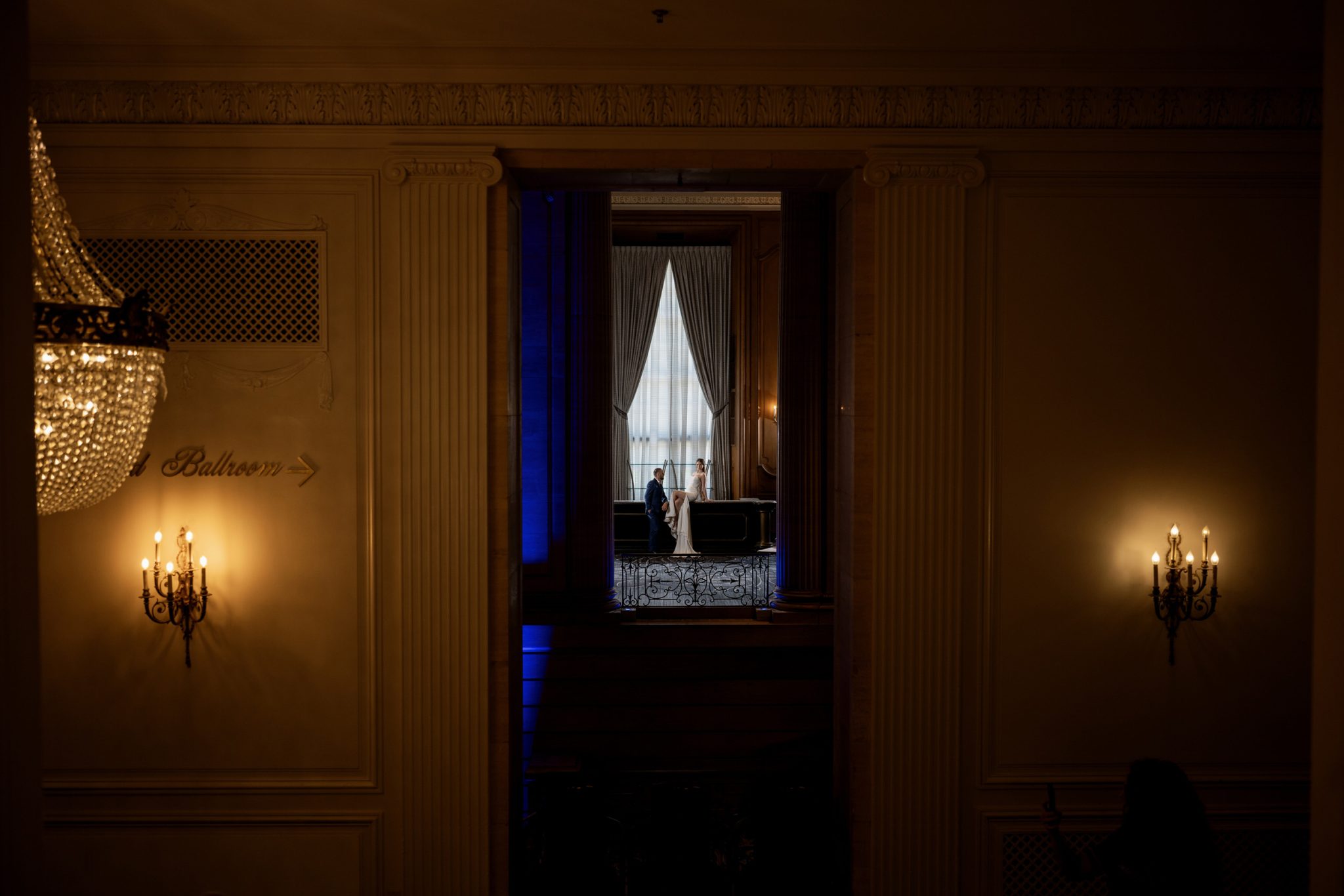
To give your portraits a sense of depth, use foreground elements like columns and doorways. Shoot through small gaps in the architecture and mix up your angles, shoot low, shoot high, zoom in tight, and pull back wide. If you step back to shoot through columns and notice the light feels flat or dark around the couple’s eyes, your key light is likely too far away. Simply have an assistant move the main softbox much closer to the couple and tilt it down toward their faces to create beautiful catchlights in their eyes.
Grand Staircase: Wide-Angle Lens and Multi-Light Setup
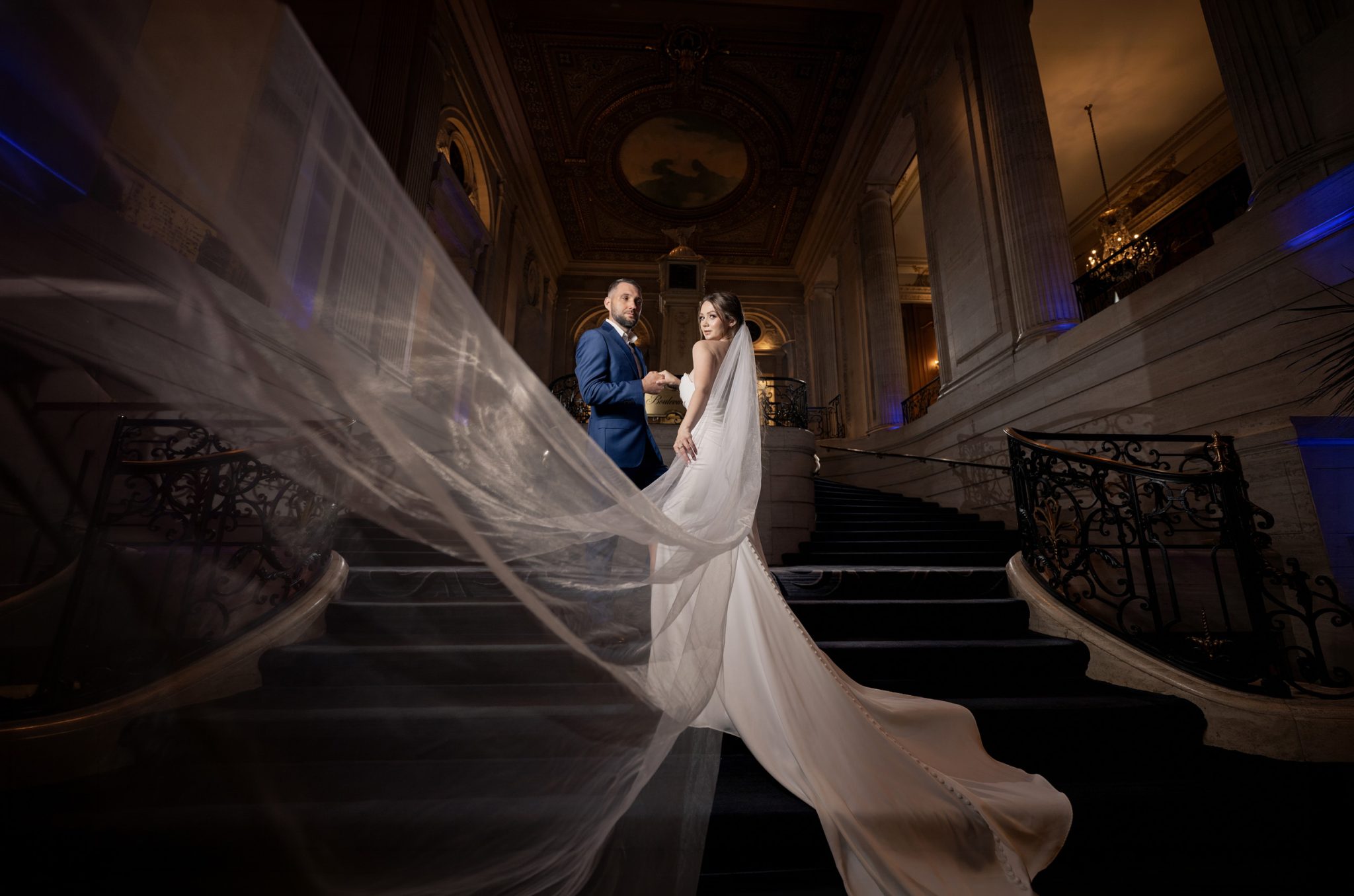
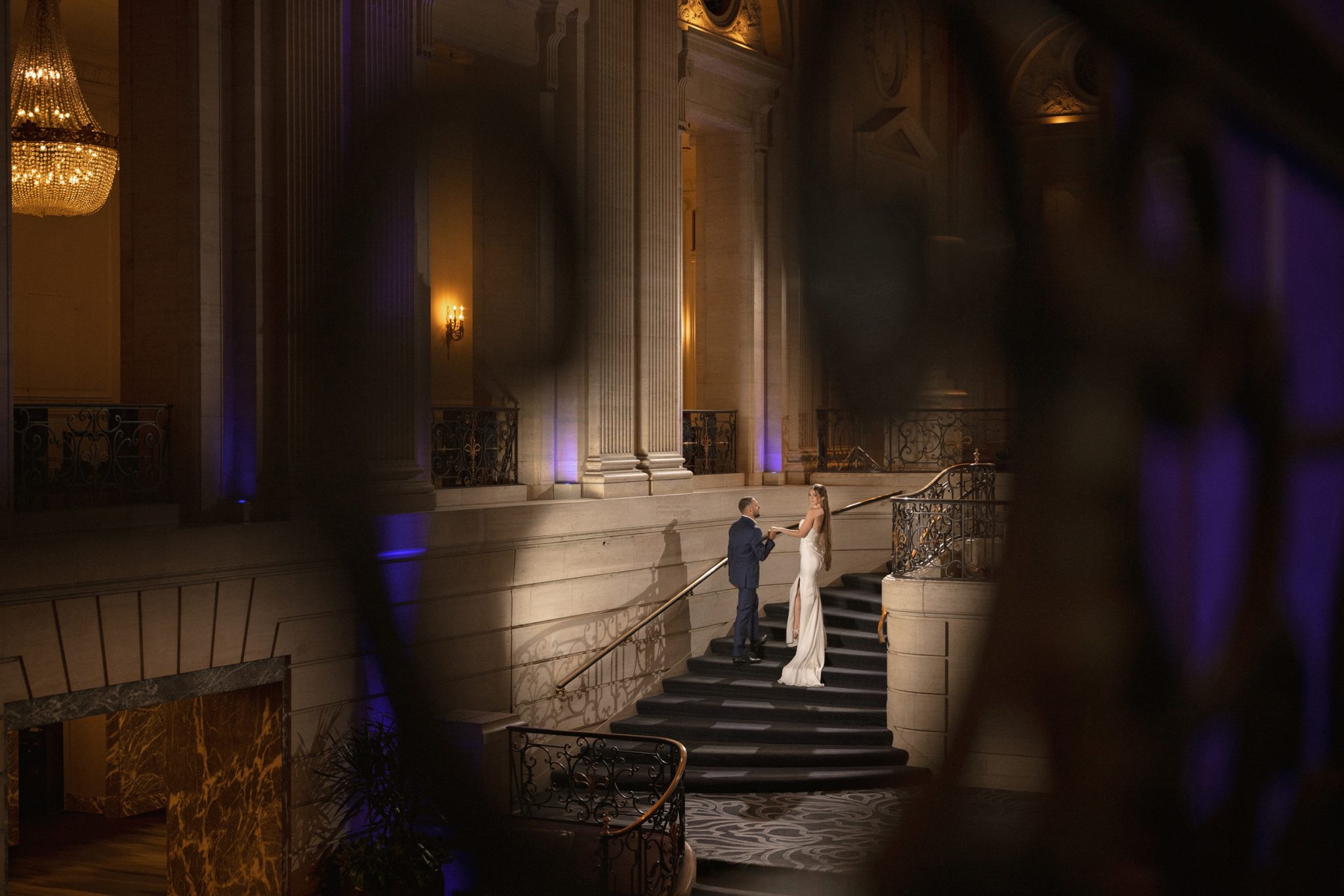
Grand staircases offer dramatic leading lines, but lighting them creatively requires a smart strategy. To light a couple on a staircase without having an assistant run alongside them, Lauren sets up two bare FJ100 strobes near the top landing, angled slightly down. These act as continuous rim lights that highlight the couple. She then places her main FJ100 with the Octa-S near the bottom of the stairs, angled down to illuminate them where they pause in the center.
For the ultimate “wow” shot on a staircase, switch to an ultra-wide lens like a 14mm. To prevent unflattering distortion on an ultra-wide lens, keep your couple positioned as close to the center of the frame as possible. However, you can deliberately bring the bride’s dress train or veil closer to the outer edges of the frame. The natural edge distortion of a 14mm lens will stretch the fabric and accentuate the room’s proportions, making the space and the dress look incredibly grand.
Mastering Wedding Portraits in Large Venues
Large venues offer plenty of opportunities for memorable wedding portraits. By balancing ambient exposure with off-camera flash, you can preserve the atmosphere of the room while drawing attention to your couple.
Compact lighting and modifiers give you the power to separate your couple from dark backgrounds, introduce dramatic rim lighting, and make your subjects the brightest, most captivating part of any room.
The goal is to make the venue part of the story while keeping the couple as its focus.
Looking for more wedding lighting inspiration?
Explore 3 Ways to Use a Speedlight for Wedding Photography, where photographer Michelle Harris demonstrates creative uses for the compact Westcott FJ100 Speedlight.


You must be logged in to post a comment.