
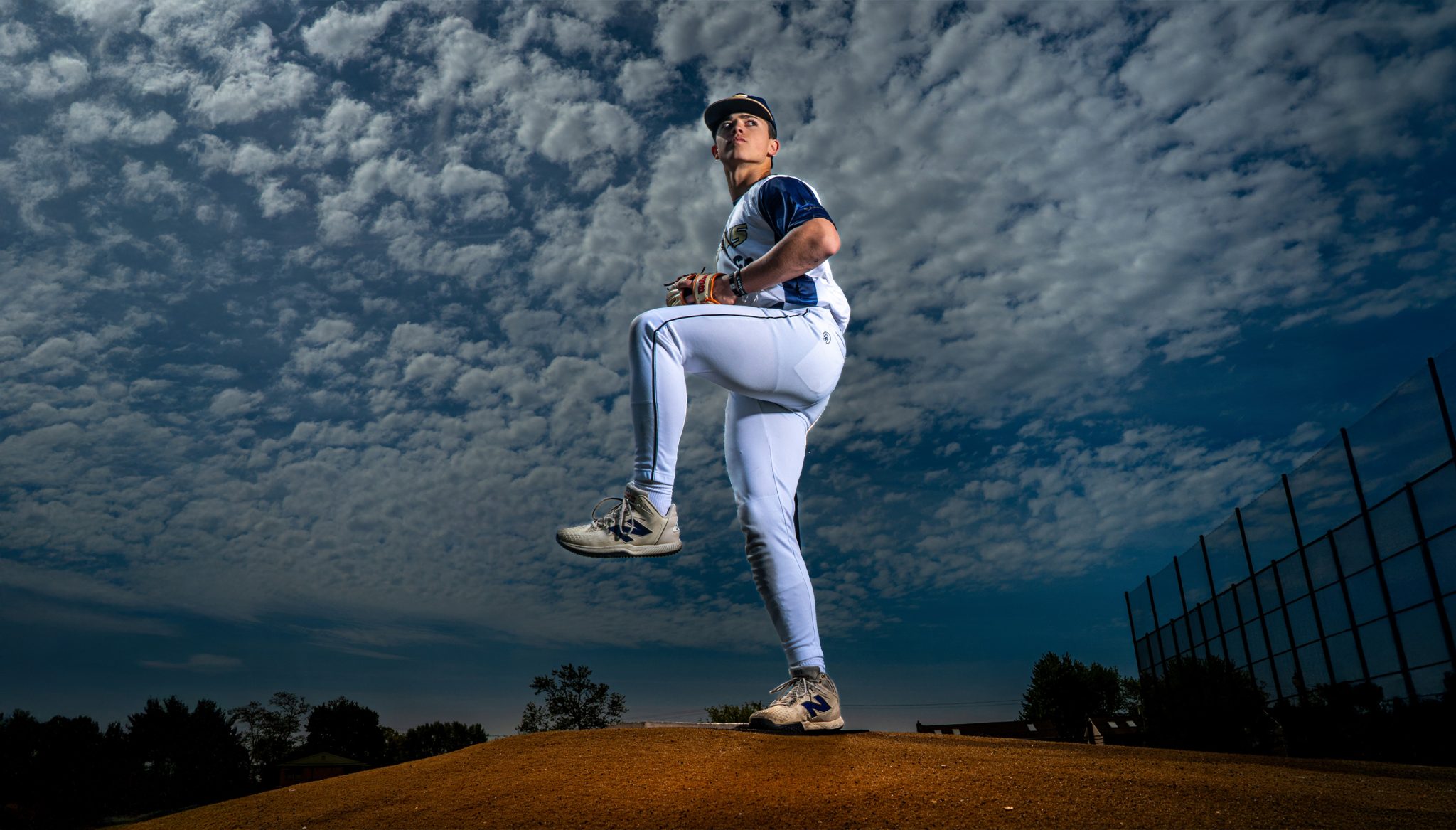
Have you ever wondered how top sports photographers get those dramatic, high-energy portraits that instantly grab your attention? In a recent shoot on the field, photographer Dani Mack broke down her exact process using Westcott off-camera flash to transform ordinary field photos into moody, high-impact sports portraits. Whether you only own a single light or a full multi-light setup, taking control of your lighting will completely elevate your work and set your sports photography business apart.
Gear That Stands Up to the Elements
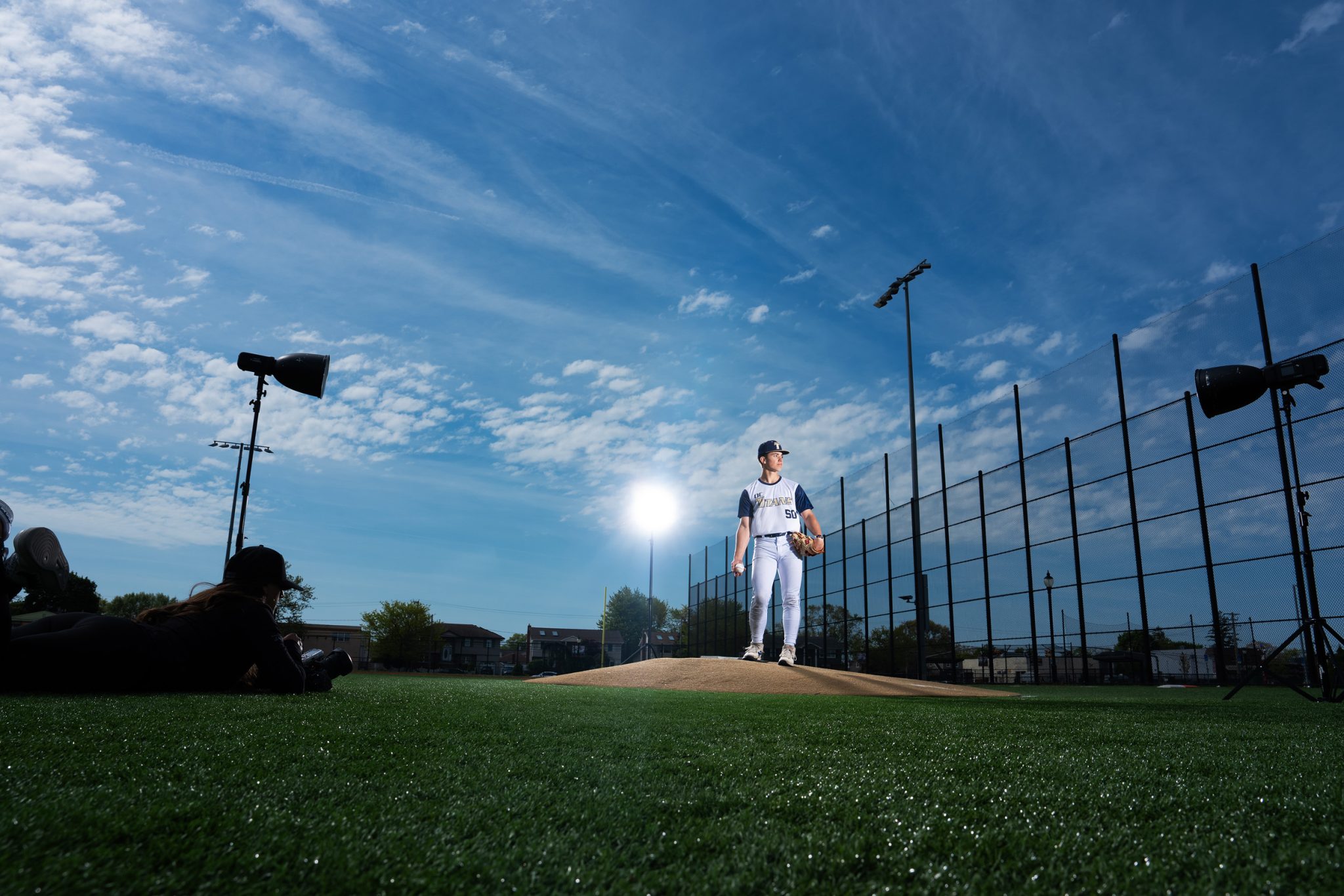
Shooting outdoors means dealing with bright sun, unpredictable overcast skies, and windy fields. To combat these conditions, Dani relies heavily on the Westcott FJWireless System. Her go-to main light is the Westcott FJ800 strobe, which packs 800 watt-seconds of power, giving her all the extra juice needed to overpower bright midday sunlight while capturing fast action. For rim lights, she pairs it with Westcott FJ400 II strobes to create clean separation between the athletes and the background, and powers her setup with Westcott ProMax AC/DC Batteries for reliable, all-day power on the field.
When it comes to modifiers outdoors, Dani leaves the softboxes at home and reaches for Westcott Long Throw Reflectors. Softboxes can quickly turn into giant sails on windy days, but long throw reflectors easily withstand strong gusts while throwing intense, direct light exactly where it’s needed.
For her lens choice, she opts for a versatile 24-70mm lens to shoot wide environmental scenes that can be cropped in post.
The D.A.N.I. Method
To keep things fast and simple on the field, Dani relies on her four-step framework: the D.A.N.I. Method:
- D – Decide: Before taking a single photo, make fast decisions about your gear and location. Evaluate wind conditions, scout for ugly background elements like rest stops or bleachers and decide where you want to position your subject.
- A – Adjust Your Settings: Before turning on any flashes, dial in your camera settings to expose for the ambient sky. Aim for a sky that is half a stop to a full stop underexposed. Shooting at settings like ISO 100, f/6.3 to f/16, and sports-portrait-lighting-setup a fast shutter speed instantly adds dramatic mood to your background.
- N – Now Add Your Lights: Turn on your Westcott strobes and fire a test shot. Start at a moderate power level around 6 and fine-tune from there until your subject’s face and body are perfectly lit.
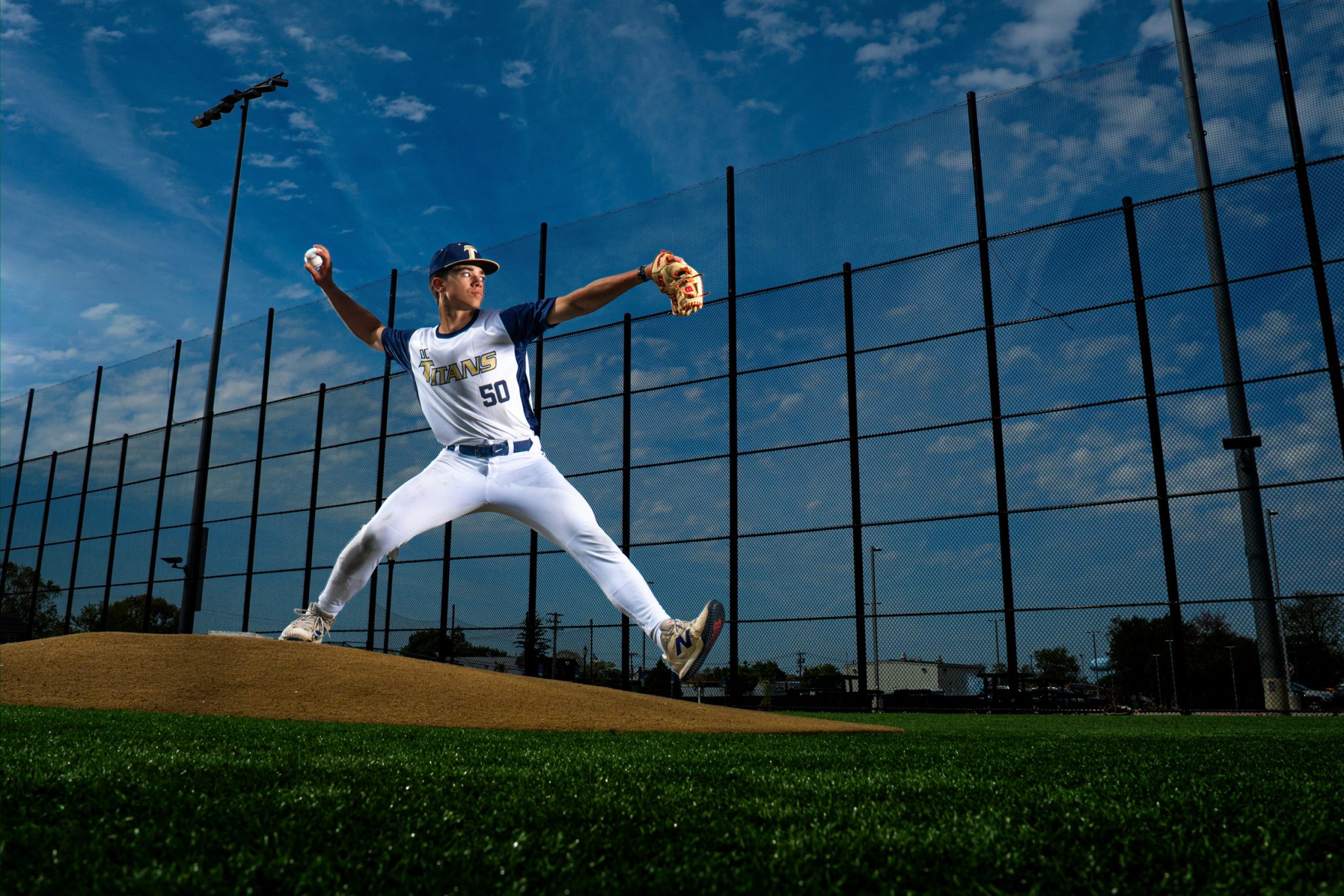
- I – Innovate: Don’t stay stuck in one spot! Get creative by moving around your athlete to change light angles, shooting through chain-link fences, and capturing unique moments like a player adjusting their batting gloves.
Step-by-Step Lighting Tips & Techniques
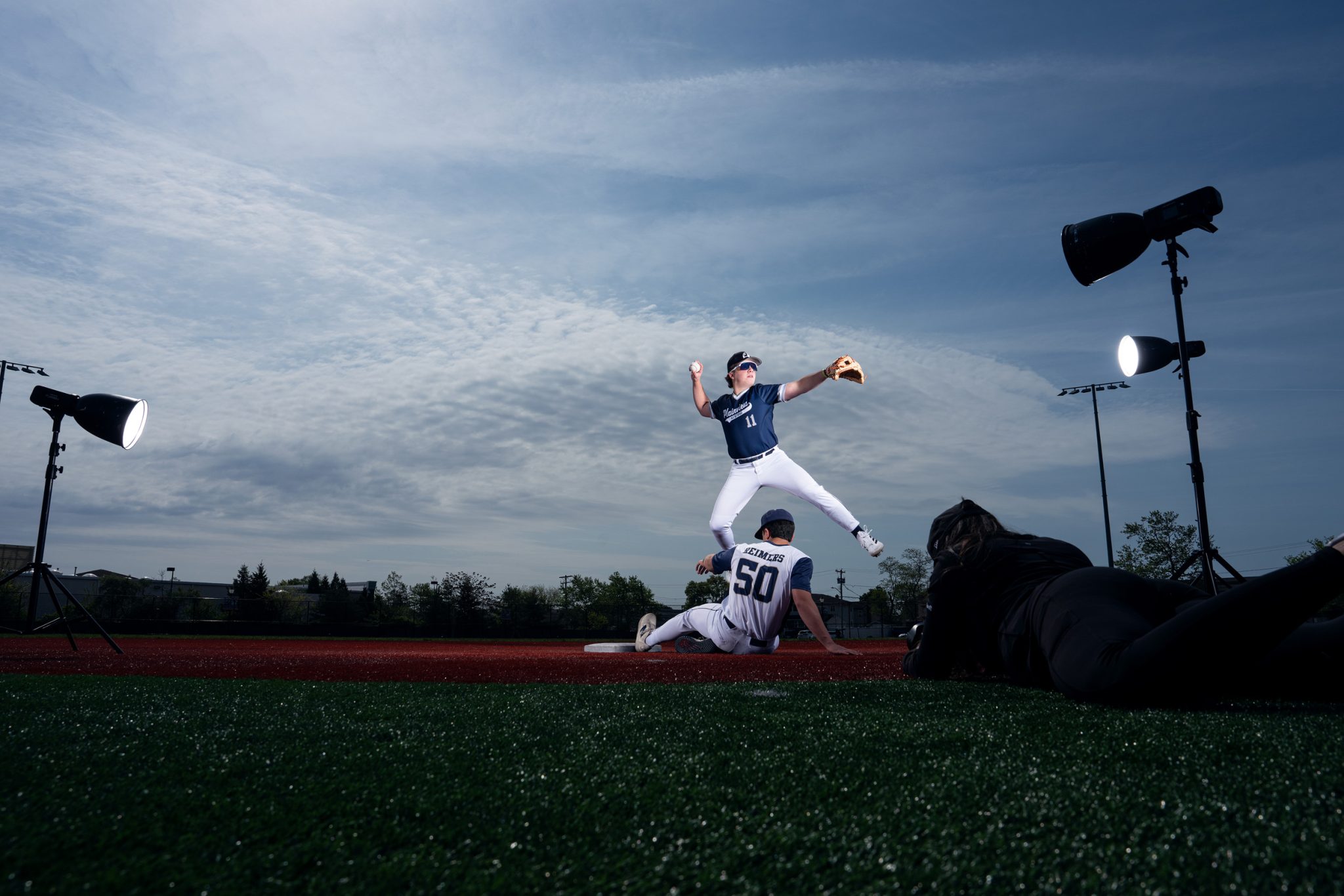
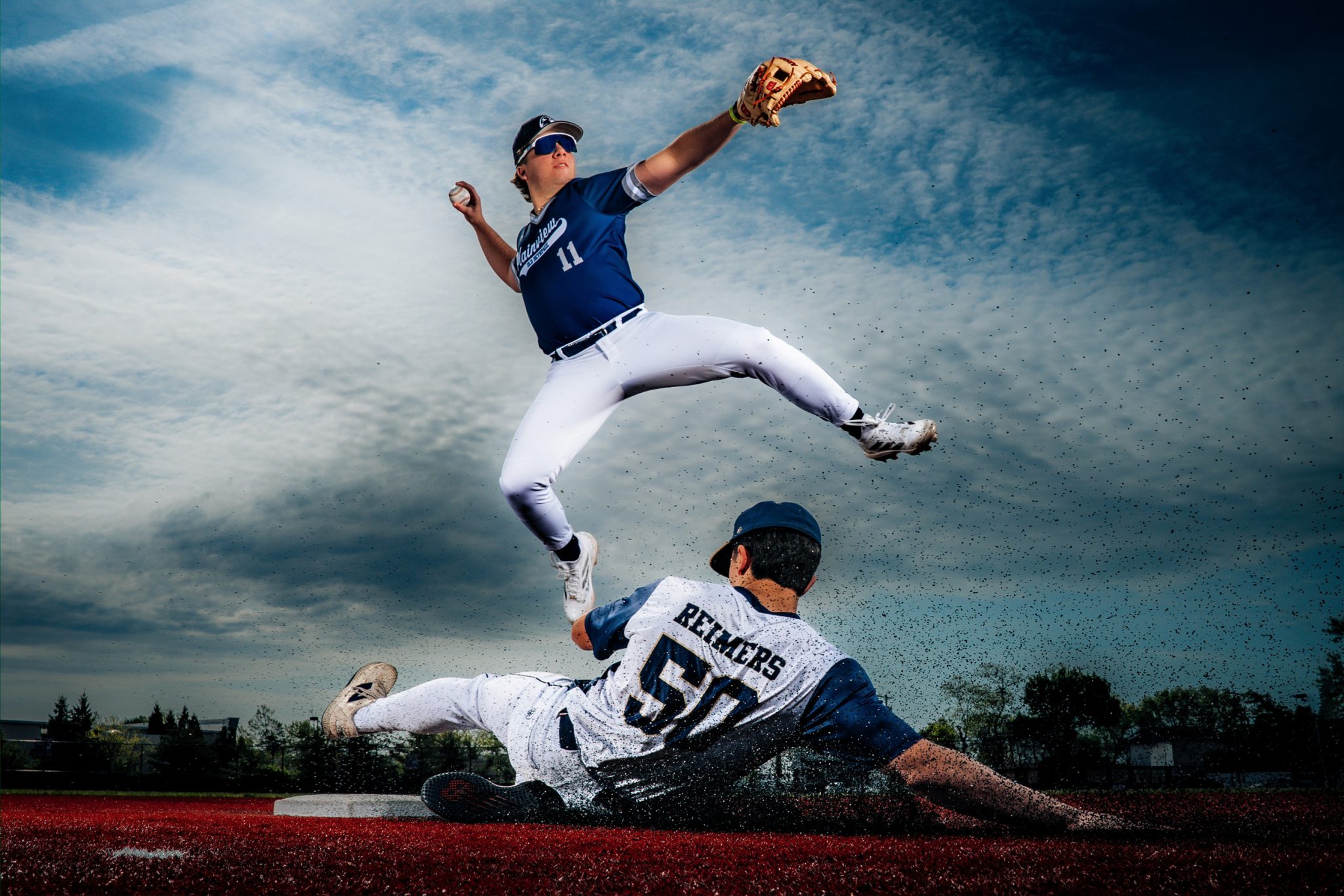
When building a three-light shot, Dani recommends starting with the rim lights first. Turn off your main light and dial in your rim lights behind the athlete first. Setting two backlights at equal power creates bright edge lighting that pops the athlete off dark backgrounds. Once you have that separation, turn your main light back on and adjust its power to light the subject’s face. If you only own a single flash, let the natural sun act as your backlight assistant while using your single Westcott strobe as your main fill light in front.
Capturing realistic action shots like sliding into second base can quickly wear out your players. To save their energy for game time, Dani uses a “fake-it-till-you-make-it” approach. Have athletes show you their movement or jump first so you can position your lights accurately. For sliding shots, you can simply have a player lay on the turf in a sliding pose and push dirt with their hands. It looks authentic in camera, saves time, and keeps your players safe.
Working on location also means solving common lighting problems on the fly. If a player’s hat or helmet creates a dark shadow across their face, lower your main light slightly and shoot straight-on to reach under the brim. If background elements like poles threaten to ruin your frame, shift your shooting angle so the athlete’s body completely covers the distraction. Also, watch out for “hot spots”—if an athlete strides toward the light during a pitch, move the light back slightly so they don’t get blown out as they move.
Don’t forget to coach athletes on their expressions as well! Sports action naturally causes players to scrunch their faces or stick out their tongues during exertion. Remind your athletes to relax their facial expressions during staged poses so you get a stronger, more confident sports portrait.
Overpowering the Sun & Elevating Your Business
As sports photographers, we rarely get the luxury of choosing what time of day we shoot. Fields are used for games, which means a team might hire you at high noon. With Westcott off-camera flash, you never have to fear harsh sunlight or flat overcast weather because you have complete control over your lighting.
Investing in off-camera flash allows you to give parents and families high-impact photos they could never capture from the stands. By mastering off-camera light and using the D.A.N.I. Method, you can build a stand-out style that grows your photography business.


You must be logged in to post a comment.